

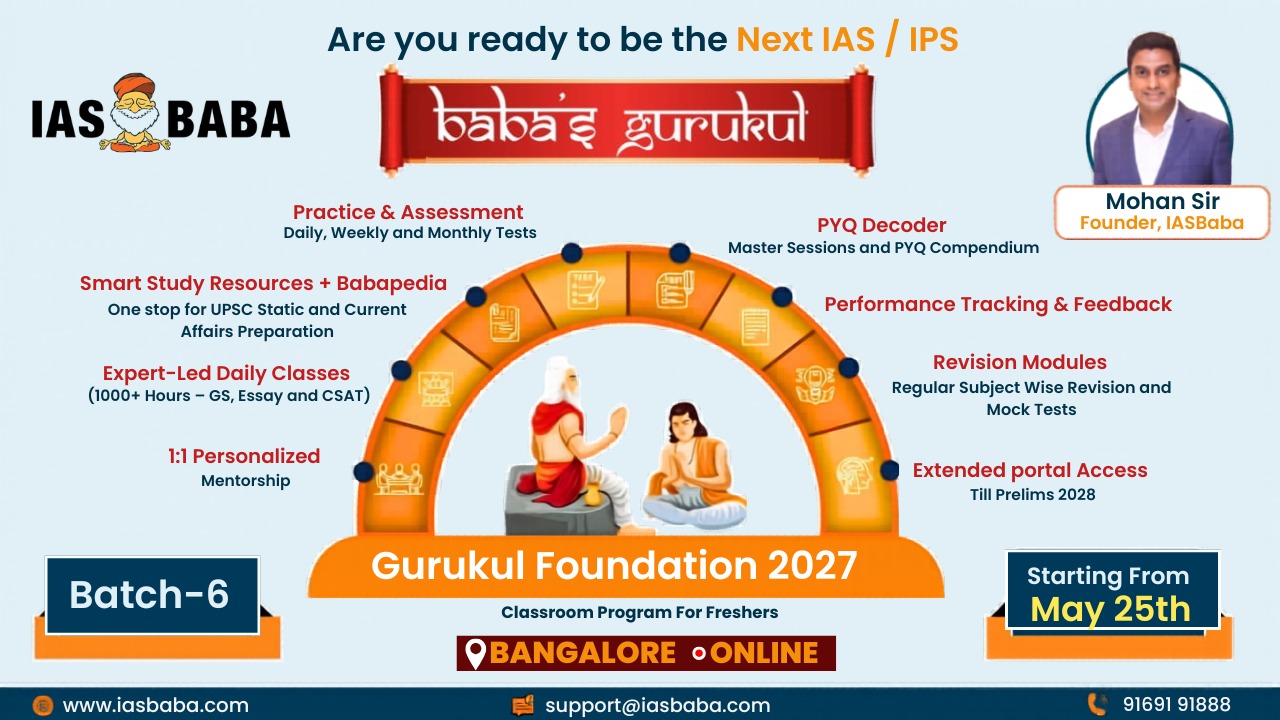
The Gurukul Foundation Course offers a structured and comprehensive pathway for Civil Services preparation. Through expert-led classroom teaching, exam-oriented study resources, continuous practice, and personalised mentorship, the programme builds strong conceptual foundations, sharp analytical ability, and disciplined preparation—guiding aspirants from clarity of fundamentals to confident exam-ready performance.
1000+ hours of in-depth classroom teaching, delivered by renowned and experienced faculty, to build strong fundamentals and exam-ready understanding.
This includes:
Well-structured, exam-focused quality study material designed to eliminate source confusion and complement classroom learning.
A scientifically designed, exam-simulated practice ecosystem starting from Day 1, aligned with the evolving UPSC pattern to build conceptual clarity, accuracy, speed, and analytical strength. And to ensure continuous assessment, confidence-building, and progressive readiness for final selection.
Holistic Support System: Group mentoring, interactive sessions, and psychological guidance to build resilience, clarity, and exam readiness.
A flexible and uninterrupted access system designed to ensure seamless learning, effective revision, and long-term preparation support.
The Foundation Course provides additional support, to ensure continuous guidance across all three stages of the UPSC Civil Services Examination—Prelims, Mains, and Interview.
P.S.: Once you complete filling out the Registration Form, you will receive a call from our mentor within 24 hours.
P.S.: Once you complete filling out the Registration Form, you will receive a call from our mentor within 24 hours.
The Gurukul Foundation Programme by IASbaba is a structured Civil Services preparation programme built on the idea of strong fundamentals, disciplined preparation, and personalised mentorship. The programme combines concept-based learning, continuous practice, and regular guidance to help aspirants prepare effectively for all stages of the UPSC examination.
Gurukul offers a comprehensive preparation ecosystem that includes structured classroom teaching, regular practice tests, NCERT and standard book coverage, current affairs support, and personalised mentorship. The programme focuses on building conceptual clarity and consistent preparation throughout the course.
Yes. The programme is designed to prepare students for all three stages of the UPSC examination—Prelims, Mains, and Interview—through classroom learning, answer-writing practice, tests, and mentorship.
Each student is assigned a mentor who provides regular academic guidance, evaluates answers, tracks progress, and helps plan preparation strategies. This personalised mentorship ensures consistent support throughout the preparation journey.
Online students receive access to live classes through the student portal, along with recorded sessions for revision. They also receive access to study resources, tests, Babapedia, and mentorship support, ensuring a learning experience similar to classroom students.
Current Affairs will be covered through a structured and multi-layered approach. Students will have access to weekly online Current Affairs classes for in-depth understanding and analysis. Additionally, Babapedia—IASbaba’s exclusive Current Affairs repository—is updated daily and divided into two sections: Prelimspedia for Prelims-specific facts and Mainspedia for Mains-oriented issues. Mentors will also guide students in identifying and tracking evolving themes and important topics, ensuring complete and focused coverage.
At Baba’s Gurukul, you’ll spend around 4–5 hours daily at the centre (offline students), immersed in focused preparation. Each day begins with a concept-driven class where the faculty ensures complete clarity on the topic. Post-class, you’ll take a Micro Prelims Test and write an answer to one Mains question, enabling consistent practice for both stages. The Mains answer will be discussed by the mentor or faculty, helping you learn how to structure answers effectively and prioritise key points—building both content and writing skills daily.
Upon successful enrolment, students will receive login credentials for the IASbaba student portal on their registered email ID. Through this portal, students gain immediate access to key learning resources, including the NCERT Foundation Classes and Babapedia, IASbaba’s dedicated platform for daily current affairs. This ensures that students can begin their preparation without delay and stay engaged with the course content from day one.
P.S.: Once you complete filling out the Registration Form, you will receive a call from our mentor within 24 hours.
You can call us on 91691 91888 (or) mail us at support@iasbaba.com
Visit our centres:
Delhi: 56/3 First Floor, Bazar Marg, Old Rajinder Nagar, New Delhi – 60 (Opposite Grover Mithaiwala). Contact Number: 88264 90453
Bengaluru: Admission Centre – No.38, 3rd Cross, 1st Phase, 2nd Stage, 60 Feet Main Road, Chandra Layout, Attiguppe, Bengaluru, Karnataka 560040 Landmark: opposite BBMP Building. Contact Number: 96634 62015
Bengaluru: IASbaba HQ – 2nd floor, Ganapathi Circle, 80 Feet Rd, Chandra Layout, Bengaluru, Karnataka 560072
*The Institute reserves the right to reflect any changes with respect to the programme/course.


