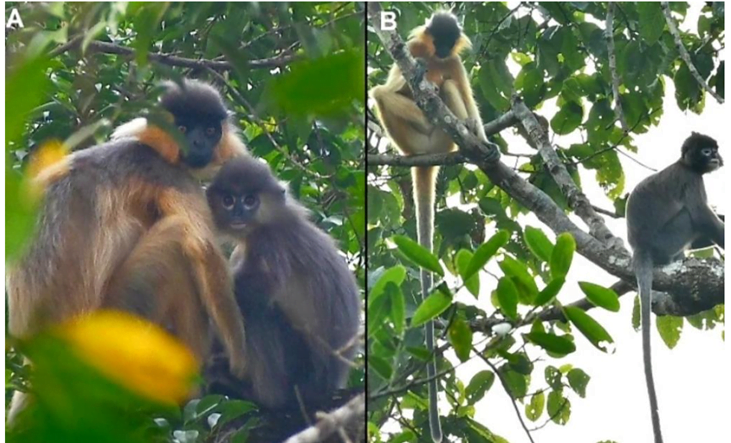
In News: In 2022, we have the first observational evidence of mixed-species association between the two threatened primate species Phayre’s langur (Trachypithecus pileatus) and capped langur (Trachypithecus phayrei), in fragmented forest patches of northeast Bangladesh.
Earlier conjecture:
Scientists initially thought that interbreeding among the two groups was more isolated to a particular place and time — specifically, when they encountered each other in western Eurasia shortly after modern humans left Africa.
This idea stemmed from the fact that the genomes of modern humans from outside Africa are only about 2 per cent Neanderthal, on average.
New findings:
Multipleinterbreeding happened between Neanderthals and the ancestors of modern humans across Europe and Asia than scientists and dilutive effects might have occurred.
This is because Neanderthal ancestry is 12 to 20 per cent higher in modern East Asians compared to modern Europeans.
This could be due to following reasons:
One is that East Asians happen to have interbred more with Neanderthals.
Of the multiple ancestral populations of Europeans, one had very little Neanderthal ancestry, diluting the overall Neanderthal contribution.
Denisovanscontributed to the modern human gene pool at least twice, leaving behind two distinct genetic components — one mostly in Papuan and Australian aboriginal populations, the other primarily in East Asian populations.
Probable reasons why Neanderthal DNA was purged from modern human genomes:
Neanderthal DNA was of less benefit to modern humans as their environments changed over time
harmful mutations were more common in Neanderthals due to inbreeding.
Hybridization:
Mixed-species association can result in the production of hybrid offspring in the wild.
Hybridisation – means a breakdown of species isolation mechanisms
Traditional belief about hybridisation – is essentially unnatural, and hence unwelcome.
Today, with rapid strides in science, it may be worthwhile to reconsider the biological importance of hybridisation, a naturally occurring and ubiquitous process, unsullied by value-laden human prejudices.
Methodology:
Scientists developed computer simulations that modelled how DNA would get shared during a range of numbers of encounters between modern humans and Neanderthals. Then, they looked into which models best fit modern human genetic databases