
Category: Geography
Context:
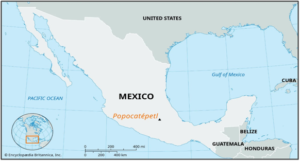
About Popocatépetl Volcano:
Source:
Category: Science and Technology
Context:

About Typhoid:
Source:
Category: Environment and Ecology
Context:

About Double Humped Bactrian Camel:
Source:
Category: International Organisations
Context:
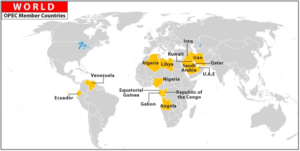
About OPEC (Organization of the Petroleum Exporting Countries) Plus:
About OPEC (Organization of the Petroleum Exporting Countries):
Source:
Category: Defence and Security
Context:

About Taimoor Missile:
Source:
GS-II: Government policies and interventions and issues arising out of their design and implementation.
Context (Introduction)
Digital technologies have transformed work into a 24×7 activity, eroding the boundary between professional and personal life. This culture of constant availability has produced a silent crisis of burnout, mental health stress, and declining productivity. The debate on the “right to disconnect” has thus moved from a labour welfare concern to a global governance and international norms issue.
Core Idea
The right to disconnect recognises an employee’s entitlement to disengage from work-related digital communication beyond prescribed working hours without fear of reprisal. It reframes occupational safety to include mental well-being, aligning labour rights with contemporary realities of platform work, remote employment, and hyper-connectivity.
Problem Diagnosis (Indian Context)
Why It Matters (Global and Economic Logic)
Way Forward
Conclusion
The right to disconnect is not an anti-growth measure but an investment in sustainable productivity. As global labour norms evolve to address the realities of the digital economy, India’s willingness to institutionalise this right will signal whether its growth model values speed alone—or the strength and resilience of its human capital.
Mains Question
In the context of increasing digitalisation of work, the demand for a “right to disconnect” has acquired constitutional significance. Examine the relevance of this right in light of Article 21 and the Directive Principles of State Policy, and discuss the need for its statutory recognition in India. (250 words, 15 marks)
GS-II: Government policies and interventions and issues arising out of their design and implementation.
GS-III: Environmental pollution and degradation; conservation, environmental impact assessment.
Context (Introduction)
The Aravalli range, one of the world’s oldest mountain systems, faces sustained ecological degradation due to mining, urbanisation, and fragmented governance across Rajasthan, Haryana, and the National Capital Region. Despite recent Supreme Court interventions—such as pausing height-based reclassification of hills—the crisis persists, highlighting deeper governance and environmental failures.
Core Idea
The ecological principle of “thinking like a mountain”, coined by Aldo Leopold, which emphasises long-term ecosystem integrity over short-term economic gains. Applied to the Aravallis, this approach demands treating the mountain range as an integrated ecological system rather than as discrete parcels defined by administrative or legal thresholds.
Problem Diagnosis: Governance and Environmental Failures
Why the Aravallis Matter
Way Forward:
Conclusion
The Aravalli crisis illustrates the dangers of governance that values immediate economic returns over ecological permanence. “Thinking like a mountain” is not environmental romanticism but policy realism recognising that while forests may regrow in decades, mountain ecosystems formed over millions of years are irreplaceable. For a megadiverse country like India, ecological short-sightedness would be the costliest failure of governance.
Mains Question