Part of: GS Prelims and GS-I – Culture & GS-III – Sci & Tech
In news
IIT Kanpur Researchers have developed ‘Damaru’ Inspired Lattice that finds applications in stealth submarines and high speed trains.
Sponsored by: A SPARC project of Ministry of Education.
Key takeaways
With the use of a micro-structured hour-glass shaped meta-structure in the lattice unit, one can get a wider variation of propagation and stop bands.
Inspiration of the lattice has come from a two-headed drum called ‘Damaru’ or which is used in ancient Hinduism and Tibetan Buddhism.
It is said that Lord Shiva has produced a special sound through this musical instrument to create and regulate the universe.
In this application, the researchers have also shown that the nature of stiffness of a vibrating medium could be altered drastically by controlling the lattice micro-structure from regular honeycomb to auxtetic honeycomb structure.
This has wide applications in the field of vibration isolation in high speed trains, stealth submarines and helicopter rotors.
The International Financial Services Centres Authority (IFSCA) obtained membership of International Association of Insurance Supervisors (IAIS).
With this membership IFSCA would have access to IAIS’s global network and would be able to exchange ideas and information with other global regulators.
This would help in developing a vibrant global Insurance hub in IFSC at GIFT City.
Important value addition
International Association of Insurance Supervisors (IAIS)
Established in: 1994
Headquarter: Switzerland.
It is a voluntary membership organization of insurance supervisors and regulators from more than 200 jurisdictions, constituting 97% of the world’s insurance premiums.
Some of the leading members of IAIS are: (1) United Kingdom- Financial Conduct Authority (FCA); (2) USA- National Association of Insurance Commissioners (NIAC); (3) India- Insurance Regulatory and Development Authority of India (IRDAI) etc.
It is the international standard-setting body responsible for developing and assisting in the implementation of principles, standards and other supporting material for the supervision of the insurance sector.
An AI & Robotics Technologies Park (ARTPARK) was recently set up in Bengaluru.
It will promote technology innovations in AI (Artificial Intelligence) & Robotics leading to societal impact by executing ambitious mission mode R&D projects.
Key takeaways
ARTPARK, is a unique not-for-profit foundation established by Indian Institute of Science (IISc), Bengaluru with support from AI Foundry in a public-private model.
It will bring about collaborative consortium of partners from industry, academia and government bodies.
ARTPARK will develop DataSetu – that will enable confidentiality and privacy-preserving framework to share data and run analytics spurring the data-sharing ecosystem and create a data marketplace, boosting AI applications and solutions.
Important value addition
National Mission on Inter-Disciplinary Cyber-Physical Systems (NM-ICPS)
Implemented by: Department of Science & Technology
Period of: five years
NM-ICPS covers entire India which includes Central Ministries, State Governments, Industry and Academia.
It would address technology development, application development, human resource development & skill enhancement, entrepreneurship and start-up development in Cyber Physical System (CPS) and associated technologies.
Aim: Establishment of 15 Technology Innovation Hubs (TIH), six Application Innovation Hubs (AIH) and four Technology Translation Research Parks (TTRP).
Bonds issued by the Lucknow Municipal Corporation (LMC) were listed on the BSE, raising Rs 200 crore for Uttar Pradesh’s capital.
Key takeaways
According to UP Chief Minister, Ghaziabad will be the next to issue a municipal issue and it will be followed by Pragyaraj, Varanasi, Agra and Kanpur.
Lucknow is the ninth city in the country to raise capital through municipal bonds.
Until now, a cumulative amount of Rs 3,600 crore has been raised via muni bonds in the country.
The money raised using such bonds is typically used for infra projects such as roads, water and housing.
In 2015, market regulator SEBI had issued the framework for raising capital by way of muni bonds.
Among the key eligibility criteria for issuing these bonds is that the local body shouldn’t have negative net worth in any of the three preceding financial years and shouldn’t have defaulted on payments in the last one year.
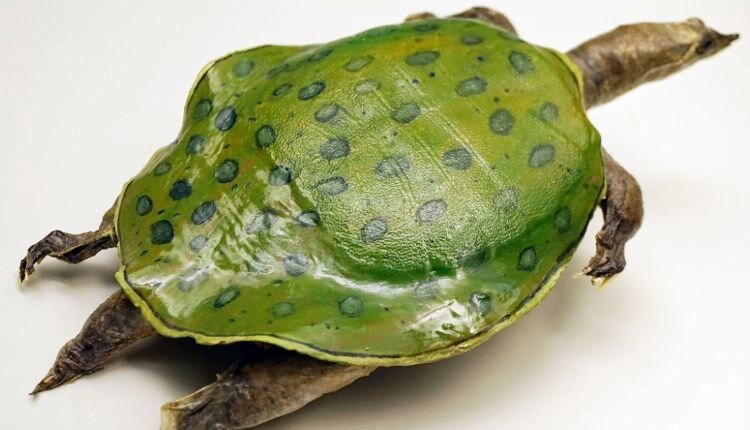
Indian peacock softshell turtle, a turtle of a vulnerable species was rescued from a fish market in Assam’s Silchar.
Important value addition
The Indian peacock softshell turtle [Nilssonia hurum] is a species of turtle found in South Asia.
IUCN Red list status: Vulnerable species.
Schedule I species in the Indian Wildlife Protection Act, 1972
This species is confined to India, Bangladesh and Pakistan.
In india, it is widespread in the northern and central parts of the Indian subcontinent.
These are found in rivers, streams, lakes and ponds with mud or sand bottoms.
Major Threats: (1) Heavily exploited for its meat and calipee; (2) Reduction of fish stock, due to overfishing, pollution, increase in river traffic, and sand-mining, among others.
Do you know?
According to a report by Guwahati-based conservation NGO, Help Earth, 29 species of turtles have been recorded in India, out of which 20 are found in Assam.
Recently, the Vice President of India has launched the first ever SCO Online Exhibition on Shared Buddhist Heritage.
Key takeaways
Developed by: National Museum, New Delhi, in active collaboration with SCO member countries.
Participants: Museums from India, Kazakhstan, China, Kyrgyz Republic, Pakistan, Russia, Tajikistan and Uzbekistan.
The launch happened during the 19th Meeting of the Shanghai Cooperation Organisation Council of Heads of Government (SCO CHG), held in New Delhi.
India highlighted that the crossborder terrorism is the biggest challenge for the SCO countries.
Buddhist philosophy and art of Central Asia connects SCO countries to each other and presents an excellent opportunity for visitors to access, appreciate and compare Buddhist art antiquities from SCO countries on a single platform.
The visitors can explore the Indian Buddhist treasures from the Gandhara and Mathura Schools, Nalanda, Amaravati, Sarnath, etc. in a 3D virtual format.
The international exhibition gives a glimpse of the artistic wealth displayed in various museums across Asia and also represents the artistic excellence embedded within an eclectic historical timeline.
Important value addition
Shanghai Cooperation Organisation
It is a permanent intergovernmental international and a Eurasian political, economic and military organization.
Aim: To maintain peace, security and stability in the region created in 2001.
The SCO is widely regarded as the “Alliance of the East”, due to its growing centrality in Asia-Pacific, and has been the primary security pillar of the region.
It is the largest regional organisation in the world in terms of geographical coverage and population, covering three-fifths of the Eurasian continent and nearly half of the human population.
Members: Kazakhstan, China, Kyrgyzstan, Russia, Tajikistan, Uzbekistan, India and Pakistan.
Observer states: Afghanistan, Belarus, Iran and Mongolia.
Dialogue Partners: Azerbaijan, Armenia, Cambodia, Nepal, Turkey and Sri Lanka.
influenza makes people more susceptible to bacterial infections.
Recently, researchers at Sweden’s Karolinska Institute have come out with findings on superinfections.
They have highlighted that influenza makes people more susceptible to bacterial infections.
Key takeaways
When an individual is infected by influenza different nutrients and antioxidants, such as vitamin C, leak from the blood.
The absence of nutrients and antioxidants creates a favourable environment for bacteria in the lungs.
The bacteria adapt to the inflammatory environment by increasing the production of an enzyme called High temperature requirement A (HtrA).
The presence of HtrA weakens the immune system and promotes bacterial growth in the influenza-infected airways.
The ability of pneumococcus to grow seems to depend on the nutrient-rich environment with its higher levels of antioxidants that occurs during a viral infection, as well as on the bacteria’s ability to adapt to the environment and protect itself from being eradicated by the immune system.
The results could be used to find new therapies for double infections between the influenza virus and pneumococcal bacteria.
The information can contribute to the research on Covid-19.
Important value addition
Superinfections
These are infection occurring after or on top of an earlier infection, especially following treatment with broad-spectrum antibiotics.
It is an overgrowth of an opportunistic pathogen from the bacterial or yeast imbalance of systemic antibiotics.
For example, influenza is caused by a virus, but the most common cause of death in influenza patients is secondary pneumonia, which is caused by bacteria.
Influenza
It is a viral infection that attacks the respiratory system i.e. nose, throat and lungs.
Context: The Farmers’ protests have erupted once again in north India primarily in opposition to the new farm acts
What are the farmer’s concern?
Their main worry is about a possible withdrawal of the Minimum Support Price (MSP) and a dismantling of the public procurement of grains.
They also contend that by leaving farmers to the mercy of the open market, the stage has been set for large private players to take over agriculture.
The farmers’ unions want nothing short of a complete withdrawal of the recently enacted Farm Acts, which they claim will ruin small and marginal farmers.
It needs to be noted that the protests are largely in the States of Punjab and Haryana.
What is government’s contention?
The government claims that the Acts will only increase options for farmers in the output markets, that the MSP-procurement system will continue, and that there is absolutely no plan to dismantle the system.
To support its claims, the government points to the fact that there is absolutely no mention of either MSP or procurement in the Acts.
It is true that a large-scale public procurement of paddy is going on in Punjab as the protests are raging, thus assuaging the fears of farmers in the region.
Why are farmers primarily from Punjab & Haryana are protesting vociferously?
The Public Distribution System (PDS) is the lifeline in these States. Farmers in Punjab and Haryana are heavily dependent on public procurement and assured price through MSP.
This is far greater than farmers in any other State.
Nearly 88% of the paddy production and 70% of the wheat production in Punjab and Haryana (in 2017-18 and 2018-19) has been absorbed through public procurement.
In contrast, in the other major paddy States such as Andhra Pradesh, Telangana, Odisha and Uttar Pradesh, only 44% of the rice production is procured by public agencies.
In the case of wheat, this percentage is even lower. In the major wheat States of Madhya Pradesh and Uttar Pradesh, only a quarter (23%) of the production is procured by public agencies
This clearly shows the heavy dependence of farmers in Punjab and Haryana on MSP and the public procurement system. Therefore, any disruption to the system, real or perceived, will cause a major upheaval
What are Government’s obligation with regard to Food Security of Nation?
Obligation under NFSA: If farmers of Punjab and Haryana need the procurement system, the government needs it even more. This is because of its obligations under the PDS and the National Food Security Act (NFSA) that is a legal and rights-based entitlement.
Large Number of people to be supported by PDS: There are nearly 80 crore NFSA beneficiaries and an additional eight crore migrants who need to be supported under the PDS. The government needs an uninterrupted supply of grain, particularly from these two States, to maintain the PDS.
Procurement is needed to supply PDS: In the last three years, nearly 40% of the total paddy production in the country (45 million tons) and 32% of wheat production (34 million tons) has been procured by public agencies to supply the PDS.
Impact of Pandemic: This year, due to the onset of the novel coronavirus pandemic and the migrant crisis, the government has earmarked much larger quantities for public distribution — about 58 million tons of rice and 37 million tons of wheat. This translates into nearly half of the rice production (49%) and 35% of the wheat production in the country.
Open Market Procurement is not feasible: Due to Pandemic, government needs to procure a huge quantum of grains than in previous years as the government cannot afford to go to the open market. That is a sure recipe for disaster as prices will skyrocket, and with the stock restrictions gone under the recent Essential Commodities Act Amendment, there is a possibility of large-scale hoarding too.
Why these States matter for government?
If the government intends to procure such huge quantities of grains, then it needs to turn to these two States, because it is these States that have always been in the forefront in supplying grains to procurement agencies.
Nearly 35% of the rice and 62% of the wheat procured in the last three years has been from these States. Also, nearly 50% of the total coarse grains came from these two States.
Thus, the government has little option but to continue its procurement from these States in the foreseeable future. Even after the COVID-19 situation improves and the migrant crisis abates, the obligations under the NFSA will continue.
Way Ahead
Engage with Protestors: It is clear that dismantling the procurement system is neither in the interests of farmers nor the government. Therefore, it is imperative that the government reaches out to the farmer groups and assures them of the indispensability of MSP-procurement system.
Diversify Procurement: The government has to diversify its procurement away from two States of Punjab & Haryana
Build Consensus: The severe trust deficit that resulted from the way the Farm Bills have been rushed through needs to be addressed by adopting a conciliatory approach towards farmers and the States.
INTERNATIONAL/ SECURITY
Topic: General Studies 2:
Salient features of the Representation of People’s Act
Powers, functions and responsibilities of various Constitutional Bodies (ECI)
NRI Voting
Context: The Election Commission (EC) approached the Law Ministry to permit NRIs to cast their votes from overseas through postal ballots.
The Commission informed the government that it is “technically and administratively ready” to extend the Electronically Transmitted Postal Ballot System (ETPBS) to voters abroad for elections next year in Assam, West Bengal, Kerala, Tamil Nadu and Puducherry.
What is the current process of voting for Indian citizens living abroad?
An NRI can vote in the constituency in which her place of residence, as mentioned in the passport, is located.
She can only vote in person and will have to produce her passport in original at the polling station for establishing identity.
Voting rights for NRIs were introduced only in 2011, through an amendment to the Representation of the People Act 1950.
What is current of strength of NRI voters?
According to a UN report of 2015, India’s diaspora population is the largest in the world at 16 million people.
Registration of NRI voters, in comparison, has been very low: a little over one lakh overseas Indians registered as voters in India, according to the EC.
In last year’s Lok Sabha elections, roughly 25,000 of them flew to India to vote.
If approved, how will voting by postal ballots work for NRIs?
According to the EC proposal, any NRI interested in voting through the postal ballot in an election will have to inform the Returning Officer (RO) not later than five days after the notification of the election.
On receiving such information, the RO will dispatch the ballot paper electronically.
The NRI voters will download the ballot paper, mark their preference on the printout and send it back along with a declaration attested by an officer appointed by the diplomatic or consular representative of India in the country where the NRI is resident.
It’s not clear, at this moment, if the voter will return the ballot paper herself through ordinary post or drop it off at the Indian Embassy, which may then segregate the envelopes constituency-wise and send them to the Chief Electoral Officer of the state concerned for forwarding to the RO
How and when did the proposal originate?
The EC began to look for options to enable NRIs to vote from overseas after it received several requests, including one from former Rajya Sabha MP and industrialist Naveen Jindal and the Ministry of Overseas Affairs, and three writ petitions were filed by NRIs in the Supreme Court in 2013 and 2014.
A 12-member committee was set up after the 2014 Lok Sabha elections to study mainly three options — voting by post, voting at an Indian mission abroad and online voting.
The committee ruled out online polling as it felt this could compromise “secrecy of voting”.
It also shot down the proposal to vote at Indian missions abroad as they do not have adequate resources.
In 2015, the panel finally recommended that NRIs should be given the “additional alternative options of e-postal ballot and proxy voting”, apart from voting in person.
Under proxy voting, a registered elector can delegate his voting power to a representative. The Law Ministry accepted the recommendation on proxy voting.
What has been the response of Ministry of External Affairs (MEA)?
The MEA expressed strong reservations over attesting the declaration that NRI voters will have to send along with their marked ballot papers.
The MEA had said “diplomatic missions do not have the logistical wherewithal to handle attestation for a large number of overseas electors” and that they would have to seek the permission of the host country for organising such activity, which may be difficult in non-democratic countries
What happened to the proposal to grant proxy voting rights to overseas electors?
The Union Cabinet passed the proposal on proxy voting rights for NRIs in 2017. The government then brought a Bill amending the Representation of the People Act 1950.
The Bill was passed by Lok Sabha and was awaiting Rajya Sabha’s approval when it lapsed with the dissolution of the 16th Lok Sabha. This proposal hasn’t been revived yet.
In its latest letter, the EC pushed only for postal voting rights for NRIs, not proxy voting. To extend the postal voting facility to overseas voters, the government only needs to amend the Conduct of Election Rules 1961. It doesn’t require Parliament’s nod.
Conclusion
At present, postal ballots are allowed for certain categories of voters living in India. The new proposal is for overseas voters.
(TEST YOUR KNOWLEDGE)
Model questions: (You can now post your answers in comment section)
Note:
Correct answers of today’s questions will be provided in next day’s DNA section. Kindly refer to it and update your answers.
Comments Up-voted by IASbaba are also the “correct answers”.
Q.1 Consider the following focused areas of National Mission on Inter-Disciplinary Cyber-Physical Systems (NM-ICPS):
Technology Development
HRD & Skill Development
Innovation, Entrepreneurship & Start-ups Ecosystem Development
International Collaborations.
Select the correct code:
1 and 4 only
1, 2 and 4 only
1,2 3 and 4
2 and 3 only
Q.2 Consider the following statements regarding Indian peacock softshell turtle:
Its IUCN Red list status is endangered.
This species is confined to India and Bangladesh only.
Which of the above is/are correct?
1 only
2 only
Both 1 and 2
Neither 1 nor 2
ANSWERS FOR 3rd December 2020 TEST YOUR KNOWLEDGE (TYK)