Part of: GS Prelims and GS-II – Policies and interventions; Health
In news
The Union Ministry for Health and Family Welfare participated in the Partnership for Maternal, Newborn and Child Health (PMNCH) ‘Accountability Breakfast’ to discuss the issues of maternal and child health.
The event was co-hosted by the White Ribbon Alliance (WRA) and Every Woman Every Child (EWEC).
Theme of the Event: Protecting gains in Reproductive, Maternal and Child Health from the Covid pandemic.
Important value additions
PMNCH
It is a global health partnership founded in 2005.
It is hosted at the WHO in Geneva, Switzerland.
The Accountability Breakfast aims to convert talk into action for the health and rights of women, children and adolescents.
Every Woman Every Child (EWEC) Movement
Launched by: United Nations during the United Nations Millennium Development Goals Summit in September 2010.
It is a global movement that mobilizes and intensifies international and national action by governments, the private sector, and civil society to address the major health challenges facing women, children, and adolescents around the world.
The ESG funds are increasingly becoming popular in the mutual fund industry in India.
Important value additions
ESG Fund
ESG is a combination of three words – Environment, Social and Governance.
It is a kind of mutual fund.
Its investing is used synonymously with sustainable investing or socially responsible investing.
The ESG fund focuses on companies with environment-friendly practices, ethical business practices and an employee-friendly record while other funds don’t.
As ESG funds gain momentum in India, companies will be forced to follow better governance, ethical practices, environment-friendly measures and social responsibility.
The first ESG mutual fund was launched by the State Bank of India – SBI Magnum Equity ESG Fund.
The wetlands, which play an important role in the storage of sediment and nutrients, are being identified in Rajasthan for ensuring their utilisation and enabling the local authorities to maintain them.
Key takeaways
While six wetlands are already identified in the State, 52 more have been earmarked for time-bound development.
Wetlands would be strengthened for increasing vegetation of aquatic plants and protecting biodiversity.
No waste would be allowed to be dumped at the wetlands and effective steps would be taken for water conservation
Strict action would be taken against those running submersible pump sets for illegal salt mining in the Sambhar Lake.
The State Government’s Directorate of Environment and Climate Change will function as the secretariat of the State Wetland Authority.
The fresh and saline lakes supporting unique ecosystems in the State would be protected with the strict implementation of the Wetlands (Conservation and Management) Rules, 2019
Important value additions
Wetlands
They are highly productive ecosystems that provide the world with nearly two-thirds of its fish harvest.
They play an integral role in the ecology of the watershed.
They provide an ideal environment for organisms that form the base of the food web and feed many species of aquatic animals.
They help in carbon sequestration (removal of carbon dioxide from the atmosphere).
They provide habitat for animals and plants and support plants and animals that are found nowhere else.
They are also an important source of ground water recharge.
Threats to Wetlands
Urbanization
Agriculture: Construction of a large number of reservoirs, canals and dams have altered the hydrology of the associated wetlands.
Pollution: Due to mercury from industrial sources
Climate Change: Increased air temperature; increased frequency of storms, droughts, and floods; increased sea level rise
Dredging and sand mining: Dredging of streams lowers the surrounding water table and dries up adjacent wetlands.
Exotic Species: Exotic introduced plant species such as water hyacinth and salvinia clog waterways and compete with native vegetation.
A Memorandum of Understanding (MoU) was signed between the Ministry of AYUSH and Ministry of Women and Child Development for controlling Malnutrition as a part of POSHAN Abhiyaan.
Key takeaways
The specific areas identified under the MoU for co-operation include: (1) Integration of AYUSH into POSHAN Abhiyaan; (2) Control of malnutrition through the principles and practices of Ayurveda, Yoga and other Ayush systems.
The Anganwadi worker who is providing the Ayurveda nutrition message to the community at ground level may be designated as ‘DHATRI’ – Dedicated Health Activist to Replenish the Innutrition.
The two Ministries have also decided to launch the hashtag #Ayush4Anganwadi for generating awareness about the activities on the digital media.
Important value additions
POSHAN Abhiyaan
It is Government of India’s flagship programme
Ministry: Ministry of Women & Child Development
Objective: To improve nutritional outcomes for children, pregnant women and lactating mothers.
According to data shared in the Parliament, the number of arsenic-affected habitations in India has increased by 145% in the last five years (2015-20).
Key takeaways
India had 1,800 arsenic-affected habitations in 2015.
This increased to 4,421 habitations as of September 2020.
Most of the arsenic-affected habitations lie in the Ganga and Brahmaputra alluvial plains – Assam, Bihar, West Bengal, Punjab, and Uttar Pradesh (UP).
Assam had the highest share of such habitations (1,853), followed by West Bengal (1,383).
However, the number of fluoride affected habitations has significantly come down.
Important value additions
Arsenic Poisoning
It is naturally present at high levels in the earth’s crust and groundwater in a number of countries.
It is highly toxic in its inorganic form.
Contaminated water used for drinking, food preparation and irrigation of food crops poses the greatest threat to public health from arsenic.
Long-term exposure to arsenic can cause cancer, skin disease, cardiovascular disease and diabetes.
In early childhood exposure, it may cause reduced cognitive development and increased deaths in young adults.
According to the WHO’s guidelines for drinking water quality (2011), the permissible limit of Arsenic in groundwater is 0.01 mg per litre.
Fluoride Toxicity
Excessive fluoride intake usually occurs through the consumption of groundwater naturally rich in fluoride, particularly in warm climates.
Such exposure may lead to dental fluorosis (tooth decay) or crippling skeletal fluorosis.
Do you know?
A new Sub-programme under National Rural Drinking Water Programme (NRDWP) – National Water Quality Sub-Mission (NWQSM) was started by the Ministry of Drinking Water and Sanitation in 2017 to address the urgent need for providing clean drinking water in about 28,000 Arsenic & Fluoride affected habitations.
The magnitude of the Sun’s solar activity is decreasing.
This period of decreased solar activity is known as the Modern Grand Solar Minimum that will last from 2020 to 2053.
Key takeaways
This is done by observing the number of Sunspots at any given time.
The number of sunspots is directly proportional to solar activity.
More Sunspots mean more solar activity.
The last time such an event occurred was during the Maunder Minimum, from 1645 CE to 1710 CE.
Impact
The surface temperatures on Earth may go down during the Modern Grand Solar Minimum due to a 70% reduction in solar magnetic activity.
Variations in solar irradiance will lead to heating of the upper layer of the Earth’s atmosphere and influences the transport of solar energy towards the planet’s surface.
Decreased solar activity has complex impacts on the abundance of ozone in the Earth’s atmosphere
It also affects the climatic cycles of Earth such as the North Atlantic Oscillation (NAO).
Miscellaneous
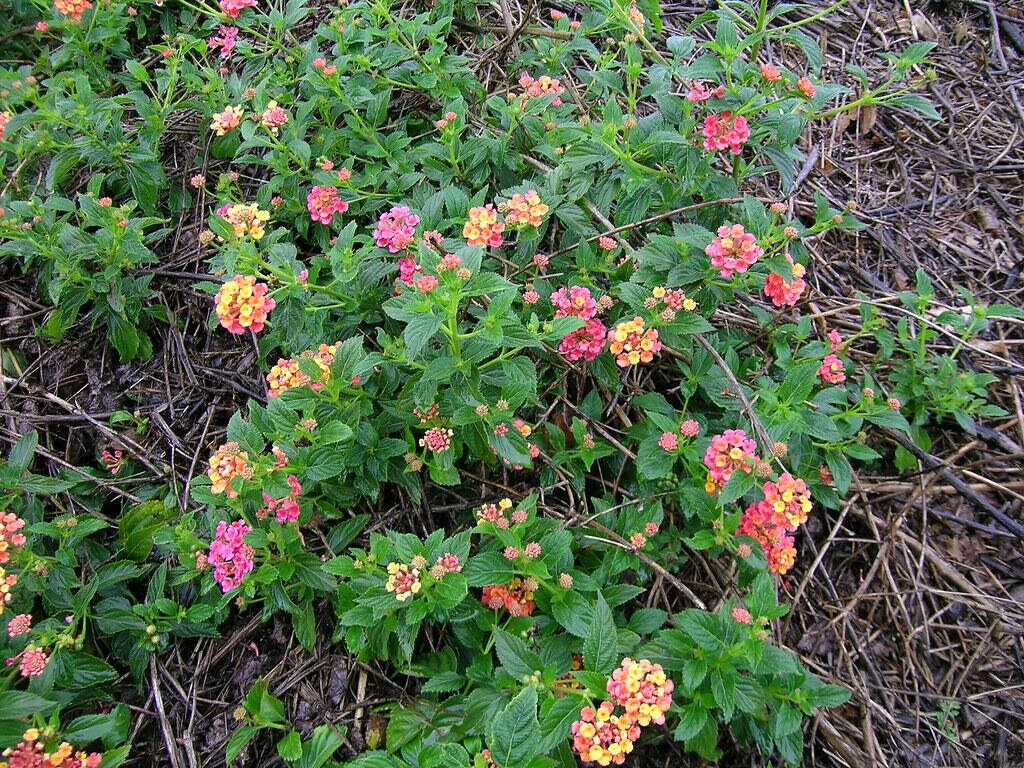
Lantana
It is an invasive species which was introduced in tropical regions as an ornamental plant.
It is generally deleterious to biodiversity.
It is an agricultural weed.
It was recently in news as a special drive to uproot its bushes in the Sajjangarh Wildlife Sanctuary was carried out
It is native to Central and South America.
Sajjangarh Wildlife Sanctuary
Location: Udaipur, Rajasthan
It is a part of Sajjangarh Palace built in 1884.
Flora and Fauna: Animals like chitals, panthers, hares, blue bulls (Nilgais), jackals, wild boars, hyenas, and sambhar.
It is famous for Long-billed vulture, commonly known as the Indian vulture: IUCN Red List Status: Critically Endangered; CITES Status: Appendix II; Wildlife (Protection) Act, 1972 Status: Schedule I
Invasive Species
An invasive species is an organism that is not indigenous, or native, to a particular area and causes harm.
They are capable of causing extinctions of native plants and animals, reducing biodiversity, competing with native organisms for limited resources, and altering habitats.
They can be introduced to an area by ship ballast water, accidental release, and most often, by humans.
Exercise Bongosagar
The second edition of Indian Navy (IN) – Bangladesh Navy (BN) Bilateral Exercise Bongosagar is scheduled to commence in Northern Bay of Bengal on 03 October 2020.
Aim: To develop interoperability and joint operational skills through conduct of a wide spectrum of maritime exercises and operations.
Ships from both navies will participate in surface warfare drills, seamanship evolutions and helicopter operations.
This exercise will be followed by the 3rd edition of IN – BN Coordinated Patrol (CORPAT) wherein IN and BN units will undertake joint patrolling along the International Maritime Boundary Line (IMBL).
Conduct of CORPATs has strengthened understanding between both the navies and instituted measures to stop conduct of unlawful activities.
(MAINS FOCUS)
INTERNATIONAL/ SECURITY
Topic: General Studies 2,3:
India and its neighborhood- relations.
Security challenges and their management in border areas
Context: The India-China standoff in Ladakh persists even after multiple rounds of commander-level talks and two ministerial meetings between the defence and foreign ministers of the two countries.
India-China border Clashes during May – To read more about it, Click here
What exactly is the controversy about Galwan Valley? – Click Here
Factors leading to escalation and strategic implication of dispute – Read here
Do You Know?
In the late 1950s, when China first transgressed into Aksai Chin, the then Chinese premier, Zhou Enlai made a proposal to accept India’s hold over Arunachal Pradesh (then called North East Frontier Agency) in return for Chinese control over Aksai Chin.
This region of Ladakh was critical to China to shield its turbulent periphery of Tibet and Xinjiang
What has prompted China to get aggressive about Aksai Chin in recent months?
Union Home minister stated in Parliament, in September 2019, after changing the status of Ladakh and J&K to Union Territories, “Kashmir is an integral part of India. When I talk about Jammu and Kashmir, Pakistan-occupied Kashmir and Aksai Chin are included in it”
The above statement was viewed by many as India’s intent to recapture Aksai Chin
China strongly questioned this statement and has refused to endorse the new status of Jammu and Kashmir
Internal drivers of Chinese Ladakh Offensive
1. To Increase Military Presence in Tibet
President Xi has made a strong policy move on Tibet, asking for developing a “new socialist Tibet”, where its Buddhism must conform to the “Chinese context”.
This, in Xi’s approach, would be done by taking the Tibetans away from the Dalai Lama, changing their Lamaistic religious and social practices, and integrating them closely and ethnically with mainstream China.
This approach aims to control Tibet in three principal ways.
One, to cut off its external linkages and deflect international pressure on Tibet
Two, change its demographic composition,
Three, institutionalise mass surveillance.
Ladakh offensive will help in increasing military presence in Tibet. The projection of a so-called Indian military threat will help in mobilization of Chinese troops in Tibet & surrounding areas and thus their repression.
The standoff is thus in China’s internal political interests of stability in Tibet
2. Silencing Domestic Critics
Ladakh Standoff has been woven into China’s resurgent territorial nationalism. The local media plays up the idea that India is too weak to stand against China’s might.
Xi is also using the Ladakh standoff in his internal political campaign of silencing critics who are cautioning him against hostility towards India and other neighbours, while the principal challenge is to confront the US.
Conclusion
The internal political dynamics needs be decoupled from the Ladakh standoff through a summit meeting between Modi and Xi.
Context: Speaking at the UN General Assembly, Chinese President Xi Jinping made two promises that came as a welcome surprise to climate change watchers.
What has China announced?
First, Xi said, China would become carbon net-zero by the year 2060.
Also, China now aims to have CO2 emissions peak before 2030 (earlier China had committed to peak by 2030). That means China would not allow its greenhouse gas emissions to grow beyond that point.
What is Net-Zero State?
Net-zero is a state in which a country’s emissions are compensated by absorptions and removal of greenhouse gases from the atmosphere.
Absorption can be increased by creating more carbon sinks such as forests, while removal involves application of technologies such as carbon capture and storage
Why is net-zero an important target?
Scientists and climate change campaign groups say global carbon neutrality (net-zero) by 2050 is the only way to achieve the Paris Agreement target of keeping global temperatures from rising beyond 2°C compared to pre-industrial times.
At the current rate of emissions, the world is headed for a 3° to 4°C rise in temperatures by 2100.
Do You Know?
China is the world’s largest emitter of greenhouse gases. It accounts for almost 30% of global emissions, more than the combined emissions in the United States, the European Union and India, the three next biggest emitters
Currently, just 15 percent of the China’s energy mix is provided by renewables.
How significant is China’s commitment?
Signifies Long Term Commitment: Getting China to commit itself to a net-zero target, even if it is 10 years later than what everyone has in mind, is a big breakthrough, especially since countries have been reluctant to pledge themselves to such long term commitments.
Helps Paris Climate Deal to Succeed: The Chinese goal, if realised, would lower global warming projections for 2100 by about 0.2° to 0.3°C, the most impactful single action ever taken by any country.
What is the Politics behind China announcing such measures?
Environmental Leadership: The announcement gives China an opportunity to show environmental leadership at the same time as the United States retreats from the issue
Image Makeover: The 2060 pledge reflects China’s desire to showcase itself as a “responsible international player” after a storm of negative attention (spats with India over borders, the EU over rights abuses, Australia over security and the US over everything from trade and technology)
Rule Setter: Xi’s pledge plays into his larger agenda of promoting China as a global standard setter. If the global direction of travel is away from coal and towards cheap renewables and green tech, China could put itself at the forefront of a new economic order.
Domestic Political Dividends: Taking coal plants offline, meeting stringent emissions targets and pleasing the population by curbing pollution could also deliver a strategic win to the Chinese Communist Party, which prevents incentive to rebel for Democracy.
Puts Pressure on India: European Union and 70 other countries (that have relatively low emissions) have committed itself to a net-zero emission status by 2050. Leadership by China in Environmental Initiatives puts pressure on other two big emitters – USA and India
What is India’s commitment?
India has resisted pressure to make a long-term commitment, citing the fact that developed countries had utterly failed in keeping their past promises, and never delivered on the commitments they made earlier.
India has also been arguing that the climate change actions it has been taking are, in relative terms, far more robust than those of the developed countries.
If one looks at the pledges that have been made in the Paris Agreement, India is the only G20 country whose actions are on track to meet the 2° goal. The other developed countries actually have to make efforts towards a 1.5° world, but they are failing even to do enough to meet the 2° target
Climate Action Tracker puts India’s actions as “2°C compatible”, while the US, China and even the European Union’s current efforts are classified as “insufficient”
Conclusion
The announcements by China was a great one in the fight against climate change. Now we need commitments to the challenging objective of big emissions reductions over the next decade.