IASbaba's Daily Current Affairs Analysis

Archives
(PRELIMS Focus)
Category: Defence and Security
Context:
- Man Portable Anti-tank Guided Missile (MPATGM) Weapon System, indigenously developed by DRDO has been field evaluated in different flight configurations.

About Man Portable Anti-Tank Guided Missile (MPATGM):
- Development: It is indigenously designed and developed by Defence Research & Development Organisation (DRDO).
-
- Partners: Bharat Dynamics Limited (BDL) and Bharat Electronics Limited (BEL) are the development-cum-production partners (DcPP) for the MPATGM.
- Composition: The system consisted of the MPATGM, Launcher, Target Acquisition System, and the Fire Control Unit.
- Generation: It is the third-generation “fire and forget” missile.
- Operational Range: Its range is minimum of 200m to a maximum of 4 km (varies by source, commonly cited as up to 2.5–4 km).
- Weight: It is extremely lightweight (approx. 14.5 kg) to ensure portability by a single soldier.
- Launch platforms: The missile can be launched from a tripod-mounted system as well as from a military vehicle-based launcher, enhancing its operational flexibility.
- Guidance system: It uses a Miniaturized Imaging Infrared (IIR) Seeker for all-weather, day/night operations.
- Warhead: It is equipped with a Tandem High Explosive Anti-Tank (HEAT) warhead, specifically designed to defeat Explosive Reactive Armour (ERA).
Source:
Category: Economy
Context:
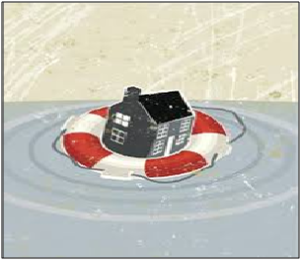
- Having battled natural disasters in recent years, Kerala asked the Union government to consider instituting ‘catastrophe bonds’ as protection against disaster-linked losses.
About Catastrophe Bonds:
-
- Nature: These are insurance-linked securities that transfer the financial risks from natural disasters from the bond issuer to the capital market.
- Significance: These are a unique hybrid insurance-cum-debt financial product that transforms insurance cover into a tradable security.
-
- Risk bearing: At present, the financial risk is fully borne by the State or Central governments. These bonds are sponsored by sovereign governments, who pay premiums.
- Special Purpose Vehicle (SPV): A separate legal entity is typically created to hold the investor’s principal in safe, liquid assets (like U.S. Treasurys) to ensure the funds are immediately available if a disaster strikes.
- Issuing authorities: These are issued through intermediaries, such as the World Bank or Asian Development Bank, to reduce issuance risks.
- Purchasing authorities: These are purchased by global investors, including pension funds, hedge funds, and family offices, who are attracted by high returns and the diversification benefits of non-market correlated risks.
- Coupon rates: The risk level and frequency of disaster occurrence directly influence coupon rates. For instance, earthquake-related bonds often offer lower premiums (1-2%) compared to those covering cyclones or hurricanes.
- Global scene: Mexico and the Philippines have been using CAT bonds to protect themselves against disaster-linked losses.
- Mechanism:
-
-
- Investors buy the bond and receive periodic high-interest payments (coupons).
- If no predefined disaster occurs during the bond’s term (usually 1–3 years), the investor gets their full principal back.
- If a trigger event occurs, the principal is forfeited by the investor and transferred to the sponsor to fund relief and reconstruction.
-
- Relevance for India:
-
- Fiscal Shock Absorber: India’s high vulnerability to climate-induced disasters makes cat bonds a strategic “fiscal buffer” to protect the national budget from sudden shocks.
- Low Insurance Penetration: With less than 10% of India’s disaster-affected population covered by traditional insurance, cat bonds provide a macro-level safety net.
- Regional Leadership: India is exploring a South Asian Cat Bond initiative to pool risks across the subcontinent (e.g., earthquakes in Nepal/Bhutan and cyclones in Bangladesh/Sri Lanka) to lower premium costs for all.
Source:
Category: History and Culture
Context:
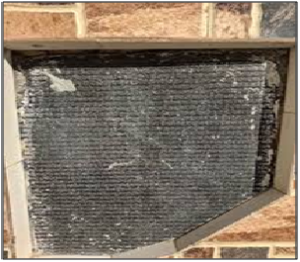
- Epigraphic evidence, including the Bhadrakali Temple inscription, found across Prabhas region, authenticates the historical legacy of Prabhas Patan and the Somnath Temple.
About Bhadrakali Temple Inscription:
-
- Location: It is situated in Prabhas Patan, Gujarat specifically on the wall of the Bhadrakali Temple.
- Carving: It was carved in 1169 CE (Valabhi Samvat 850 and Vikram Samvat 1255).
- Patronage: It is a eulogistic inscription of Param Pashupata Acharya Shriman Bhavabrihaspati, the (spiritual preceptor of Maharajadhiraj Kumarapala of Anhilwad Patan).
- Tradition: It reflects the Shaiva-Pashupata lineage, a dominant religious tradition in early medieval Gujarat.
- Significance: This inscription records the ancient and medieval history of the Somnath Temple. It mentions the construction of Somnath Temple in all four yugas.
- Historical narrative: The inscription uniquely lists the materials used for the Somnath Temple across the four Yugas:
-
- Satya Yuga: Built of Gold by Chandra (Soma).
- Treta Yuga: Built of Silver by Ravana.
- Dvapara Yuga: Built of Wood by Shri Krishna.
- Kali Yuga: Built of Stone by King Bhimdev Solanki (and later renovated by Kumarapala)
- Associated rulers: The historic Bhadrakali inscription reflects the devotion of the Solanki rulers and scholars like Bhavabrihaspati.
- Protection: It is protected by State Department of Archaeology, Gujarat.
Source:
Category: Environment and Ecology
Context:
- The Central Empowered Committee recommended that the Ecologically Sensitive Zone around Bannerghatta National Park should be restored to its original 2016 extent.
About Bannerghatta National Park:
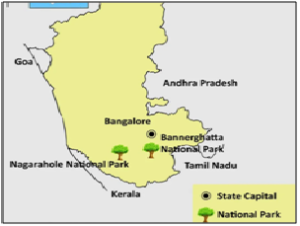
- Location: It is located in the hills of the Anekal range, near Bangalore, Karnataka.
-
- Establishment: It was declared a National Park in 1974. In 2006, India’s first butterfly enclosure was inaugurated at the park.
- Area: It covers an area of approximately 260.51 sq km.
- Connectivity: It forms a vital elephant corridor linking the Biligirirangana Hills and Sathyamangalam forests.
- River: The Suvarnamukhi stream, the main source of water for the animals in the park, runs through the centre of the park.
- Vegetation: There are three types of vegetation that can be found here: Dry Deciduous Scrub Forests, Southern Tropical Dry Deciduous Forests and Southern Tropical Moist Mixed Forests.
- Flora: These include Narcissus latifolia, Schleichera oleosa, Sandalwood, Neem, Tamarind, Bamboo, Eucalyptus, etc.
- Fauna: Prime habitat for several species, including the endangered Asian Elephant, Indian gaur, Tiger, Sambar deer, Spotted deer,Leopard, Wild dog, Wild pig, Sloth bear etc. are found here.
Source:
Category: International Organisations
Context:
- India is expected to grow by 7.4 per cent in the current financial year, driven by consumption and public investment, the UNDESA said in a report.

About UNDESA:
-
- Full form: It stands for United Nations Department of Economic and Social Affairs.
- Nature: Rooted in the United Nations Charter and guided by the transformative 2030 Agenda for Sustainable Development, the UNDESA upholds the development pillar of the United Nations.
- Objective: Its Divisions and Offices work together towards a common goal to promote the social, economic, and environmental dimensions of sustainable development.
- Establishment: It was originally founded in 1948 and restructured in 1997.
- Headquarters: It is based at UN Headquarters in New York, United States.
- Mandate:
- UN DESA’s work programme can be categorized into three areas: norm-setting, analysis, and capacity-building.
-
-
- Its work addresses a range of cross-cutting issues that affect peoples’ lives and livelihoods. From poverty reduction to governance to finance to the environment, UNDESA’s work is about human progress for all, especially the most vulnerable.
-
- Focus areas:
-
-
- To facilitate the negotiations of Members States in many intergovernmental bodies to address ongoing or emerging global challenges;
- To provide substantive support to intergovernmental processes on development issues in the General Assembly and the Economic and Social Council;
- To advise interested Governments on the ways and means of translating policy frameworks developed in the UN conferences and summits into programmes at the country level;
- To collaborate closely with its partners at regional and country levels in helping countries to formulate and implement development strategies;
- To compiles, generate, and analyse a wide range of economic, social, and environmental data and information on which member states of the United Nations draw.
- Reports Published:
-
- World Economic Situation and Prospects Report
- World Social Report
- Sustainable Development Goals Report.
Source:
(MAINS Focus)
GS-III: Science and Technology—developments and their applications and effects in everyday life; Environmental pollution and degradation; conservation.
Context (Introduction)
Artificial Intelligence (AI) is rapidly transforming sectors ranging from healthcare and agriculture to governance and finance. However, as highlighted in the article, the environmental costs of developing and deploying AI systems have received far less policy attention. With India positioning itself as a global AI hub, ignoring these impacts risks undermining climate and sustainability goals.
Core Idea
AI is not environmentally neutral. The development, training, and deployment of large AI models impose significant energy, water, and carbon costs, necessitating a policy framework that integrates AI governance with environmental regulation and sustainability metrics.
Environmental Impact of AI
- Carbon footprint
- Training a single Large Language Model (LLM) can generate ~3,00,000 kg of CO₂ emissions
- Another study estimates ~6,26,000 pounds of CO₂ for training one large model
- Comparable to the lifetime emissions of multiple cars
- Energy consumption
- According to UNEP (2024), a single query on ChatGPT consumes ~10 times more energy than a Google search
- Global ICT sector contributes 1.8%–2.8% of global GHG emissions (some estimates up to 3.9%)
- Water stress
- AI servers may consume 4.2–6.6 billion cubic metres of water by 2027, aggravating water scarcity
- Data centres rely heavily on freshwater for cooling
Global Regulatory Responses
- UNESCO (2021): Recommendation on the Ethics of Artificial Intelligence — recognises AI’s negative impacts on environment and society
- European Union:
- AI Environmental Impacts Act, 2024
- Harmonised AI rules linking technology governance with sustainability
- Corporate Sustainability Reporting Directive (CSRD) mandates disclosure of emissions from data centres and high-compute activities
- United States & EU emerging as leaders in AI sustainability regulation
India’s Policy Gaps and Challenges
- Data deficit: No standardised, verifiable data on AI-specific carbon, energy, and water footprints
- Regulatory blind spot: Environmental Impact Assessment (EIA) framework focuses on physical infrastructure, not digital or algorithmic projects
- Narrative imbalance: Policy discourse emphasises AI for climate solutions, but not climate costs of AI
- Lack of disclosure norms: AI environmental impacts are not part of ESG reporting standards in India
Way Forward
- Develop measurement standards for AI energy, water, and GHG footprints
- Extend EIA Notification, 2006 to assess large-scale AI model development and data centres
- Mandate AI-specific environmental disclosures under ESG norms (SEBI, MCA)
- Incentivise green AI practices:
- Pre-trained models
- Renewable-powered data centres
- Efficient algorithms
- Promote multi-stakeholder governance involving industry, think tanks, and civil society
Conclusion
As India accelerates AI adoption, environmental sustainability must become a core pillar of AI governance. Measuring, regulating, and disclosing AI’s ecological footprint is essential to ensure that technological progress does not come at the cost of climate stability and resource security. Responsible AI is not only ethical—it is environmentally imperative.
Mains Question
- The rapid expansion of artificial intelligence (AI) systems has created a new category of environmental externalities linked to energy use, water consumption and carbon emissions. Critically analyse the environmental footprint of AI across its life cycle and examine the policy, regulatory and technological measures India must adopt to align AI-led growth with its climate and sustainability commitments. (250 words, 15 marks)
GS-II: Effect of policies and politics of developed and developing countries on India’s interests; India and its bilateral, regional and global groupings and agreements involving India.
Context (Introduction)
The global order is witnessing heightened volatility due to renewed U.S. unilateralism, an assertive China, and prolonged instability in Europe following the Russia–Ukraine war. Against this backdrop, India and Germany are recalibrating their bilateral engagement to shape a broader Indo-Europe strategic framework, aimed at enhancing stability, diversification, and resilience in global geopolitics.
Core Idea
The article argues that India–Germany relations are no longer merely bilateral, but central to constructing an Indo-Europe strategic geography that links India’s scale, demography, and market depth with Europe’s industrial strength, technological sophistication, and regulatory capacity—thereby hedging against over-dependence on any single great power.
Key Drivers of India–Germany Convergence
- European strategic rethinking:
Europe is reassessing long-term dependencies on:- Russian energy
- Chinese supply chains
- American security guarantees
- Germany’s defence transformation:
- Emergence as the world’s third-largest defence spender
- Planned defence expenditure of 3.5% of GDP
- Annual military spending may reach $200 billion by end of the decade
- First time since WWII that Germany’s military capacity could translate into sustained strategic power
- India’s strategic recalibration:
- Hedging against China’s assertiveness
- Moving beyond reliance on Russia and China
- Deepening engagement with Germany and the EU to stabilise Eurasia
Why the Indo-Europe Idea Matters
- Complementary strengths:
- India: Demography, market scale, Indo-Pacific centrality
- Europe/Germany: Industry, technology, capital, regulation
- Not an alliance, but a geometry:
- Indo-Europe does not replace NATO or the Quad
- Acts as a supplementary strategic pillar balancing Eurasian power shifts
- Bridging regions:
Initiatives such as:- India–Middle East–Europe Economic Corridor (IMEC)
- Cooperation on critical minerals
- Green hydrogen
- Maritime awareness in the western Indian Ocean
Important Historical & Strategic Anchors
- Deep historical links:
- Indo-German interactions during World War I
- Shared legacy of seeking strategic autonomy under great-power dominance
- Leadership signalling:
- Chancellor Friedrich Merz’s India visit
- Modi–Merz agreement on defence industrial cooperation
- Revival of momentum after years of relative stagnation
Challenges Ahead
- Implementation gap: Translating agreements into tangible defence, trade, and technology outcomes
- European coherence: Indo-Europe’s success depends on wider EU buy-in, not Germany alone
- Managing U.S. factor: Both India and Europe still see the U.S. as indispensable, but seek greater burden-sharing
Way Forward
- Accelerate defence co-development and co-production
- Institutionalise India–EU strategic consultations
- Align Indo-Pacific and European security perspectives
- Leverage economic corridors and clean-energy partnerships
- Ensure Indo-Europe complements, rather than competes with, existing multilateral frameworks
Conclusion
In an era of geopolitical churn, India and Germany are moving beyond episodic cooperation toward strategic co-construction. The Indo-Europe idea reflects a pragmatic response to uncertainty—anchored not in alliances, but in diversification, resilience, and shared responsibility. If effectively implemented, it can become a stabilising pillar in an increasingly fragmented global order.
Mains Question
- The evolving India–Germany partnership reflects a broader attempt to construct an “Indo-Europe” strategic geography amid global geopolitical volatility. Critically examine the drivers and strategic significance of the Indo-Europe idea, and assess its implications for India’s pursuit of strategic autonomy in a multipolar world. (250 words, 15 marks)