
IASbaba's Daily Current Affairs Analysis

Archives
(PRELIMS Focus)
Category: Environment and Ecology
Context:
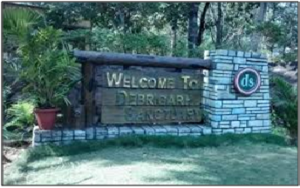
- The Debrigarh Wildlife Sanctuary is set to host the second edition of the two-day ‘Indian Bison Fest’.
About Debrigarh Wildlife Sanctuary:
-
- Location: It is situated in the Bargarh district of Odisha.
- Other names: It is also known as the “Land of Bisons” due to its significant population of Indian Gaur.
- Lifeline: It is bounded on the east and north by the Hirakud Reservoir (Mahanadi River), the world’s longest earthen dam.
- Terrain: It is characterised as an amphi-terrestrial habitat, an integrated landscape of forests, grasslands, and wetlands.
-
- Status: It was declared a wildlife sanctuary in 1985. It is also a designated Eco-Sensitive Zone (ESZ).
- Historical significance: It finds a special mention because of noted freedom fighter Veer Surendra Sai. During his rebellion against the British, his base at Barapathara was located within the sanctuary.
- Vegetation: Most of the plant sanctuary is covered with mixed and dry deciduous forest.
-
- Flora: Major trees found here are Sal, Asana, Bija, Aanla, Dhaura, etc.
- Fauna: These include Indian leopards, sloth bears, chousingha (four-horned antelope), sambar deer, gaurs (Indian bison), wild boars, and Indian wild dogs (dholes) are among the notable animal residents.
- Birds: It is one of the most flocked wintering grounds of migratory birds that visit the sanctuary from far-off places. Some of the most prominent among them are the crested serpent eagle, Flower Peckers, red-vented bulbul, tree pie, drongo, and white eye oriental.
- Eco-Tourism: It is managed through a community-driven model involving local Gond tribal women, providing sustainable livelihoods through safaris and eco-cottages
Source:
Category: Government Schemes
Context:
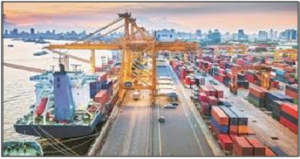
- Recently, CBIC has issued detailed eligibility conditions, application process and operational guidelines for the Eligible Manufacturer Importers (EMIs) scheme.
About Eligible Manufacturer Importers (EMIs) Scheme:
-
- Nature: It is designed as a trust-based facilitation measure, encouraging compliant manufacturers to benefit from simplified procedures.
- Objective: Under this initiative, Eligible Manufacturer Importers (EMI) will be able to clear imported goods without paying Customs duty at the time of clearance.
- Duration: EMI facility will be available from 1st April, 2026 and will remain in force till 31st March, 2028.
-
- Deferred payment facility: Approved EMIs can clear imported goods from ports without immediate payment of Customs duty.
- Monthly cycle: Instead of transaction-based payments, duties are paid on a monthly basis as per the Deferred Payment of Import Duty Rules, 2016.
-
- Liquidity boost: The primary goal is to improve cash flow and working capital for manufacturers, allowing them to reinvest funds into production instead of tying them up in upfront taxes.
- Trust-based model: It operates on a “trust-but-verify” principle, rewarding highly compliant businesses with simplified procedures.
- Significance: It is expected to improve ease of doing business, strengthen compliance culture, and boost domestic manufacturing.
- Eligibility criteria:
-
- Manufacturing Status: Must be a registered manufacturer under the CGST Act or an importer sending goods to a job worker.
- Track record: Must have a clean record of Customs and GST compliance, sound financial standing, and a minimum turnover.
- Customs footprint: A minimum requirement of filing at least 25 EXIM documents (Bills of Entry/Shipping Bills) in the preceding financial year.
- AEO framework: Existing Authorised Economic Operator (AEO-T1) entities, including MSMEs, are eligible to apply. Participants are expected to eventually upgrade to AEO-T2 or AEO-T3 status.
Source:
Category: Science and Technology
Context:
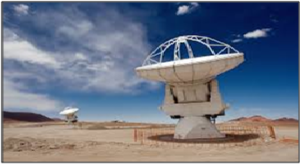
- Recently, astronomers have captured the central region of our Milky Way in unprecedented detail with the help of the ALMA telescope.
About ALMA Telescope:
- Full form: ALMA stands for Atacama Large Millimeter/submillimeter Array.
-
- Location: It is a radio telescope located in the Atacama Desert in Chile.
- Objective: It is a state-of-the-art radio-telescope that studies celestial objects at millimetre and submillimetre wavelengths.
- Development: It was designed, planned and constructed by the US’s National Radio Astronomy Observatory (NRAO), the National Astronomical Observatory of Japan (NAOJ) and the European Southern Observatory (ESO).
- Launch: It has been fully functional since 2013.
-
- Expanse: It consists of 66 high-precision antennas, spread over a distance of up to 16 km in the Atacama Desert of northern Chile. These antennas can be moved closer together or farther apart for different perspectives – like the zoom lens of a camera.
- Sensitivity: It also has extraordinary sensitivity, which allows it to detect even extremely faint radio signals.
- Why Atacama Desert:
- Low Humidity: Millimetre waves are highly susceptible to absorption by atmospheric water vapour. The Atacama is the driest place on Earth, minimizing signal loss.
- High Altitude: At 5,000+ metres, the atmosphere is thin, providing a clearer “window” to the universe.
-
- International Partnership: ALMA is not an Indian project; it is a global collaboration involving:
- Europe: European Southern Observatory (ESO).
- North America: U.S. National Science Foundation (NSF) and National Research Council of Canada.
- East Asia: National Institutes of Natural Sciences (NINS) of Japan, South Korea, and Taiwan.
- Host Country: Republic of Chile
- Major discoveries:
-
- Black Hole Imaging: Part of the Event Horizon Telescope (EHT) project that captured the first image of the supermassive black hole (Sagittarius A*) at the center of the Milky Way.
- Protoplanetary Disks: Captured detailed images of the disk around the star HL Tauri, revolutionizing theories on how planets form.
- Einstein Ring: Observed the bending of light from distant galaxies in unprecedented detail.
Source:
Category: Polity and Governance
Context:
- Recently, the 25th Foundation Day of the Bureau of Energy Efficiency (BEE), Ministry of Power, Government of India, was celebrated in New Delhi.
About Bureau of Energy Efficiency (BEE):
- Nature: It is a statutory body which was established in 2002 under the provisions of the Energy Conservation Act, 2001.
- Objective: The primary objective of BEE is to reduce energy intensity in the Indian economy.
- Nodal ministry: It comes under Ministry of Power.
-
- Coordination: It coordinates with designated consumers, designated agencies and other organizations; recognizes, identifies and utilizes the existing resources and infrastructure, in performing the functions assigned to it under the Energy Conservation Act.
- Indian Carbon Market (ICM): BEE is the lead implementing agency for the Carbon Credit Trading Scheme (CCTS). In early 2026, BEE launched 12 offset methodologies to streamline carbon credit projects across energy, waste, and transport sectors.
- Regulatory functions:
- Develop minimum energy performance standards for equipment and appliances under Standards and Labelling
-
-
- Develop minimum energy performance standards for Commercial Buildings
-
- Develop Energy Consumption Norms for Designated Consumers
- Schemes of Bureau of Energy Efficiency: These include National Mission for Enhanced Energy Efficiency (NMEEE), Energy Conservation Building Code (ECBC), Standards and Labeling Scheme, Municipal Demand Side Management (MuDSM) Scheme, Agricultural Demand Side Management (AgDSM) Scheme.
Source:
Category: Geography
Context:
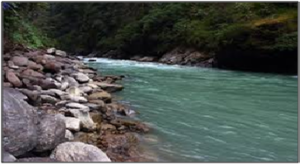
- Over the past 200 years, the Kosi River has shifted its path westward by over 100 kilometres.
About Kosi River:
-
- Nature: It is a transboundary river which flows through China, Nepal, and India. It is a prominent tributary of the Ganges.
- Tributaries: It is known as “Saptakoshi” in Nepal because it eventually comprises seven upper tributaries: Sun Kosi, Tama Kosi, Dudh Koshi, Indravati, Likhu, Arun, and Tamur.
- Other names: People often call it the “Sorrow of Bihar” because of the big floods it can cause, especially in the Indian state of Bihar.
- Course: The river Kosi is formed by the confluence of three streams, namely the Sun Kosi, the Arun Kosi, and the Tamur Kosi. About 48 km north of the Indian-Nepalese frontier, the Kosi is joined by several major tributaries and breaks southward through the Siwalik Hills at the narrow Chatra Gorge.
- Confluence: It enters India near Hanuman Nagar (Bihar) and joins the Ganges near Kursela in the Katihar district.
- Area: The Kosi drains an area of 74,500 sq.km, of which only 11,070 sq.km lie within Indian Territory.
- Major crop: Corn (maize) is extensively cultivated on the sandy soils of the Kosi’s basin.
- Shifting course: Over the last 250 years, the Kosi has shifted its course over 100 kilometres from East to West and the unstable nature of the river is attributed to the heavy silt it carries during the monsoon season.
- Sediment load: It carries one of the highest sediment loads in the world (second only to the Brahmaputra in India), leading to riverbed aggradation and frequent breaches of embankments.
- Kosi megafan: It has built one of the world’s largest alluvial fans (mega-fan) in North Bihar.
Source:
(MAINS Focus)
UPSC Mains GS Paper-II (International Relations) covering global conflicts, West Asia geopolitics, India’s foreign policy, energy security, and international law
Introduction
West Asia is experiencing one of its most perilous military and diplomatic confrontations since World War II, marked by the U.S.–Israel offensive against Iran. Instead of stalling violence or preserving diplomatic channels, the conflict underscores deeper strategic ambitions—threatening regional stability, international norms, and global economic security.
Key Questions Explored
- What are the strategic motives of the U.S. and Israel?
- How has war escalated from tactical strikes to potential regional restructuring?
- What are the implications for international law, global energy security, and strategic balance?
Background & Escalation of Conflict
Breakdown of Diplomacy
- Pre-war talks with Oman suggested possible de-escalation, with Iran committing to not pursue nuclear weapons. Yet within 24 hours, U.S. and Israel launched strikes, killing Iranian leadership.
- This sequence suggests force replaced diplomacy, despite renewed negotiation attempts.
Diplomatic deterioration was rapid, highlighting:
- Collapse of nuclear diplomacy reminiscent of the 2015 JCPOA breakdown.
- Shift from engagement to preemption and coercive strategy.
Shift from Tactical War to Strategic Power Play
The response from Tehran—striking U.S. bases across the Persian Gulf and expanding the conflict beyond Israel—points to war’s regionalisation. Iran also announced potential closure of the Strait of Hormuz, through which ~30% of global oil supply flows.
Strategic Motives of U.S.–Israel Bloc
Israel’s Security and Hegemonic Aspirations
- Tehran’s missile capabilities and support to militias have long been perceived as existential threats by Israel.
- Netanyahu opposed the 2015 nuclear deal because it did nothing to constrain Iran’s conventional military strength.
Strategic logic:
- Iran is the last major revisionist regional power not aligned with U.S.–Israel interests. Its removal could pave the way for a unipolar West Asia dominated by U.S.–Israel structures.
Decapitation and Regime Change Strategy
- The strikes primarily targeted leadership (“decapitation strategy”) to induce regime collapse.
- However, Iran’s geographical depth (~70 times larger than Israel) and asymmetric defense capabilities make swift regime change unlikely.
Risks of this strategy:
- Assassination does not guarantee political collapse but can fuel resistance and wider war.
- Iran’s retaliation shows that leadership targeting can escalate rather than end conflict.
Broader Strategic & Geopolitical Implications
- Regional Destabilisation
- The conflict now involves missile strikes on U.S. assets across the Gulf and threatens to pull Gulf states into broader warfare.
- Possibility of cross-Gulf confrontations increases instability and could involve other actors like Iraq, Syria, and broader Middle Eastern militia networks.
- Global Economic and Energy Impact
- Closure or disruption of the Strait of Hormuz threatens global energy security, directly impacting prices and global markets.
- India, China, Japan, and Europe depend on oil shipments through this chokepoint—making the conflict economically consequential worldwide.
Erosion of International Norms
The use of force without clear UN Security Council backing and amid active negotiations raises serious international law concerns, specifically:
- Violation of Article 2(4) of the UN Charter (prohibition on use of force).
- Ambiguous self-defense arguments under Article 51.
Implication: Military action, employed in lieu of diplomacy, weakens global conflict-resolution norms.
Why Unipolar West Asia? (Geopolitical Theory)
The concept ties into hegemonic stability theory, which argues that a dominant power or bloc can enforce order—but often at the cost of marginalising other actors and provoking counter-hegemonic resistance.
In this case:
- A hegemonic West Asia would centre on U.S.–Israel norms and control.
- But deep resistance (Iran’s retaliation, proxy networks across the region) questions whether unipolarity can be established sustainably.
Proxy Networks & Asymmetric Warfare
Iran’s influence through militias across Lebanon (Hezbollah), Gaza (Hamas), and Yemen (Houthis) acts as a strategic deterrent and complicates isolation.
Strategic Realignment
Potential alliances could deepen between Iran and powers like China or Russia, further polarising global strategic competition.
Conclusion
The conflict between Israel, the U.S., and Iran transcends simple military objectives. It reflects a broader geopolitical struggle over strategic hegemony in West Asia, with efforts to reorder power structures in favour of a unipolar regional architecture. However:
- Regime change through force is not assured,
- Regional escalation risks widespread instability,
- International law and norms are undermined,
- Global economic systems, especially energy security, are at risk.
For India and global actors, the crisis necessitates calibrated diplomatic engagement that balances geopolitical interests, legal principles, and economic stability.
Mains Examination Question
-
- The ongoing conflict in West Asia is no longer a mere bilateral dispute but a structural war aimed at reshaping the regional order. Critically analyze the objectives of the U.S.-Israeli alliance against Iran and its implications for India’s energy security and strategic autonomy.
GS Paper II (Polity, Governance & Social Justice) covering education policy, constitutional equality, anti-discrimination, equity mechanisms, and vulnerable sections protection.
Introduction
In early January 2026, the University Grants Commission (UGC) notified the University Grants Commission (Promotion of Equity in Higher Education Institutions) Regulations, 2026, through which it sought to overhaul the existing anti-discrimination framework in universities and colleges across India. Intended to more effectively prevent caste-based discrimination and promote equity in higher education, these transformed regulatory norms have instead unleashed a major public debate on social justice, constitutional equality and policy design in Indian academia.
The controversy highlights deep faultlines in the interpretation and practice of social justice, constitutional morality, and procedural fairness within public policy. As protests, political reactions and even judicial scrutiny mount, the UGC reform conversation has become a litmus test for India’s contemporary approach to identity, rights and governance.
Background: Why UGC Reforms Matter
Historical Context
- The UGC first introduced equity-related norms in 2012 as guidelines for handling caste discrimination on campus, following tragic cases such as those of Rohith Vemula and Payal Tadvi, which exposed systemic gaps in grievance redressal.
- However, the older framework was non-binding, lacked enforceable timelines and did not include all marginalised groups under its ambit. This led to repeated criticism by students, academics and courts.
Demand for Stronger Measures
- Rising reported cases of discrimination — rising from 173 (2019–20) to 378 (2023–24), according to UGC data — pushed for a more robust, enforceable policy.
- Supreme Court interventions also nudged the UGC to formalise a statutory framework with clear mechanisms for prevention, redress and accountability.
Key Features of the UGC (Promotion of Equity) Regulations, 2026
The new regulations represent a significant departure from the 2012 version. Their core elements include:
Institutional Mechanisms
- Mandatory Equal Opportunity Centres (EOCs) and Equity Committees in all universities and colleges to prevent discrimination.
- Appointment of dedicated Equity Officers to oversee implementation and grievance redress.
- Time-bound procedures for handling complaints (e.g., fixed timelines).
Broad Coverage
- Discrimination defined across caste, religion, gender and disability dimensions, aiming to cover multiple forms of exclusion on campus.
- Expanded monitoring and reporting architecture, including annual institutional compliance reports to the UGC.
Enforcement and Penalties
- Penalties for non-compliant institutions could include withdrawal of grants, prohibition on offering degrees, or derecognition.
- Intended to move the system from discretionary to enforceable justice.
Core Controversies & Faultlines
The UGC reform has triggered nationwide debate with multiple faultlines:
- Perceived Reverse Discrimination
A major flashpoint is the regulations’ definition of caste-based discrimination as acts only against members of Scheduled Castes (SCs), Scheduled Tribes (STs) and Other Backward Classes (OBCs). Critics argue this leaves General Category students with no equivalent redressal avenue, resulting in possible reverse discrimination or unequal protection under law.
Some student groups and commentators have labelled the reforms as biased and potentially weaponisable — allowing lodging of complaints without adequate safeguards for false or malicious allegations.
- Legal and Constitutional Concerns
Soon after notification, multiple petitions were filed in the Supreme Court of India challenging the regulations’ constitutionality.
In late January 2026, the Supreme Court issued an interim stay on implementation, indicating concerns about vague provisions and the risk of misuse, especially where definitions and enforcement mechanisms lack clarity.
The Court’s remarks underscored that a policy aimed at promoting social justice must also uphold constitutional equality (Article 14) and avoid inadvertent segregation or discrimination in the name of equity.
- Campus Atmosphere & Autonomy
Another criticism focuses on the burden on institutions — both administrative and cultural — and implications for academic autonomy.
- Institutions fear becoming prosecutorial bodies rather than teaching and research spaces.
- Broad and ambiguous terms like “implicit discrimination” could lead to misinterpretation and campus distrust.
Some academics and student bodies argue that reforms were rushed without adequate stakeholder consultation, revealing a disconnect between policymaking and ground reality.
- Politics of Social Justice
Political reactions have been deeply divided:
- Some regional political leaders condemned opposition to equity committees as stemming from casteist mindsets.
- Others defended the need for inclusive mechanisms, cautioning against fear-mongering.
The debate illustrates how education policy interacts with broader issues of identity politics, equity and public perception in India.
Balance Between Equity & Equality
The UGC reform debate epitomises a central policy dilemma in Indian social justice: ensuring protection for historically marginalised groups while simultaneously upholding the constitutional ideal that all citizens are equal before law.
Sustainable Implementation
Effective anti-discrimination mechanisms require not just legal frameworks but institutional capacity, sensitisation training, due process safeguards and procedural clarity.
Conclusion
The UGC (Promotion of Equity in Higher Education Institutions) Regulations, 2026 stand at the intersection of education reform, social justice and constitutional governance. While the intent to tackle discrimination is commendable, the controversy highlights critical challenges around definition, fairness, procedural safeguards, institutional autonomy, and equal protection under law.
The Supreme Court’s stay and sustained public debate signal the need for nuanced legal design — one that preserves the spirit of social justice without undermining the rule of law, due process and inclusivity for all students.
UPSC Mains Question (250 words)
“In the context of the UGC (Promotion of Equity in Higher Education Institutions) Regulations, 2026, critically examine how policies aimed at promoting social justice can reconcile affirmative action with constitutional principles of equality and procedural fairness.”