IASbaba's Daily Current Affairs Analysis

Archives
(PRELIMS Focus)
Devon Island
Category: Geography
Context:
- NASA uses Devon Island to study Mars, primarily because it’s barren and its freezing, polar desert conditions allow researchers to test next-generation rovers.
About Devon Island:
-
- Location: It is located in the Canadian arctic archipelago, within the zone classified as the High Arctic.
- Size: It is approximately 55,000 sq. km in area, making it the 27th largest island in the world.
- Uniqueness: It is the world’s largest uninhabited island.
-
- Boundaries: The Ellesmere Island lies to the north of Devon Island and the Baffin Bay lies to its east.
- Climate: The short growing season of only about 40 to 55 days and the low temperatures (2° to 8°C in summer) discourage the growth of plants here. Winters are extremely harsh with temperatures being as low as −50 °C.
- Limited solar energy: The limited solar energy input is also one of the factors influencing the existence of life on this island. Little precipitation is also received on Devon Island.
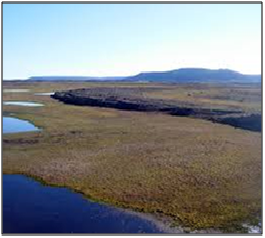
- Landscape: The “out-of-the-world-like” landscape here is cold, dry, and rocky. Snow and ice blanket the island’s ice cap for the entire year.
- Crater: It is home to a 14-mile-wide Haughton Crater. It was formed when a meteorite struck millions of years ago, leaving behind terrain that resembles the surface of Mars.
- Significance: Astronauts preparing for Mars missions do pay occasional visits to Devon Island to get used to extraterrestrial conditions. NASA uses Devon Island to study Mars, primarily because it’s barren, and its freezing, polar desert conditions allow researchers to test next-generation rovers.
- Astrobiology: Researchers study endolithic colonisation (microorganisms living inside rocks) in the crater to understand how life might survive in extreme extraterrestrial conditions.
Source:
National Leprosy Eradication Programme
Category: Government Schemes
Context:
- The Union Minister of State for Health and Family Welfare recently informed the Rajya Sabha about the National Leprosy Eradication Programme.
About National Leprosy Eradication Programme:
-
- Nature: It is a centrally sponsored scheme under the overarching umbrella of National Health Mission (NHM).
- Aim: The primary aim is controlling leprosy through early detection and treatment.
-
- Goal: Its goal is to make India leprosy-free by interrupting transmission, eliminating stigma, and ensuring dignified care for all affected individuals.
- Objectives:
-
-
- To reduce prevalence rate less than 1/10,000 population at sub national and district level.
- To reduce Grade II disability % < 1 among new cases at National level.
- To reduce Grade II disability cases < 1 case per million populations at National level.
- Zero disabilities among new Child cases.
- Zero stigma and discrimination against persons affected by leprosy.
-
- Notifiable Disease: Leprosy became a mandatory notifiable disease in 2025 for all health sectors.
- Services offered: The programme offers free-of-cost services for prevention, diagnosis, treatment, and rehabilitation of leprosy through all public health facilities across India.
- Technical and financial support: It provides both technical and financial support to all States and Union Territories for implementation of activities related to prevention, early detection, case confirmation, treatment, disability prevention, and post-treatment care.
- Convergence: It also facilitates convergence with other national health programmes and deploys digital platforms such as Nikusth 2.0 for surveillance and reporting.
- Alignment: The programme is aligned with the Sustainable Development Goals (SDGs) and the WHO Global Leprosy Strategy. WHO Global Leprosy Strategy aims to achieve zero transmission, zero disability, and zero discrimination by 2027.
Source:
Central Industrial Security Force (CISF)
Category: Defence and Security
Context:
- India marked the Raising Day of the CISF on March 10, recognising the vital role the force plays in protecting the country’s important infrastructure and industrial assets.
About Central Industrial Security Force (CISF):
- Nodal ministry: It is a Central Armed Police Force (CAPF) in India operating under the Ministry of Home Affairs.
-
- Mandate: It provides security to various critical infrastructures, including 70 airports and 361 important national installations.
- Headquarters: Its headquarters is located in New Delhi.
- Motto: Its motto is “Protection and Security”.
-
- Origin: The idea of forming a specialised industrial security force gained urgency after the Indo-Pakistani War of 1965, which exposed the vulnerability of vital economic assets during wartime.
- Establishment: The CISF came into existence in 1969 through the CISF Act 1968 with a sanctioned strength of only three battalions. The original charter of CISF was to provide integrated security cover to certain sensitive public sector undertakings.
- Amendment: The Act was amended in 1983, declaring the CISF as an Armed Force of the Union.
- Size: The force has since grown into a premier multi-skilled organization with a present strength of more than 188,000 personnel.
-
- Organisation Structure: CISF is headed by an Indian Police Service officer with the rank of Director-General, assisted by an IPS officer in the rank of Addl. Director-General. The force is divided into seven sectors (Airport, North, North-East, East, West, South, and Training) and also has a Fire Service Wing.
- Compensatory cost force: It is a compensatory cost force, which means that it bills its clients for the services it provides.
-
- Uniqueness: The CISF is the only CAPF with a daily public interface – in the airports, in the Delhi Metro, and in the iconic monuments.
- Key functions:
-
- The CISF security umbrella includes India’s most critical infrastructure facilities, like nuclear installations, space establishments, airports, seaports, power plants, etc.
- In addition, the CISF also protects important government buildings, iconic heritage monuments, Delhi Metro, Parliament House Complex, and Central Jails of Jammu and Kashmir.
- CISF personnel are trained in disaster management techniques, enabling them to actively respond to natural disasters like earthquakes, floods, and cyclones.
- CISF is one of the largest Fire Protection Service providers in the country. CISF is the only force with a customized and dedicated fire wing.
Source:
Sharavathi Lion-Tailed Macaque Sanctuary
Category: Environment and Ecology
Context:
- Recently, Karnataka High Court directed the state government that no activities on the ground should be carried out within the Sharavathi Lion-Tailed Macaque Sanctuary.
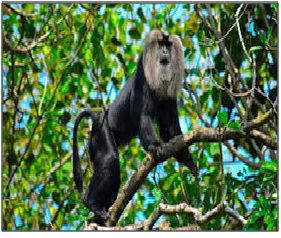
About Sharavathi Lion-Tailed Macaque Sanctuary:
- Location: It is located in the Sharavathi River Valley within the Shivamogga and Uttara Kannada districts of Karnataka.
- Uniqueness: It is part of the Western Ghats, a UNESCO World Heritage Site.
-
- Formation: It was created in 2019 by merging the Sharavathi Valley Wildlife Sanctuary, Aghanashini LTM Conservation Reserve, and adjacent reserve forest blocks.
- Key Water Bodies: It includes the Linganamakki Reservoir and the world-famous Jog Falls.
- Terrain: The overall terrain of the sanctuary is highly undulating, with altitude ranging from 94 m to 1102 m.
- Vegetation: It mainly consists of tropical evergreen to semi-evergreen types of forests, moist deciduous forests, and grasslands and savanna.
- Flora: The sanctuary is immensely rich in species like Dhoopa, Gulmavu, Surahonne, Mavu, Nandi, etc.
- Fauna: It is home to the endangered lion-tailed macaque, tiger, leopard, wild dog, jackal, sloth bear, spotted deer, sambar, barking deer, mouse deer etc.
- Unique Ecosystems: It is home to rare Myristica Swamps, which are freshwater swamp forests that host specialized flora and fauna.
Source:
Savitribai Phule
Category: History and Culture
Context:
- Union Home Minister paid tribute to Savitribai Phule on her death anniversary, recognizing her pioneering role in promoting women’s education and social equality.
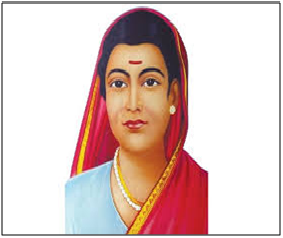
About Savitribai Phule:
- Pioneer: Savitribai Phule (1831–1897) was a pioneering Indian social reformer, educator, poet, and women’s rights activist from Maharashtra.
- Uniqueness: She is widely regarded as India’s first female teacher and a leading figure of the social reform movement against caste and gender discrimination during the 19th century.
- Birth: Savitribai Phule was born on 3 January 1831 in Naigaon, Satara district (Maharashtra) to Khandoji Neveshe Patil and Lakshmi.
- Marriage: She was married at a young age to Jyotirao Phule, a prominent social reformer. At a time when education for women was discouraged, Jyotirao Phule educated Savitribai at home, after which she received teacher training in Pune and Ahmednagar.
- Women’s Education: In 1848, Savitribai and Jyotirao Phule established India’s first school for girls in Pune (Bhide Wada), challenging rigid social norms.
- Education for Marginalized Communities: She opened schools for Dalits and backward castes, helping expand access to education for oppressed communities.
- Fight Against Social Evils: She campaigned against child marriage, sati, caste discrimination and supported widow remarriage.
- Women’s Empowerment: She founded the Mahila Seva Mandal, encouraging women to discuss their rights and social issues.
- Social Welfare Initiatives: The Phule couple established Balhatya Pratibandhak Griha, a shelter to prevent female infanticide and protect widows.
- Satyashodhak Samaj: She actively worked with the reformist organization founded by Jyotirao Phule to fight caste oppression and promote equality.
- Literary Contributions: She authored works like Kavya Phule and Bavan Kashi Subodh Ratnakar, promoting education and social awareness.
- Death: During the 1897 bubonic plague outbreak, Savitribai and her adopted son Yashwantrao opened a clinic to treat affected patients. While serving infected individuals, she contracted the plague and died on 10 March 1897, sacrificing her life in service of humanity.
Source: