Part of: GS Prelims and Mains II – Government schemes and programmes; Education reforms
In news:
In a bid to improve the quality of education in India and provide better facility to students, the government had planned to set up 20 world-class “institutions of eminence” around the country.
The plan was to have 20 world-class universities—10 private and 10 public—with each requiring an investment of at least Rs 5,000 crore over the next few years.
However, an expert committee (headed by former Chief Election Commissioner N. Gopalaswami) which was set up to recommended the names of institutions to be granted the prestigious Institutes of Eminence has recommended 30 names, 15 in each category. (instead of 10 in each category)
About the “Institutions of Eminence” Scheme
The scheme is aimed at developing world-class institutions which would put India on the global education map.
Institutions will be offered greater autonomy and freedom to decide fees, course durations and structures.
The 10 selected public institutions would also receive a grant of ₹1000 crore, while the 10 private institutions would not receive any financial assistance.
139 polluted cities not on clean air plan: report
Part of: GS Prelims and Mains III – Environment and Ecology; Pollution; Health Concerns
In news:
According to Greenpeace report –
There are 139 Indian cities that breach air pollution standards but are not included in the Centre’s National Clean Air Programme (NCAP)
Greenpeace report analysed air pollution data of 313 cities and towns for the year 2017.
Of these 313 cities, 241 (77%) had PM10 levels beyond the National Ambient Air Quality Standards (NAAQS).
While 102 of these cities were included in the NCAP, the remaining 139 cities were left out.
Even if the NCAP were to able to reduce pollution by 30% by 2024, 153 cities would still be left with pollution levels exceeding the NAAQS, the report added.
Do you know about National Clean Air Programme (NCAP)?
National Clean Air Programme (NCAP) is the latest initiative taken by the government of India to create strategies for reduction in air pollution levels at both regional and urban scale.
The Goal of NACP is to meet the prescribed annual average ambient air quality standards at all locations in the country in a stipulated timeframe.
It is a five-year action plan with a tentative target of 20-30% reduction in concentrations of PM10 and PM2.5 by 2024, with 2017 as the base year.
The plan covers 102 non-attainment cities, across 23 states and Union territories, which were identified by the Central Pollution Control Board (CPCB) on the basis of their ambient air quality data between 2011 and 2015.
Non-attainment cities
Cities are considered as Non-attainment cities, if they were consistently showing poorer air quality than the National Ambient Air Quality Standards.
Cities included under the list of Non-attainment cities Delhi, Varanasi, Bhopal, Kolkata, Noida, Muzaffarpur, and Mumbai.
Objective of NACP
To augment the capacity of air quality monitoring network across the country to provide reliable data on the state of air pollution.
To solicit public participation in planning and mitigation of air quality issues through public outreach, transparency by disseminating data in public domain.
To have realistic and measurable goals for prevention, mitigation and abetment of air pollution in a time-bound manner.
Golden langur breeding project in Assam
Part of: GS Prelims and Mains III – Environment and Biodiversity; Animal Conservation
In news:
Golden Langur Conservation Breeding Programme was undertaken at the Assam State Zoo in Guwahati during the 2011-12 fiscal.
The Project aimed to create an isolated and undisturbed site within the zoo, to provide a natural habitat for the primates with a golden coat endemic to Assam.
It is believed to be a successful project, as a pair of golden langurs gave birth to a female infant.
IUCN Status: The golden langur (Trachypithecus geei) is currently endangered.
U.S. imposes sanctions on Venezuelan oil firm
Part of: GS Mains II – International affairs
In news:
US imposed sweeping sanctions on Venezuelan state-owned oil firm PDVSA, aimed at severely curbing the OPEC member’s crude exports to the U.S. and at pressuring socialist President Nicolás Maduro to step down.
Russia, a close ally of Venezuela, denounced the move as illegal interference in Venezuela’s affairs.
Venezuela would probably have problems servicing its $3.15 billion sovereign debt to Russia.
U.S. charges Huawei and its CFO Meng
Part of: GS Mains II – International affairs; US-China concerns
In news:
Chinese company, Huawei is accused of stealing trade secrets and evading U.S. sanctions against Iran.
Huawei is world’s second largest smartphone manufacturer
The Huawei indictments come on the eve of a round of U.S.-China talks to de-escalate the tariff war between the two countries.
Trump said he could intervene in the case if it would be in the interest of national security or help a trade deal with China.
The timing of the crackdown on Huawei has left some wondering whether U.S. concerns are purely based on security and fears of Huawei spying for the Chinese government, or have an element of the U.S. wanting to get a competitive edge in building the world’s 5G networks.
Gold turns red hot, price at a peak
Part of: GS Mains III – Indian Economy and related issues
In news:
Gold prices in India hovered near record levels
Factors responsible for such high prices –
Increase in global demand (especially from central banks)
Central banks of many countries like Russia and Turkey, along with a few other smaller economies that have seen currency issues, are buying gold, thereby pushing up the demand
Fall in the quantum of mining of the precious metal
Do you know?
Gold price now (30th Jan 2019) = ₹33,800 (highest ever for the yellow metal)
Gold price during demonetization = ₹30,600
Centre’s nod to ₹7,214 cr. disaster relief
Part of: GS Mains III – Disaster and Disaster Management; Role of State
In news:
The Home Ministry approved the release of ₹7,214 crore to six States and a Union Territory for damage caused by natural calamities during the kharif season 2018-19.
Among the sanctioned amount, ₹4,714.28 crore will be given to Maharashtra (drought), ₹949.49 crore to Karnataka (drought), ₹900.4 crore to Andhra Pradesh (drought), ₹317.44 crore to Himachal Pradesh (flood and landslips), ₹191.73 crore to Uttar Pradesh (flood), ₹127.60 crore to Gujarat (drought) and ₹13.09 crore to the Union Territory of Puducherry (cyclone).
Person in news: George Fernandes
Why in news?
George Fernandes, former Defence Minister and one of the most prominent leaders of the socialist movement in the 1970s, died.
George Fernandes had set out to be a priest but instead became a trade union leader, socialist and finally Defence Minister of India.
Person in news: Suman Kumari
Why in news?
Suman Kumari is Pakistan’s first Hindu woman judge.
She aims to give legal help to Sindh’s poor people.
Do you know?
Pakistan’sfirst judge from the Hindu community was Justice Rana Bhagwandas, who served as the acting Chief Justice for brief periods between 2005 and 2007.
(MAINS FOCUS)
NATIONAL/ETHICS
TOPIC:
General studies 1, 4 and Essay
Personalities in Indian national movements
Ethics; Indian thinkers and philosophers
Gandhian philosophy: Art of dying
Context:
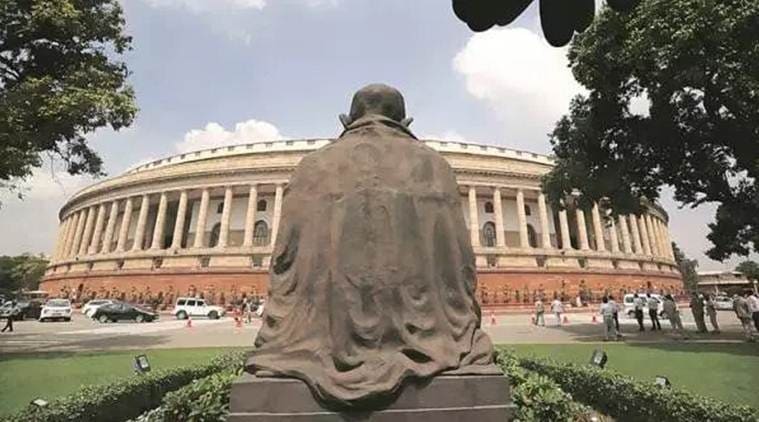
Jan 30th, 2019 marked 71st anniversary of Gandhi’s death.
His assassination was a great shock. But, strangely, his death unified those in India who had lost faith in non-violent co-existence.
As a matter of fact, Gandhi’s death taught everyone about the worth of civic friendship and social solidarity.
Greatness of Gandhi
Gandhi is known for his rise as the non-violent leader of the Indian independence movement.
Gandhi knew that he might have to meet death at the hands of his own countrymen and if that happens it will unite the Hindus and Mussalmans.
Gandhi had written that – “The enemies of the community are constantly making efforts against such a unity. In such a great endeavour, someone will have to sacrifice his life.”
Gandhi, all through his life, talked about his death with a great deal of openness and with no sanctimony. For him the fundamental philosophical question — ‘should I live or die; to be or not to be’? — had already found its answer in the idea of self-sacrifice.
Lessons what we can learn from Gandhi and Socrates
In the Gandhian philosophy of resistance, we can find the intertwining of non-violence and exemplary suffering.
For Gandhi, the practice of non-violence began with an act of self-sacrifice and the courage of dying for truth.
Gandhi believed that when fighting injustice, the actor must not only have the courage of his/her opinions but also be ready to give his/her life for the cause.
He had always held that satyagraha implied the willingness to accept not only suffering but also death for the sake of a principle. (Gandhi’s mantra “Do or Die”)
Do you know?
Socrates inspired Gandhi on the importance of self-sacrifice and the art of dying at a time when the latter was developing his idea of satyagraha in South Africa.
Gandhi referred to Socrates as a “Soldier of Truth” (satyavir) who had the willingness to fight unto death for his cause.
Consequently, for Gandhi, there was a close link between the use of non-violence and the art of dying, in the same manner that cowardice was sharply related to the practice of violence.
Gandhi remained a Socratic dissenter all his life. (This can be viewed from his further commitment to struggle for the truth)
Gandhi considered Socrates’ civic action as a source of virtue and moral strength.
Gandhi’s approach to death exemplified another Socratic aspect: courage.
Gandhi’s dedication to justice in the face of death was an example of his courageous attitude of mind as a Socratic gadfly.
Issues related to direct and indirect farm subsidies and minimum support prices
Inclusive growth and issues arising from it.
General Studies 2
Government policies and interventions for development in various sectors and issues arising out of their design and implementation.
Welfare schemes for vulnerable sections of the population by the Centre and States and the performance of these schemes; mechanisms, laws, institutions and bodies constituted for the protection and betterment of these vulnerable sections
Why Guaranteed basic income is not a solution to mass poverty?
Introduction:
The idea of a universal basic income has caught the imagination of the Indian political system.
The first serious attempt to figure out how to guarantee a minimum standard of living for every Indian was made way back in 1962.
A group of economists at the Planning Commission, led by Pitambar Pant, wrote about how every citizen could be guaranteed a minimum standard of living by 1977, or 15 years later.
Idea of a universal basic income during 1960s
India was too poor a country to depend primarily on redistribution.
India needed to grow its economy more rapidly if living standards had to be raised.
Planning Commission economists said that families in the top eight income deciles would benefit from accelerating growth, while those in the bottom two deciles would need some form of direct income support to maintain a minimum standard of living.
So, the idea of an income transfer was basically meant for the poorest fifth of the population, which was not in a position to take advantage of the opportunities that would become available from economic expansion.
Idea of a universal basic income now
Interestingly, the recent proposal by four economists—Josh Felman, Boban Paul, M.R. Sharan and Arvind Subramanian – are on same lines.
They have recommended an income support scheme in which the bottom eight deciles in rural India (or the bottom four deciles in the country as a whole) will need income support.
The merit of their scheme is that it is more progressive than a farm loan waiver or the Rythu Bandhu scheme in Telangana, which benefit landowners rather than tenants or farm workers.
Fiscal cost will be manageable, since the income transfers will be funded by money released from the scrapping of schemes such as the Fasal Bima Yojana and the fertilizer subsidy.
However, there are a few issues that need to be highlighted –
First, the assumption that a basic income for the poorest four deciles in rural India could be fiscally neutral looks good on paper. However, there will be obvious fiscal consequences and income support will be offered by cutting back other schemes such as fertilizer subsidy etc. This will have effects like shift of spending from large farmers to the rural poor.
Second, growing support for a basic income in developed countries comes against the backdrop of stagnant median incomes over several decades. There is also the fear that the fourth industrial revolution will displace millions of workers. However, the current Indian context is quite different. Incomes have been rising across the spectrum even after taking into account higher levels of inequality. It will be wise to focus on basic services such as health and education, create fiscal space to boost spending on rural public goods.
Third, data on Indian poverty needs to be updated. It is quite likely that the new survey could show a further decline in poverty as defined by the Suresh Tendulkar committee. There will be a need to reassess what constitutes the minimum consumption basket used to define poverty in India. Much of the subsequent basic income calculations will have to be rejigged.
The current proposals for direct income support falls well short of the promise of an unconditional basic income for all citizens. The Indian direct income support is in contrast to the proposals in developed countries.
For instance, the proposed income support is promised for “every poor person”, and not every Indian. Nor specified who should be considered poor or how the programme will be funded.
Conclusion:
As the Planning Commission economists pointed out in 1962, there can be no frontal attack on mass poverty without accelerating economic growth.
Let economic growth work for the top eight deciles, while the focus of government welfare spending should be on the bottom two deciles that are denied opportunities for various social or geographical reasons.
Connecting the dots:
Serious consideration must be given to the idea of a universal basic income as a more effective way to address mass poverty concern. Comment.