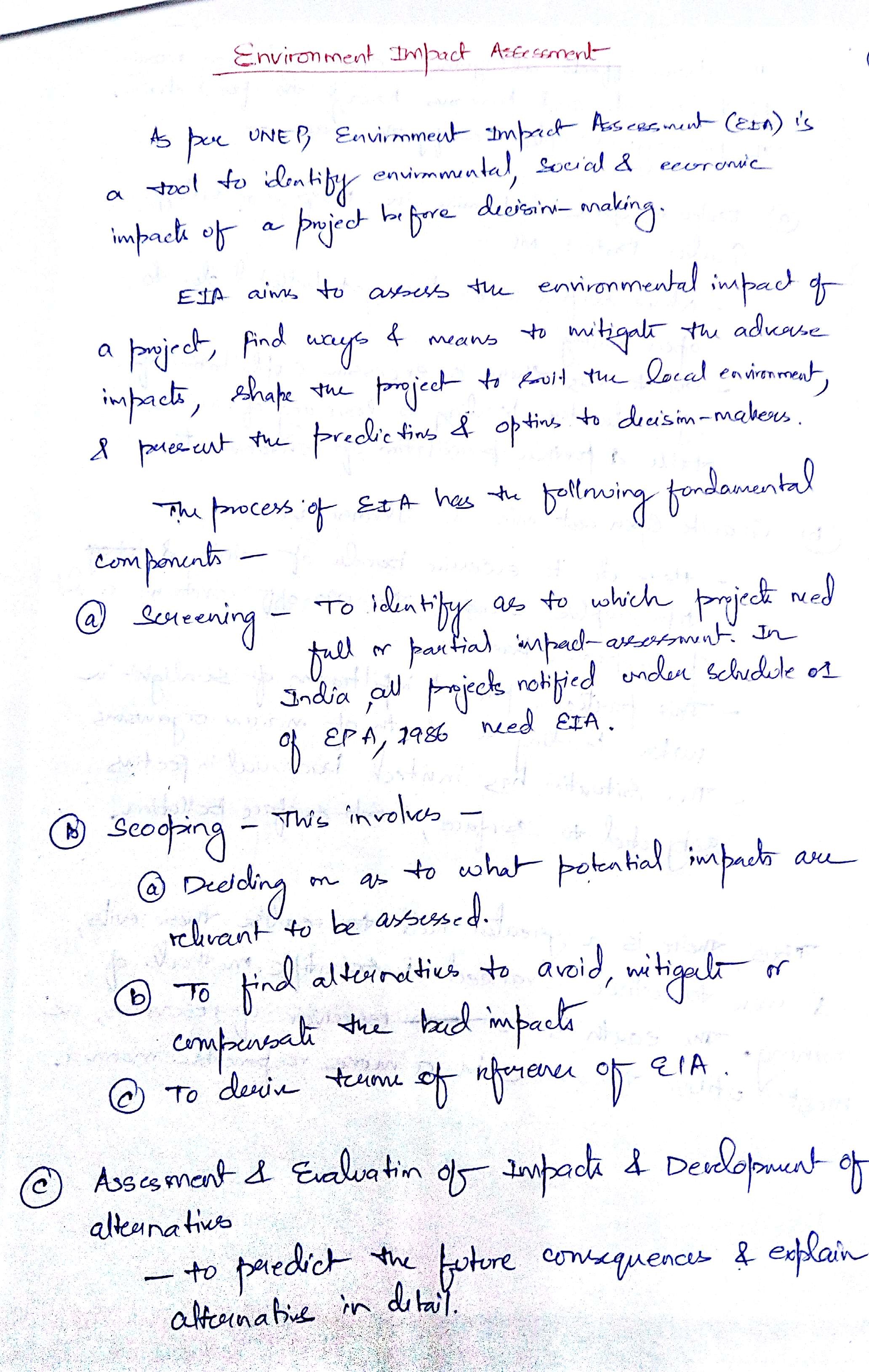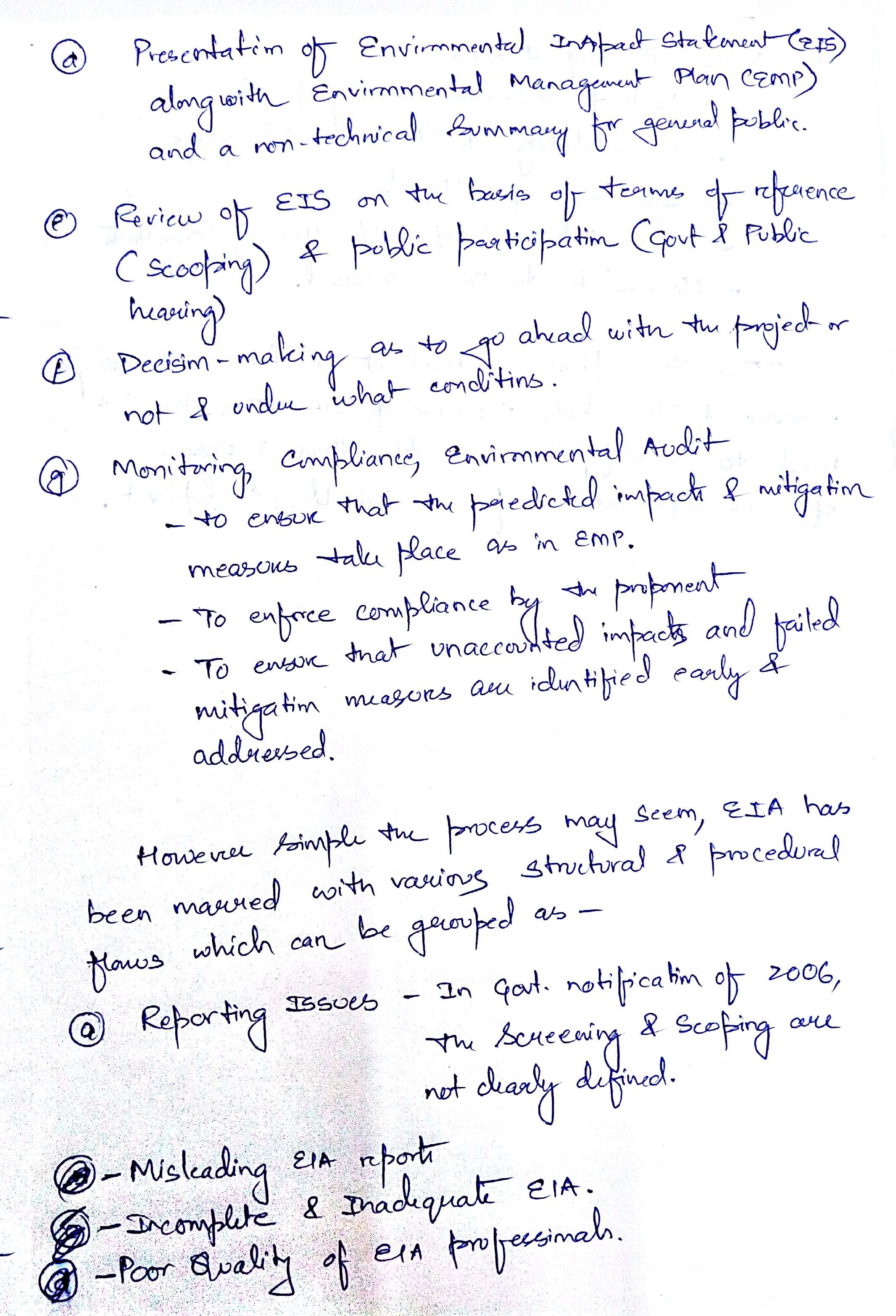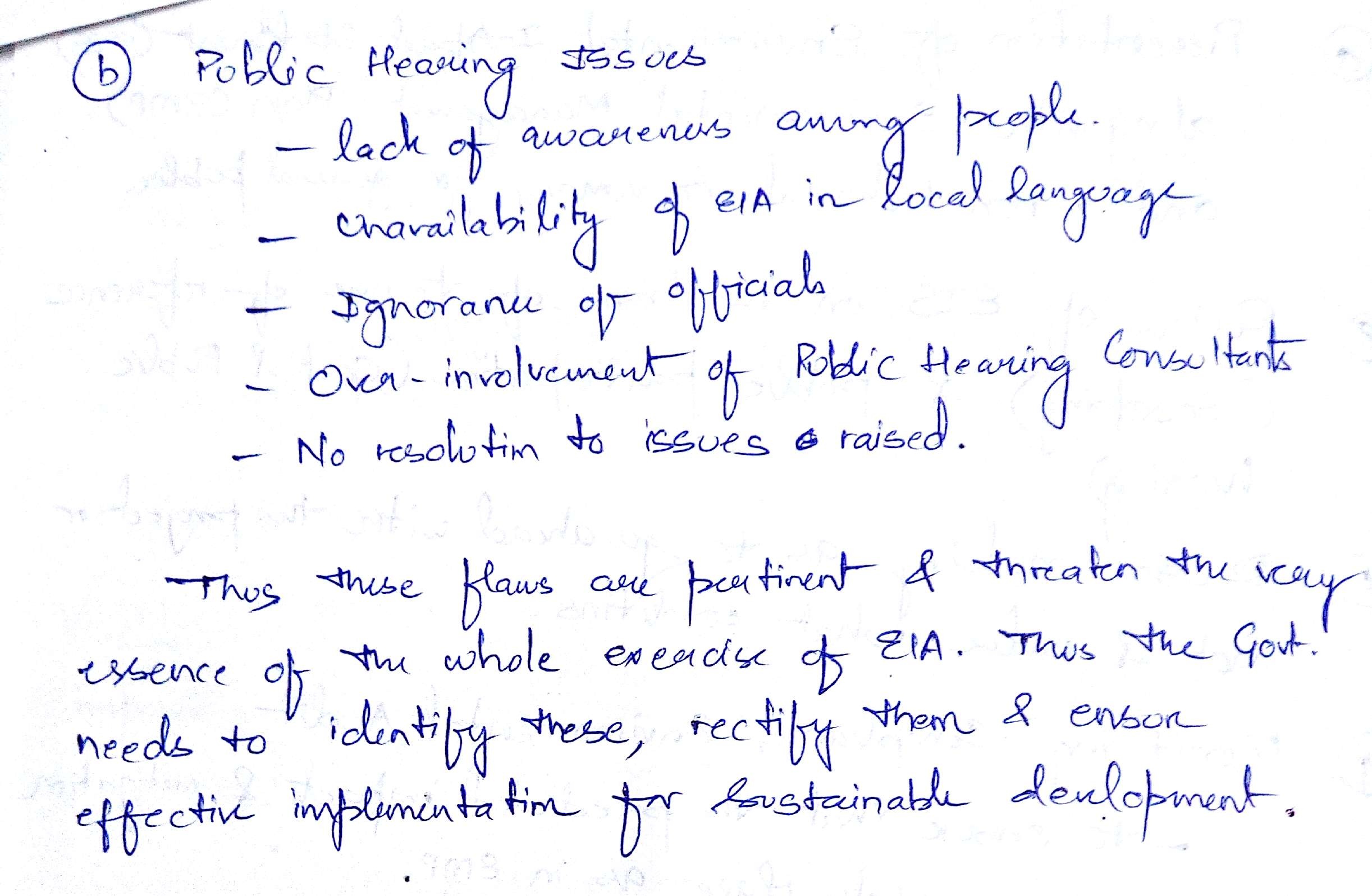

1. What do you understand by ‘Environmental Impact Assessment (EIA)’? What is assessed under EIA? What are its essential components? Discuss.
Introduction:
Your introduction should explain what is Environmental Impact Assessment(EIA)
Body:
Objectives of Environmental Impact Assessment
Mention the areas which got assessed under EIA.
Mention the essential components of EIA.
Although legislation and practice vary around the world, the fundamental components of an
EIA would necessarily involve the following stages:
Conclusion: –
You should conclude it by saying that in present times when we are facing so many challenges in terms of Environmental degradation, it is essentially important to use and successfully adopt a tool like EIA for better results and environmentally sustainable growth.
Best Answer1: -Kamlesh Dheerendra
Best Answer2: -Valar dohaeris
Environmental Impact Assessment-EIA is an imp decision making tool for resource use optimisation for a sustainable project development. EIA is used to assess-
• Environmental impacts- resources to be used and diverted for project, probable pollution it might cause (air, water, noise etc), effects on biodiversity in the area or possible degradation of natural resources around
Essential components of EIA are-
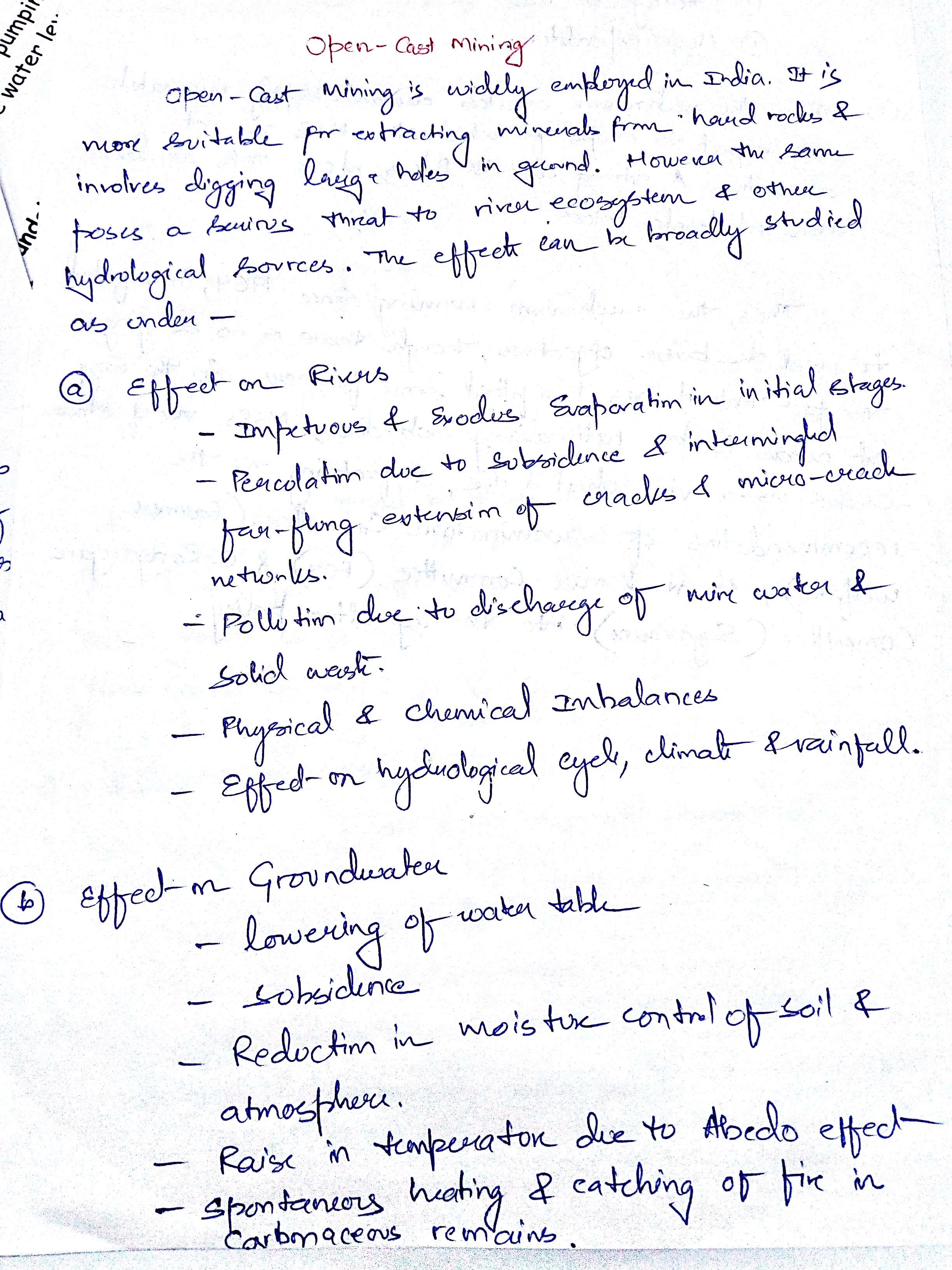
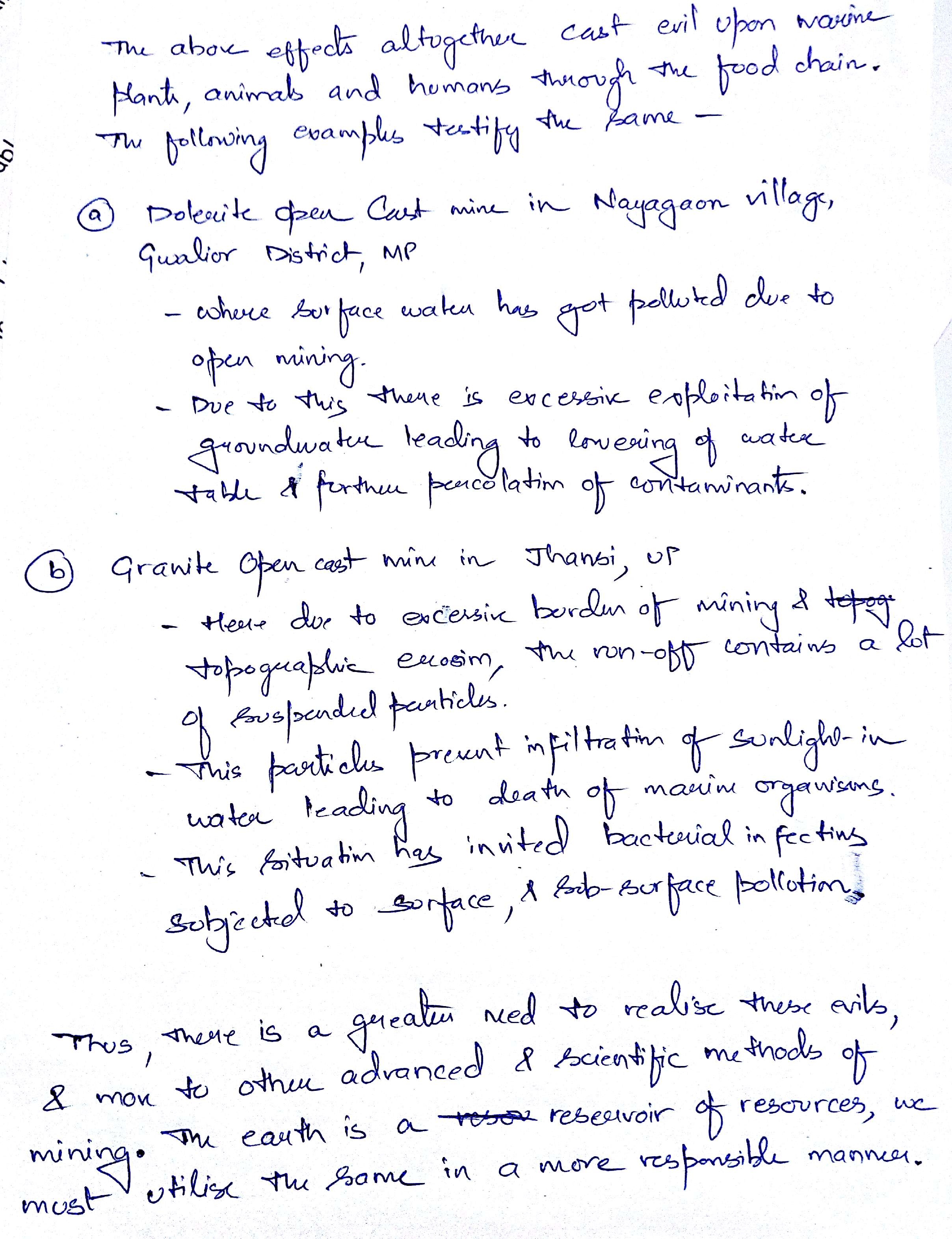
3. Open cast mining poses serious threats to the river ecosystem and other hydrological bodies. Do you agree? Substantiate by taking at least two case studies from India.
Mining activities are accompanied by a variety of environmental impacts, which can contribute towards degradation of environment as a whole. The process of environmental degradation that starts with the extraction of minerals results in land degradation and additions of pollutants to the atmosphere.
In open cast mining operation enormous quantity of dust of various sizes gets into environment. Minerals obtained from the open cast mining undergo transportation and storage, size reduction and classification, washing and concentrating, mixing and drying operations.
You can provide case studies of – (any 2) – and explain along respective impacts or threats posed.
Case study I: Jharia Coal Fields (JCF) and its impact on Damodar river
Large scale of unplanned and unscientific open cast mining in various mineral belt has been observed during last decade having serious implications on the surrounding river ecosystem and hydrological bodies.
Factors responsible for causing these include drainage from mining sites, sediment runoff from mining site, erosion from OB dumps and spoils heaps, leaking from tailing ponds/OB dumps, heated and heavy metals loaded effluents from coal industries and sewage effluents.
Mine water discharged from underground mines has high hardness due to dissolved sulphates and chlorides. It has been reported that water bodies have been severely polluted in JCF. Huge volumes of polluted water from underground mines are channelled into the Damodar thus polluting it chemically.
Apart from actual mining activities, coal beneficiation and preparation plants also release a large amount of water effluents in the river which poses a threat to aquatic ecosystem and prevailing biodiversity. Mining also affects the groundwater. Continuous pumping out of mine water may lead to lowering of ground-water table in the region. Besides, there is a scarcity of potable water due to both, increased demand and contamination.
Some parameters such as total dissolved solids (TDS), Fe, nitrite, hardness, conductivity, heavy metals in the surface and groundwater exceed the defined quality standards
Case II: IMPACT OF OPEN-CAST IRON ORE MINING IN KUDREMUKH ON BHADRA RIVER ECOSYSTEM, KARNATAKA
You can provide other case studies (of your respective states if any)
Belpaher open cast mining area of lb valley coalfield of Orissa state, operating under Mahanadi Coalfiled Ltd.(MCL).
Best answer 1: ISHAAN
Open cast mining is surface mining technique of extracting rock or minerals from the earth by the use of traditional mega drilling machine and sometimes rock blasting is used to make way for transport minerals. Some major case studies conducting in India are:-
1-JHARIA COALFIELD(JCF) CASE STUDY BY department of earth science, they found :-
(a) Mine’s water discharged from underground mines has high hardness due to dissolved sulphates and chloride : causing oral dehydration problems in children.
(b)Huge volumes of polluted water from underground mines are channelled into the Damodar thus polluting it chemically.
(c) a large amount of water effluents in the river:kills fish and destroy biodiversity.
(d) there is a scarcity of potable water .
e)Fe, nitrite, hardness, conductivity, heavy metals in the surface and groundwater exceed the declined quality standards cause disabled children.
2-Singareni Collieries Company Limited (SCCL) operates 16 open cast mines in Telangana:
(a) skin diseases caused by the water are common.
(b) Livestock drink water that runs down from the waste dump into the ponds, causing several diseases and even got killed.
(c)the presence of high level of mercury in near ponds and river .
therefore need to make installation of water filtration system and environment consultancy division ,environmental management plan development, legal compliance audits to secure Right to a life of people living near mining areas.
Best answer 2: Kamlesh Dheerendra
3. Nitrate pollution of groundwater is an issue of serious concern in many parts of India. What causes nitrogen pollution of groundwater? What are its associated health hazards? Also discuss the remedial measures to address this problem.
Intro:
Start with how nitrate pollution is a growing menace in many parts of India especially rural parts. Mention how ground water is majorly affect by nitrate pollution. Mention any reports like central ground water report about how 21 states across country are affected by nitrate pollution.
Body:
Part 1
-Write about the causes for nitrate pollution.
-Categories the answer into two i.e. natural and anthropogenic like decomposition, run off etc from natural and over and unscientific fertilizer usage, unplanned sceptic lanes near water bodies from anthropogenic.
Part 2
-Write about the health effects of this pollution like blue baby syndrome, being carcinogenic it causes different types of cancer etc.
Part 3
-Write about remedies, like strict industrial discharge control, awareness about over fertilizer usage, shift to organic fertilizers, scientifically planed drainage lanes in city, bio remediation in case of pollution seen among others. Write in points and give small explanation of one line at least.
Conclusion:
End with how government is being tough with polluter like shifting of industries along Yamuna and ganga rivers, how SC has issued verdict about no new construction along river plains and how shift to NBS, neem coated fertilizers and organic farming cultivation can play a huge role in bringing a change.
Best answer: Mohit Rastogi
With groundwater forming largest share in agriculture irrigation supply and drinking water in India, nitrate pollution in groundwater is a serious concern. According to Central ground water board report 387 districts in 21 states in India suffer from nitrate pollution in groundwater.
Causes:
Natural
1. Decomposition of organic dead bodies releases nitrate compounds in soil which are leached down by rain or running water into ground water.
Anthropogenic
1. Excessive utilization of urea fertilizers more than that can be absorbed by plants
Health Hazards:
Remedies
a. Neem coating urea to slowdown dissolution of nitrates into soil
Given the wide ramification and wide spread nature of problem, targeting reduction of nitrates and other pollutants can be considered in Swachh Bharat Abhiyan. Awareness, and simple, cost friendly remedies can help in managing nitrate pollution.
4. The generation of HFCs during the production of HCFCs poses serious environmental challenges. Why? Discuss the associated issues and challenges.
Here the focus of the question is HFCs and not HCFCs, so your answer needs to be in sink. Also when the question asks discuss the associated issues, you need to discuss about all the issues.
Hydrofluorocarbon (HFC), any of several organic compounds composed of hydrogen, fluorine, and carbon. HFCs are relatively nonflammable, chemically stable, and nonreactive. HFCs are produced synthetically and are used primarily as refrigerants and insulating foams. They became widely used for this purpose beginning in the late 1980s, with the introduction of the Montreal Protocol, which phased out the use of chemicals such as halons and chlorofluorocarbons (CFCs) that contribute to the depletion of Earth’s ozone layer. However, while HFCs have an ozone depletion potential of zero, they are potent greenhouse gases, and thus their manufacture and use became increasingly regulated in the 21st century.
According to the United Nations Environment Programme, HFCs are currently the world’s fastest growing greenhouse gases, with their emissions increasing by up to 10 percent per year. They also trap thousands of times more heat in the Earth’s atmosphere than another greenhouse gas, carbon dioxide.
HFCs have grown rapidly in recent years largely due to the growing demand for cooling, particularly in developing countries in hotter climates with a fast-growing middle class.
US wanted to include HFCs in Montreal Protocol (which is binding) to phase out them while India had an opinion that it should be included in UNFCCC as it is a green house gas and not an Ozone depleating gas.
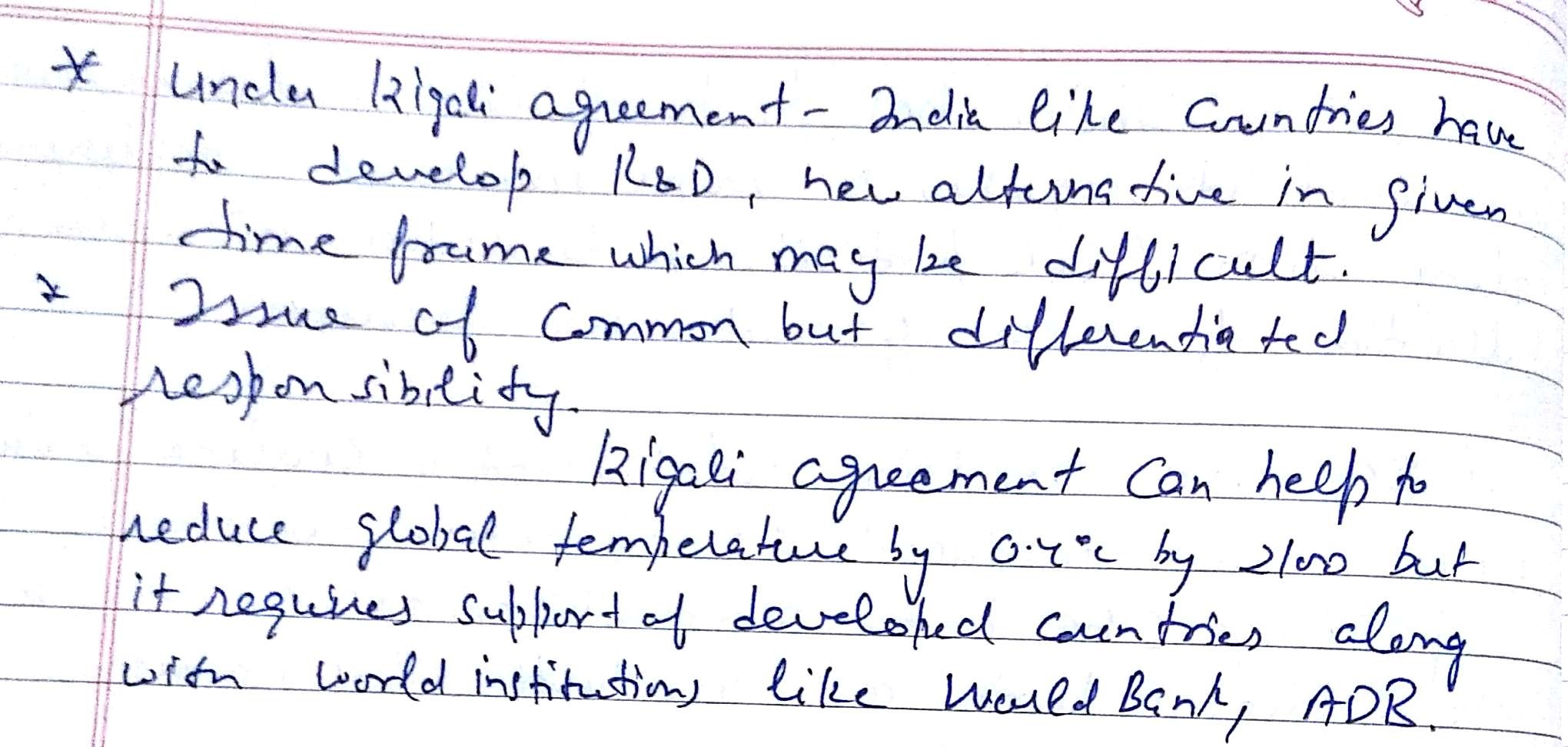
Finally, on Oct. 15, the 197 parties that enforce the Montreal Protocol on Substances that Deplete the Ozone Layer, including the U.S., agreed to a landmark deal to reduce the emissions of hydrofluorocarbons (HFCs), in a move that scientists estimate could prevent up to 0.5 degrees Celsius of global warming by the end of the century. The agreement is called Kigali Agreement as the meeting was held in Kigali, Rwanda.
Under the phase-out agreement, developed countries will begin to phase down HFCs by 2019 and developing countries will follow with a freeze of HFCs consumption levels in 2024, with some countries freezing consumption in 2028. Under the agreement all countries are expected to consume no more than 15-to-20 percent of their respective baselines by the late 2040’s.
However, there are several challenges faced by the countries (especially developing countries) to phase out HFCs. These countries are highly dependent on HFCs (which are non-ozone depleating) for their refrigerating requirements. The alternate compounds are not that cost effective. In order to commercialise new alternatives, a lot of investment is required on Rand D. Most of the alternate sources are produced in Developed countries. There is also lack of technology and expertise as well as information sharing between countries. Developed countries are also reluctant to share the financial burden and a separate monetary pool has not been created by Kigali agreement. That’s why till now countries were reluctant to phase out HFCs.
(The synopsis is not a model answer. It is written in articulated form so that you can have an understanding of the issue. You can write the answer in point form according to the question.)
Model Answer: Ravinder Singh
5. What were the outcomes of the Paris Summit concluded in December last year? Discuss. Did the Paris Summit indicate a marked departure from the previous trend in climate change negotiations? Critically examine.
Introduction:
Your introduction should mention about the Paris Summit in brief.
Body:
(you should write on these lines -)
Conclusion:
Your conclusion should say that Paris summit is a better attempt than previous ones (in terms of aims, participation etc.). Now, the countries should work with sincerity and better coordination to make it a success.
Best Answer1: -MDA
UNFCCC members reached a watershed moment at Paris summit in the two-decade old global climate effort. The outcomes being:
# To limit global temperature increase below 2 degrees Celsius, with an eye on limiting it to 1.5 degrees.
# Nationally determined contributions (NDCs) established by all parties and regular international review and reports on NDCs; New NDCs progressive to the existing ones to be submitted every five years.
#Developed countries to support developing countries, with voluntary contributions by developing countries.
#Extension of the goal of mobilizing100 billion dollars a year in support to 2025( a higher goal to be set after 2025)
#Mechanism to address loss and damage resulting from climate change and new transparency measures.
Yes, it is a marked departure from previous trends:
# Unlike the binary approach of previous protocols of Kyoto (top-down approach), Copenhagen
(bottom up), the Paris Agreement reflects a hybrid approach:
# Inclusion of the loss and damage mechanism crucial for poor and small-island countries suffering from extreme weather and long-term impacts.
# Global stocktake through a new transparency system with common binding commitments for all parties yet accommodating varying national capacities.
HOWEVER:
As the previous protocols, the Paris agreement too does not have specific guidelines to achieve the aims. Ex: only indicative and not explicit wordings on fossil fuel. Even though the deal is
legally binding, countries can withdraw from it without consequences, as Canada did from the Kyoto Protocol. Exclusion of renewable energy, nuclear power, changes in housing, international aviation and shipping in the report and loss and damage mechanism does not provide for any liability or compensation.
Paris agreement being a realistic deal than the previous ones, India is keen to achieve its INDC through low carbon emission pathway, solar alliance with INSPA etc. while simultaneously endeavoring to meet all the developmental challenges. However, a future target of 1.5 degree requires more commitment and sustainable efforts.