Syllabus
Context: Recently, Croatia adopted the euro currency and enter Europe’s passport-free Schengen zone after nearly a decade after joining the European Union.
About Schengen Zone:
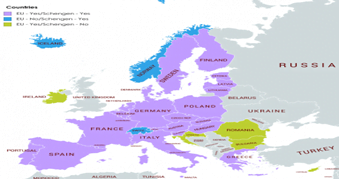
Source: The Hindu
Previous Year Question
Q.1) Consider the following pairs:
Region often mentioned in the news: Country
How many pairs given above are correctly matched?
Syllabus
Context: The Defence Ministry has started the process for the procurement of 100 more K9-Vajra tracked self-propelled howitzers, which are built by L and T using technology transferred from South Korea.
About K9-Vajras:

Syllabus
Context: Scientists from Agharkar Research Institute (ARI), Pune, an autonomous institute of the Department of Science and Technology, have discovered a Ruthenium−Ferrocene Bimetallic agent that shows a highly potent antitumor effect in platinum-resistant cancers.
About Platinum drugs:

About Agharkar Research Institute (ARI):
Source: The Times of India
Previous Year Question
Q.1) With reference to the carbon nanotubes, consider the following statement :
Which of the statements given above are correct ?
Syllabus
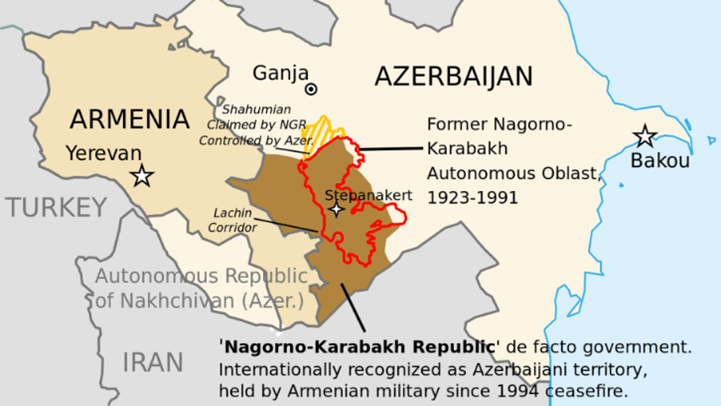
Context: Recently, United Nations International Children’s Emergency Fund (UNICEF) has issued a statement warning about deteriorating humanitarian situation in Nagorno-Karabakh due to closure of Lachin Corridor.
About Lachin Corridor:
Syllabus
Context: Recently, paleontologists have announced the discovery of a fossil beaked bird ancestor in Northeastern China.
About Confuciusornis shifan:

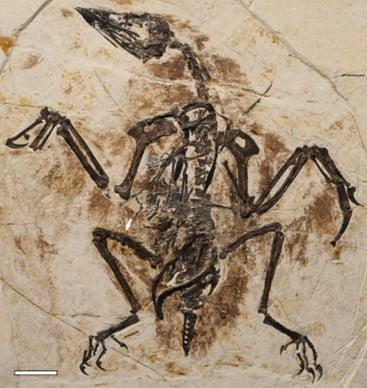
Source: Sci.news
Previous Year Question
Q.1) Which of the following is not a bird? (2022)
Syllabus
In News: The second phase of the Sari Festival “VIRAASAT”- Celebrating 75 handwoven Saris of India will begin in New Delhi.
About the festival:
Source: News on air
Syllabus
In News: Union Health Minister Dr. Mansukh Mandaviya reviewed Air Suvidha system and RT-PCR testing facilities for international passengers at the Indira Gandhi International Airport, New Delhi.
What is Air Suvidha?
What do International Passengers need to do?
Source: News on air
Syllabus
In News: Number of Janaushadhi Kendras under Pradhan Mantri Bharatiya Janaushadhi Pariyojana (PMBJP) has increased by 100 times in the last eight years.
Aim:
About the scheme:
Source News on air
Previous Year Question
Q.1) Which one of the following is a purpose of ‘UDAY’, a scheme of the Government? (2016)
Syllabus
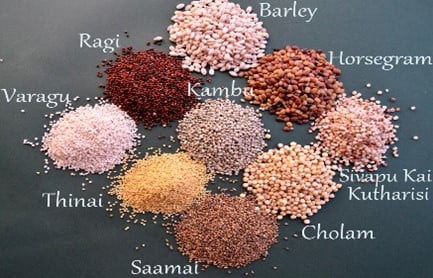
Context: The United Nations has declared 2023 as the International Year of Millets (IYM). It was an Indian Initiative. It is to make IYM 2023 a ‘People’s Movement’ alongside positioning India as the ‘Global Hub for Millets’.
About Millets:
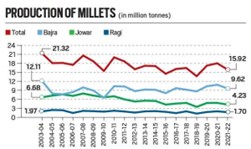
Distribution of millets production across the world:
India and millets:
New invention:
Significance of Millets:
Challenges of millets production:
Suggestion measures:
Way Forward:
Therefore, it is evident that there is a need to promote the production of more millets by providing price support to farmers as there’s not only a social dimension but also a nutritional and environmental aspect associated with these cereals.
There’s a need for developing a decentralised model of processing capabilities so that the growers stand to benefit at a community level and in the growing regions. Thus, Promoting millets could help governments save expenditure on health and nutrition.
Source: Indian Express
Previous Year Question
Q.1) With reference to the “Tea Board” in India, consider the following statements:
Which of the statements given above are correct? (2022)
Syllabus
Context:
About the battle:
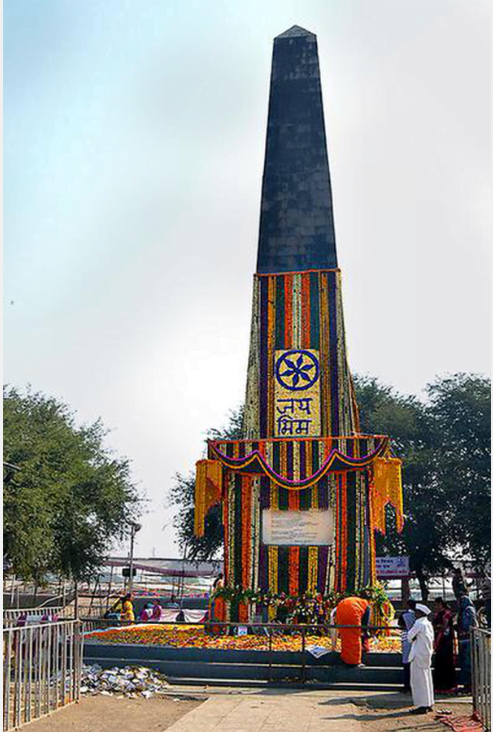
Who Were the Mahars?
Significance of the battle:
Controversy and challenges:
Way forward:
Source The hindu
Syllabus
Context: The Election Commission (EC) has recently announced that it is ready to pilot remote voting for domestic migrants, so they don’t have to travel back to their home states to vote. This comes on the back of EC’s acknowledgement of migration-based disenfranchisement.
Q.1) With reference to “VIRAASAT” scheme, consider the following statements
Which of the following statements are correct?
Q.2) With reference to ‘Pradhan Mantri Bhartiya Janaushadhi Pariyojana’, it has been created for which of the following objectives?
Q.3) Which of the following countries are part of Schengen Zone, which is often mentioned in news?
Select the correct answer using the code given below:
Comment the answers to the above questions in the comment section below!!
ANSWERS FOR ’ 3rd January 2023 – Daily Practice MCQs’ will be updated along with tomorrow’s Daily Current Affairs.st
Q.1) – a
Q.2) – c
Q.3) – b