Context: In 1922. On December 8th, the International Anthrax Commission has passed a resolution requiring the hairs and wools used in brush-making, upholstering and textile industries be disinfected before they are handled industrially.
About Anthrax:
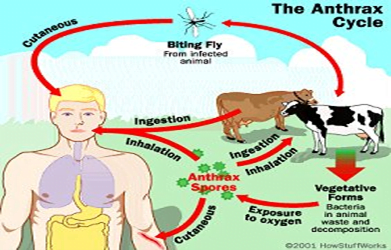
Anthrax is a zoonotic disease (could be transferred from animals to humans) caused by the spore-producing bacterium Bacillus anthracis.
Reservoirs are grass-eating animals, and the spores can survive in the environment for decades.
It is usually a disease of wild and domestic animals, including cattle, sheep, and goats.
Human infection, while rare, does occur.
Human infection usually results from contact with infected animals or their products.
Types of Anthrax:
cutaneous (through the skin),
gastrointestinal, and
There have been no confirmed cases of person-to-person transmission of cutaneous, gastrointestinal, or inhalational anthrax.
Anthrax is most common in developing countries.
The largest reported agricultural outbreak occurred in Zimbabwe, with more than 10,000 cases reported between 1979 and 1985.
Treatment:
Antibiotics, such as penicillin, are used to treat all forms of anthrax.
An antibiotic known as ciprofloxacin (Cipro) was approved in August 2000 by the U.S. Food and Drug Administration for treating people who have been exposed to inhalational anthrax.