Saving Aarey – Environmental Conservation
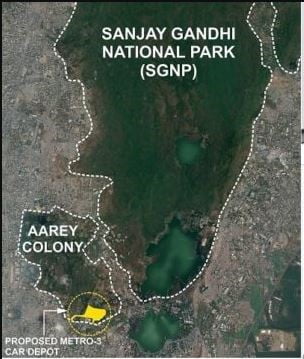
- Over the years, Aarey Milk Colony has become a crucial part of the Mumbai ecosystem. There are about 4.5 lakh trees in Aarey, according to the BMC.
- The area is known to have 86 butterfly species, 90 spider species, 46 reptile species, 126 bird species and more than 400 different types of plants. The forest is also home to a small population of leopards.
- The colony hosts over 10,000 people in 27 tribal villages, also called padas.
- It is also highlighted how the “veritable green lung” acts as a buffer for the Sanjay Gandhi National park, and forms a catchment for the Vihar lake which is a source of drinking water and offers flood and pollution control.
- But now, the 3,000 acres of forest have been whittled down to 1,300 acres. Projects such as the Film City and the Byculla zoo have cut into Aarey forest and impacted its inhabitants.
- Environmental activists say Aarey is crucial for Mumbai’s future. They argue that the forest not only provides fresh air to the people of the city at a time when pollution levels are dangerous, but its ecosystem protects the diverse habitat which harbours some endemic species.
- Also, there is an increasing threat of man-animal conflict if the Aarey cover is reduced.
- Activists have been calling for peaceful protests, saying that development and urbanisation can’t be at the cost of the environment
- Former CM Uddhav Thackeray (who made a decision to shift project from Aarey to Kanjurmarg), a professional wildlife photographer, has made a fervent appeal to the successive Government not to build the car shed in the Aarey Milk Colony.
- “If you are angry with me, then vent out your anger, but don’t stab Mumbai in the heart,” he said. His son and former Maharashtra environment minister Aaditya Thackeray shared similar sentiments on Twitter.
- The development pitch
- The car shed is proposed to be set up on 33 hectares — 2 per cent of the 1,278 hectares of Aarey land. The MMRCL (Mumbai metro rail corporation limited) has said that beyond this 33-hectare plot, no other part of Aarey will be disturbed, as the site is accessible by road from three sides.
- The MMRCL lists the benefits: The metro corridor will connect important residential, business, educational, health and recreational centres along with major transport hubs including domestic and international airports.
- The metro corridor will ultimately cater to 17 lakh commuters daily, once fully commissioned.
- The corridor will not only reduce CO2 emission to the tune of 10,000 metric tonne per year but will also help Mumbaikars cope with the deteriorating travel conditions on public transport and traffic congestion on roads. The MMRCL further says that the car depot is “mandatory and essential.”
- A car depot serves Metro trains akin to a “home” for any human being,” it notes.
- The new State Government also maintains that the project is important for Mumbai’s development.
- “Metro service is the right of a Mumbai citizen,” Maharashtra Deputy CM Devendra Fadnavis said and added that 25 per cent of the work on the Metro-3 car shed project is already completed.
- The government has also assured that no more trees will be cut for the project while saying that environmentalists have the right to express their opinion, but they should not ignore the facts.