श्रेणी: सरकारी योजनाएं
संदर्भ:
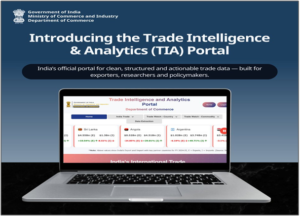
- हाल ही में, केंद्रीय वाणिज्य और उद्योग मंत्री ने नई दिल्ली में ट्रेड इंटेलिजेंस एंड एनालिटिक्स (TIA) पोर्टल लॉन्च किया।
ट्रेड इंटेलिजेंस एंड एनालिटिक्स (TIA) पोर्टल के बारे में:
- प्रकृति: यह एक वन-स्टॉप ट्रेड इंटेलिजेंस और एनालिटिक्स प्लेटफॉर्म है जो कई वैश्विक और राष्ट्रीय डेटाबेस को एकीकृत करता है।
- विकास: इसे वाणिज्य और उद्योग मंत्री के वाणिज्य विभाग द्वारा विकसित किया गया है।
- उद्देश्य: पोर्टल का उद्देश्य पूरे भारत में हितधारकों के लिए व्यापार डेटा को अधिक पारदर्शी, सुलभ और उपयोगी बनाना है। यह आयातकों, निर्यातकों, एमएसएमई और स्टार्टअप्स को सूचित और डेटा-संचालित निर्णय लेने में मदद करना चाहता है।
- महत्व: टीआईए पोर्टल की नई और अधिक विस्तृत क्षमताएं एक ही स्थान पर व्यापार डेटा की पहुंच और उपयोगिता में काफी सुधार करती हैं।
- केंद्रीकृत डिजिटल हब: यह एक केंद्रीकृत डिजिटल हब के रूप में कार्य करता है जो विविध व्यापार डेटाबेस—वैश्विक और द्विपक्षीय दोनों—को एक एकीकृत प्रणाली में समेकित करता है। इसे एक व्यापक और एकीकृत प्लेटफॉर्म के माध्यम से व्यापार विश्लेषण को बढ़ाने और डेटा-संचालित साक्ष्य-आधारित नीति निर्माण को बढ़ावा देने के लिए डिजाइन किया गया है।
- रीयल टाइम अंतर्दृष्टि: यह 28 से अधिक डैशबोर्ड में 270 से अधिक इंटरैक्टिव विज़ुअलाइज़ेशन प्रदान करता है। यह भारत और वैश्विक व्यापार, वस्तुओं और क्षेत्रीय विश्लेषण, बाजार बुद्धिमत्ता पर रीयल-टाइम, इंटरैक्टिव अंतर्दृष्टि प्रदान करता है।
- पीएलआई क्षेत्रों को शामिल करता है: इसमें उत्पादन-लिंक्ड प्रोत्साहन (पीएलआई) क्षेत्रों और महत्वपूर्ण खनिजों के लिए स्वचालित व्यापार रिपोर्ट और व्यापार रुझानों की ट्रैकिंग भी शामिल है। यह देशों में मैक्रोइकॉनॉमिक, व्यापार और निवेश संकेतकों की तुलना करने के लिए उपकरण भी प्रदान करता है।
- व्यापार सूचकांक: इसमें निम्नलिखित व्यापार सूचकांक शामिल हैं:
- व्यापार पूरकता सूचकांक: यह भारत के निर्यात प्रोफाइल और साझेदार देशों की आयात आवश्यकताओं के बीच संरेखण का आकलन करता है।
- प्रकट तुलनात्मक लाभ सूचकांक: यह उन उत्पादों को उजागर करता है जहां भारत का प्रतिस्पर्धात्मक लाभ है।
- व्यापार तीव्रता सूचकांक: यह वैश्विक प्रवाह के सापेक्ष द्विपक्षीय व्यापार संबंधों की सामर्थ्य शक्ति को मापता है।
स्रोत:
(MAINS Focus)
नए श्रम संहिताएं और श्रमिकों के लिए उनके निहितार्थ (New Labour Codes & Their Implications for Workers)
(यूपीएससी जीएस पेपर III -- "समावेशी विकास और इससे उत्पन्न होने वाले मुद्दे; विभिन्न क्षेत्रों में विकास के लिए सरकारी नीतियां और हस्तक्षेप")
संदर्भ (परिचय)
चार श्रम संहिताएं—वेतन, औद्योगिक संबंध, सामाजिक सुरक्षा, और व्यावसायिक सुरक्षा—लागू हो गई हैं, जो 29 कानूनों का स्थान लेती हैं। इनका उद्देश्य अनुपालन को सरल बनाना, सामाजिक सुरक्षा का विस्तार करना, रोजगार को औपचारिक रूप देना और कंपनियों व यूनियनों की मिली-जुली प्रतिक्रियाओं के बीच भारत के श्रम बाजार को नया आकार देना है।
मुख्य तर्क / प्रमुख विशेषताएं
वेतन संहिता, 2019
- न्यूनतम वेतन, वेतन भुगतान, बोनस और पारिश्रमिक से संबंधित कानूनों को एकीकृत करती है।
- अब "वेतन" कुल पारिश्रमिक का ≥50% होना चाहिए; पीएफ/ईएसआईसी योगदान बढ़ाता है, जिससे सेवानिवृत्ति के बाद के लाभ बढ़ते हैं।
- केंद्र राष्ट्रीय फ्लोर वेज (आधार वेतन) तय कर सकता है; राज्य इससे नीचे नहीं जा सकते।
- अनिवार्य नियुक्ति पत्र औपचारिकरण को मजबूत करते हैं; जो आईएलओ की सिफारिशों के अनुरूप है।
औद्योगिक संबंध संहिता, 2020
- 299 तक के श्रमिकों वाली फर्में सरकारी अनुमति के बिना छंटनी कर सकती हैं (पहले 100), जिससे लचीलापन बढ़ता है और संभवतः विनिर्माण प्रतिस्पर्धात्मकता बढ़ती है।
- सभी उद्योगों में अनिवार्य 14-दिन पहले की हड़ताल नोटिस, अचानक हड़तालों पर अंकुश लगाता है।
- विवाद समाधान को तर्कसंगत बनाकर और निश्चित अवधि के रोजगार को सक्षम करके व्यवसाय में सुगमता को बढ़ावा देता है।
सामाजिक सुरक्षा संहिता, 2020
- पहली बार गिग/प्लेटफॉर्म श्रमिकों और एग्रीगेटर्स को कानूनी सामाजिक सुरक्षा के दायरे में लाता है।
- श्रमिक कल्याण के लिए एग्रीगेटर्स अपने टर्नओवर का 1-2% योगदान देंगे।
- एफटीई (फिक्स्ड टर्म एम्प्लॉयमेंट) एक वर्ष के बाद ग्रेच्युटी के पात्र (पहले पांच वर्ष)।
- पीएफ, ईएसआईसी, मातृत्व लाभ जैसे लाभों का विस्तार; नीति आयोग के गिग कार्यबल अनुमानों (2030 तक 23.5 मिलियन) के अनुरूप।
व्यावसायिक सुरक्षा, स्वास्थ्य और कार्य शर्तें संहिता, 2020
- कार्यस्थल सुरक्षा, प्रवासी श्रम और ठेका श्रम से संबंधित 13+ कानूनों को समेकित करती है।
- सहमति और अनिवार्य सुरक्षा उपायों (परिवहन, सीसीटीवी, सुरक्षा) के साथ महिलाओं को रात की पाली में काम करने की अनुमति देती है।
- सप्ताह में 48 घंटे की अधिकतम सीमा; डबल वेतन पर ओवरटाइम।
- ऑडियोविजुअल और डिजिटल मीडिया श्रमिकों, बागान श्रमिकों और बीड़ी/सिगार श्रमिकों को शामिल करती है।
आलोचनाएं / कमियां
- नौकरी की सुरक्षा पर चिंता: छंटनी की सीमा बढ़ाने से अनिश्चित रोजगार बढ़ सकता है और श्रमिकों की बातचीत करने की क्षमता सीमित हो सकती है।
- यूनियन अधिकार कमजोर: अनिवार्य हड़ताल नोटिस, सख्त यूनियन पंजीकरण नियम और रजिस्ट्रारों की विस्तारित शक्तियां सामूहिक सौदेबाजी को कम कर सकती हैं।
- एमएसएमई अनुपालन बोझ: उच्च पीएफ/ईएसआईसी योगदान छोटे और असंगठित फर्मों के लिए लागत दबाव बढ़ाता है, जिससे अनौपचारिकरण का जोखिम है।
- केंद्रीकरण की चिंता: देशव्यापी आधार वेतन विविध जीवन स्तर वाले राज्यों को बाधित कर सकता है।
- कमजोर कार्यान्वयन क्षमता: श्रम एक समवर्ती विषय होने के कारण, राज्य-स्तरीय तैयारी में काफी भिन्नता है---जिससे स्थिरता और प्रवर्तन प्रभावित होता है।
- ट्रेड यूनियन आलोचना: संहिताओं को "150 वर्षों में सुरक्षित अधिकारों को नकारने" और लोकतांत्रिक श्रम संस्थानों को कमजोर करने वाला माना जा रहा है।
सुधार और आगे की राह
- लचीलेपन और सुरक्षा के बीच संतुलन बनाएं: क्षेत्र-विशिष्ट छंटनी सीमा पेश करें, सेवानिवृत्ति मानदंडों को मजबूत करें और लचीलेपन को मजबूत सामाजिक सुरक्षा के साथ जोड़ने वाले "फ्लेक्सिक्योरिटी" मॉडल को बढ़ावा दें।
- सामाजिक सुरक्षा वितरण मजबूत करें: गिग/प्लेटफॉर्म कल्याण कोषों को रीयल-टाइम डिजिटल ट्रैकिंग के साथ कार्यान्वित करें। लाभों की पोर्टेबिलिटी के लिए, विशेष रूप से प्रवासी श्रमिकों के लिए, ई-श्रम को पीएफ/ईएसआईसी के साथ एकीकृत करें।
- कार्यान्वयन क्षमता में सुधार करें: निरीक्षण तंत्र के बुनियादी ढांचे का विस्तार करें, डिजिटल निरीक्षण प्रणालियों और बहुभाषी श्रमिक जागरूकता अभियानों को तैनात करें। एमएसएमई के लिए चरणबद्ध अनुपालन और वित्तीय सहायता प्रदान करें।
- सामूहिक सौदेबाजी को मजबूत करें: पारदर्शी और पूर्वानुमेय यूनियन पंजीकरण नियम सुनिश्चित करें और आईएलओ द्वारा अनुशंसित त्रिपक्षीय परामर्श को पुनर्जीवित करें।
- प्रावधानों को स्पष्ट करें और मुकदमेबाजी कम करें: एग्रीगेटर योगदान, एफटीई लाभ और वेतन घटकों पर विस्तृत नियम प्रदान करें ताकि व्याख्या की स्पष्टता और एकसमान अपनाना सुनिश्चित हो।
निष्कर्ष
श्रम संहिताएं भारत के श्रम कानूनों का एक महत्वपूर्ण समेकन हैं, जिनका लक्ष्य औपचारिकरण, सामाजिक सुरक्षा और व्यवसाय में सुगमता में सुधार करना है। हालांकि, कमजोर श्रम अधिकारों, असमान राज्य क्षमता और बढ़ती अनिश्चितता के डर को कैलिब्रेटेड सुधारों, मजबूत प्रवर्तन ढांचे और वास्तविक सामाजिक संवाद के माध्यम से दूर किया जाना चाहिए ताकि समावेशी और न्यायसंगत श्रम शासन सुनिश्चित हो सके।
मुख्य परीक्षा प्रश्न
"नई श्रम संहिताएं सरलीकरण और विस्तारित सामाजिक सुरक्षा के माध्यम से भारत के श्रम बाजार को आधुनिक बनाना चाहती हैं। श्रमिकों के अधिकारों, नौकरी की सुरक्षा और समावेशी विकास पर उनके प्रभावों का समालोचनात्मक विश्लेषण करें।" (250 शब्द, 15 अंक)
स्रोत: फर्स्टपोस्ट