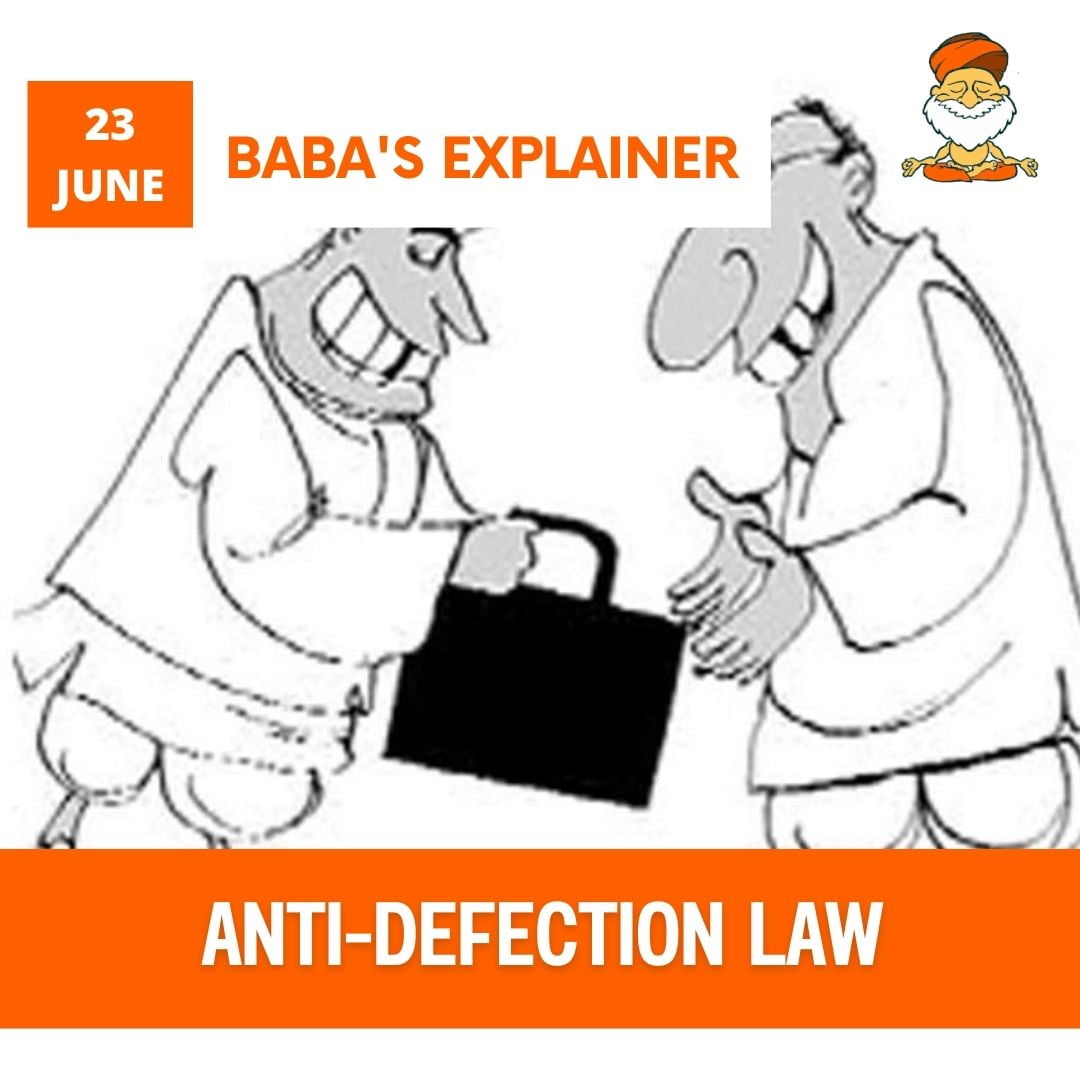
- The anti-defection law was passed in 1985 through the 52nd Amendment to the Constitution. The Amendment added the Tenth Schedule to the Indian Constitution, with an intent to curb “the evil of political defections”.
- Under the anti-defection law, legislators may be disqualified from their membership to the House if they resign from their party after being elected, or defy the direction issued by the party leadership during a vote on any issue.
When can a legislator be disqualified as per Tenth Schedule?
- If a member of a house belonging to a political party:
- Voluntarily gives up membership of his political party, or
- Votes contrary to a direction issued by his political party, or does not vote in the House at all, when such a direction is issued.
- However, a member shall not be disqualified if he has taken prior permission of his party, or is condoned by the party within 15 days from such voting or abstention.
- If an independent candidate joins a party after the election.
- If a nominated member joins a party six months after he becomes a member of the legislature
Are there any exceptions?
- A person shall not be disqualified if his original political party merges with another (applicable only if more than two-thirds of the members of the party have agreed to the merger), and:
- He and other members of the old political party become members of the new political party, or
- He and other members do not accept the merger and opt to function as a separate group.
- Note that Until 2003, the law also exempted defections caused by 1/3rd members of the original party splitting from the party. This exception was removed in 2003.
Who has the power to disqualify?
- The Chairman or the Speaker of the House takes the decision to disqualify a member.
- If a complaint is received with respect to the defection of the Chairman or Speaker, a member of the House elected by that House shall take the decision.