Part of: GS Prelims and GS- III – Infrastructure; Environment
In news
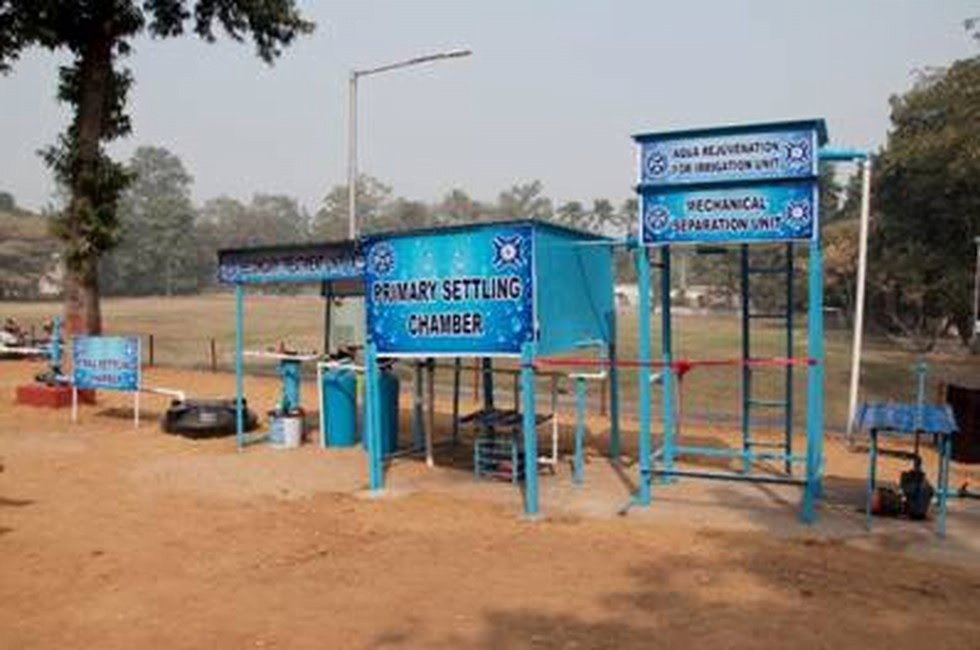
CSIR-Central Mechanical Engineering Research Institute, Durgapur (West Bengal) unveiled the first-ever Waste Water Treatment Technology Model which purifies Waste Water for Irrigation/Farming purposes.
It facilitates an Organic Farming Model through treated Waste Water.
Key takeaways
Aqua Rejuvenation Plant (ARP) is an Integrated Waste Water Rejuvenation Model which has Six-Stage purification profile for comprehensive treatment of Waste Water, based upon diverse purification parameters.
The approx. 24,000 litres of Water that can be rejuvenated using ARP will be sufficient for almost 4 acres of Agricultural Land (barring seasonal variations in water requirements).
The used filtration media have been specially developed to handle Indian Sewage Water Parameters and based upon Geographical Variations they may be modified.
The system has dual benefit. While the treated water is being used for irrigation purpose, the filtered sludge generated is also utilized as manure / fertilizer.
The bio char prepared from dry leaves falling in autumn season is also used for mixing in soil as it reduces the water requirement for irrigation thus saving precious water.
Part of: GS Prelims and GS- III – Biodiversity; Environment
In news
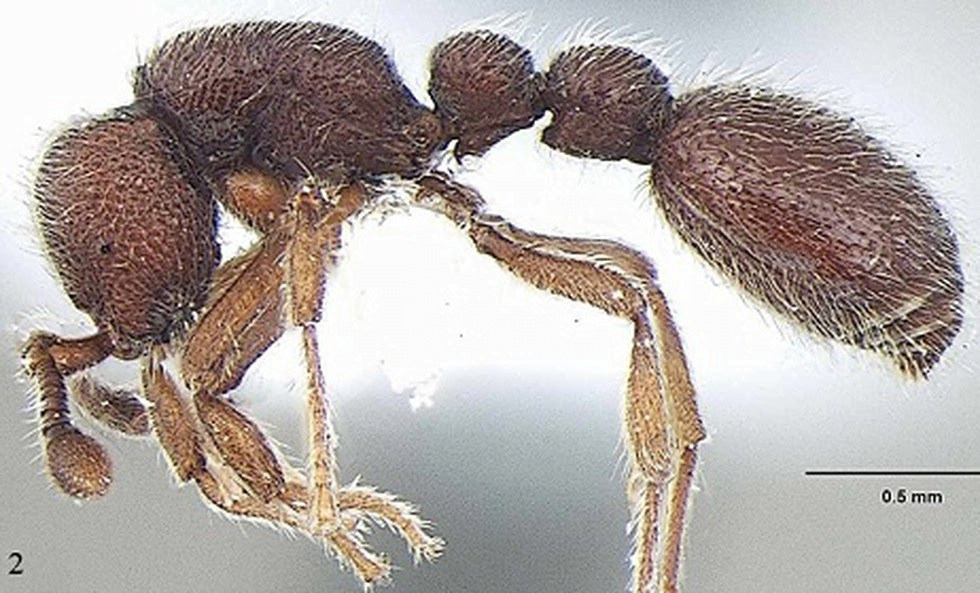
Two new species of a rare ant genus have been discovered in India.
The species of the ant genus Ooceraea found in Kerala, and Tamil Nadu add to the diversity of this rare genus.
Key takeaways
One of them found in the Periyar Tiger Reserve of Kerala, has been named Ooceraea joshii, in honour of Prof. Amitabh Joshi, a distinguished evolutionary biologist.
The newly discovered ant species with ten segmented antennae, establish an old world lineage that contains a species emerging as the only model organism among the ant subfamily.
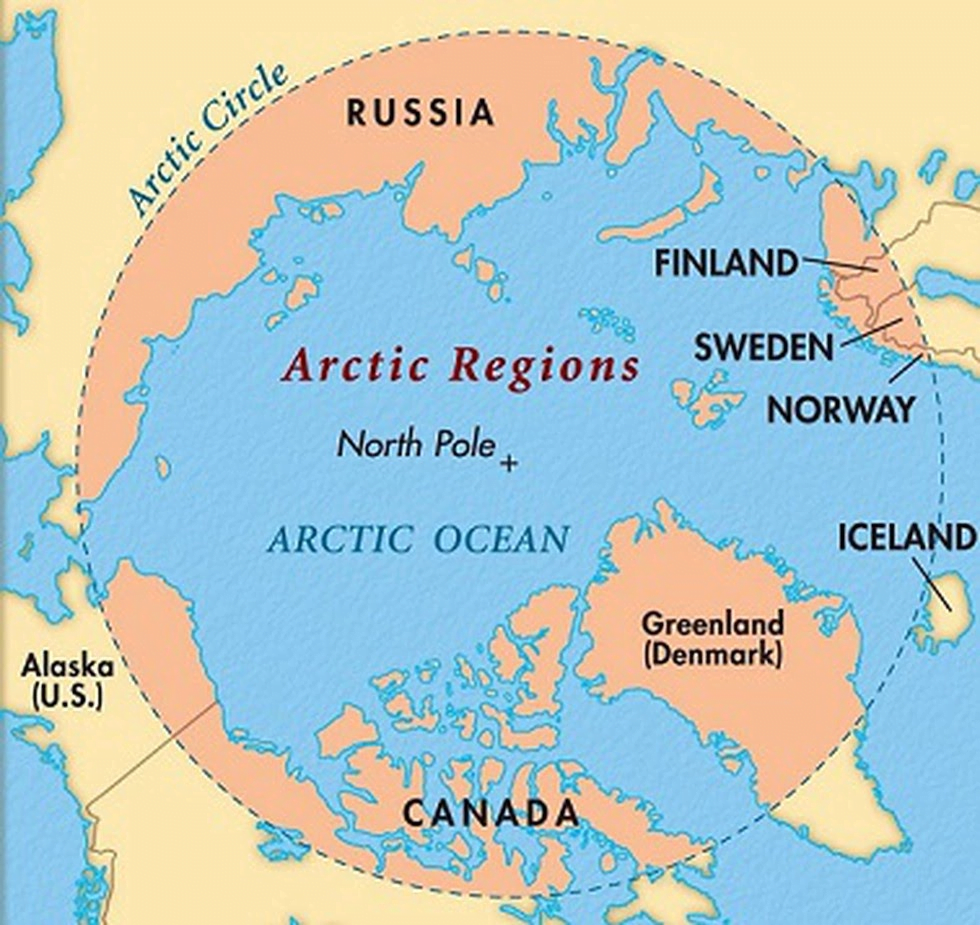
India has unveiled a new draft ‘Arctic’ policy that, among other things, commits to expanding scientific research, sustainable tourism and mineral oil and gas exploration in the Arctic region.
Key takeaways
India expects the Goa-based National Centre for Polar and Ocean Research to lead scientific research and act as a nodal body to coordinate activities under it.
Aim: (1) To put in place Arctic related programmes for mineral/oil and gas exploration in petroleum research institutes; (2) To encourage tourism and hospitality sectors in building specialised capacities and awareness to engage with Arctic enterprises.
Arctic research will help India’s scientific community to study melting rates of the third pole — the Himalayan glaciers, which are endowed with the largest freshwater reserves in the world outside the geographic poles.
Do you know?
India launched its first scientific expedition to the Arctic in 2007.
Himadri is India’s first permanent Arctic research station located at Spitsbergen, Svalbard, Norway.
It was set up during India’s second Arctic expedition in 2008.
Part of: GS Prelims and GS- III – Banking; Economy
In news
The RBI has suggested a tougher regulatory framework for the non-banking finance companies’ (NBFC) sector to prevent recurrence of any systemic risk to the country’s financial system.
Key takeaways
RBI released a discussion paper on the revised regulatory framework which is formulated on a scale-based approach, and sought comments within a month.
The regulatory and supervisory framework of NBFCs will be based on a four-layered structure — the base layer (NBFC-BL), middle layer (NBFC-ML), upper layer (NBFC-UL) and the top layer.
If the framework is visualised as a pyramid, the bottom of the pyramid, where least regulatory intervention is warranted, can consist of NBFCs currently classified as non-systemically important NBFCs (NBFC-ND), NBFCP2P lending platforms, NBFCAA, NOFHC and Type I NBFCs.
The next layer may comprise NBFCs currently classified as systemically important NBFCs (NBFC-ND-SI), deposit-taking NBFCs (NBFC-D), HFCs, IFCs, IDFs, SPDs and CICs.
The extant regulatory framework for NBFC-NDs will now be applicable to base layer NBFCs.
The extant regulatory framework applicable for NBFC-NDSI will be applicable to middle layer NBFCs.
NBFCs residing in the upper layer will constitute a new category.
The current threshold for systemic importance, which is ₹500 crore now, is proposed to be revised to ₹1,000 crore.
As per the proposals, the extant NPA classification norm of 180 days will be reduced to 90 days.
Important value additions
Non-Banking Financial Company
It is a financial institution that does not have a full banking license or is not supervised by a national or international banking regulatory agency.
The most important difference between non-banking financial companies and banks is that NBFCs don’t take demand deposits.
Related articles:
RBI introduces risk-based internal audit norms for NBFCs, UCBs: Click here
Structured Finance and Partial Guarantee Programme to NBFC-MFIs launched: Click here
Special liquidity scheme for NBFCs/HFCs approved: Click here
Joe Biden assumed office as President of the USA recently.
Among the first orders he signed was one to restore America’s participation in the United Nations Paris Agreement on climate change.
Key takeaways
America’s return will take effect on February 19.
USA has promised enforcement mechanism to achieve net-zero emissions no later than 2050, including a target no later than the end of his term in 2025, aided by a planned federal investment that will total $1.7 trillion over ten years, besides private investments.
The plan revolves around 10 million well-paying clean energy jobs with a focus on solar and wind power.
This year’s UN climate conference in Glasgow will see the new administration engaging UNFCCC member-nations to raise global ambition.
Do you know?
The withdrawal from the Paris Agreement meant that the U.S. was no longer bound by its national pledge made under the pact: to achieve an economy-wide reduction of its GHG emissions by 26%-28% below the 2005 level in 2025.
America also stopped its contribution to the UN’s Green Climate Fund, to which it had pledged $3 billion, after transferring an estimated $1 billion.
In the past, the U.S., under George W. Bush, had pulled out of the previous pact, the Kyoto Protocol, in 2001.
Important value additions
What is the Paris Agreement?
In December 2015, 195 countries signed an agreement (came into force on Nov 2016) within the United Nations Framework Convention on Climate Change(UNFCCC), dealing with greenhouse-gas-emissions mitigation, adaptation, and finance
Objective: To slow the process of global warming by limiting a global temperature rise this century well below 2 degrees Celsius above pre-industrial levels and to pursue efforts to limit the temperature increase even further to 1.5 degrees Celsius.
Another crucial point in this agreement was attaining “net zero emissions” between 2050 and 2100. Nations have pledged “to achieve a balance between anthropogenic emissions by sources and removals by sinks of greenhouse gases in the second half of this century”.
Developed countries were also told to provide financial resources to help developing countries in dealing with climate change and for adaptation measures.
As part of a review mechanism, developed countries were also asked to communicate every two years the “indicative” amount of money they would be able to raise over the next two years, and information on how much of it would come from public financial sources.
In contrast, developing countries have only been “encouraged” to provide such information every two years on a voluntary basis.
The agreement also includes a mechanism to address financial losses faced by less developed nations due to climate change impacts like droughts, floods etc. However, developed nations won’t face financial claims since it “does not involve or provide a basis for any liability or compensation”.
To recognize and honour the invaluable contribution and selfless service rendered by individuals and organizations in India in the field of Disaster Management, Government of India has instituted an annual award known as Subhash Chandra Bose Aapda Prabandhan Puraskar.
For the year 2021, (i) Sustainable Environment and Ecological Development Society (in the institutional category) and (ii) Dr. Rajendra Kumar Bhandari (in the Individual category) have been selected for the Subhash Chandra Bose Aapda Prabandhan Puraskar for their excellent work in Disaster Management.
The award is announced every year on 23rd January, the birth anniversary of Netaji Subhash Chandra Bose.
The award carries a cash prize of Rs. 51 lakh and a certificate in case of an institution and Rs. 5 lakh and a certificate in case of an individual
Bhawana Kanth
Flight lieutenant Bhawana Kanth is set to become the first woman fighter pilot to take part in the Republic Day parade.
She will be a part of the Indian Air Force’s (IAF’s) tableau that will showcase mock-ups of the light combat aircraft, light combat helicopter and the Sukhoi-30 fighter plane.
She is currently posted at an airbase in Rajasthan where she flies the MiG-21 Bison fighter plane.
Kanth is also one of the first women fighter pilots in the IAF.
(Mains Focus)
AGRICULTURE/ ECONOMY/ GOVERNANCE
Topic:
GS-2: Government policies and interventions for development in various sectors and issues arising out of their design and implementation.
GS-3: Issues related to direct and indirect farm subsidies; Transport and marketing of agricultural produce and issues and related constraints.
GS-3: Indian Economy and issues relating to planning, mobilization, of resources, growth, development and employment
Context: Farmers on the warpath would mean that agriculture reforms have again occupied centrestage not just in the minds of the politicians but also policymaker.
Why farmers are protesting against farm laws: Click here and here
Why earlier government negotiations have failed: Click here
What is the long term solution advocated by experts: Click here
Do You Know?
As in the Agriculture Census, 2015-16, the total number of small and marginal farmers’ households in the country stood at 12.56 crore. These small and marginal holdings make up 86.1% of the total holdings.
RBI has set a cap that out of a bank’s overall adjusted net bank credit, 18% must go to the agriculture sector, and within this, 8% must go to small and marginal farmers and 4.5% for indirect loans
Farm Credit and Small Farmers
Institutional Credit avoids Debt Trap: To enable small farmers to diversify their crops or improve their income they must have access to credit at reasonable rates of interest. This prevents them from going to private moneylender who charge exorbitant rate of interest leading to debt trap
Subsidised Agri-credit Increasing every year: The central government announces an increase in the target of subsidised agriculture credit limit every year and banks surpass the target.In 2011-12, the target was ₹4.75-lakh crore; now, agri-credit has reached the target of ₹15-lakh crore in 2020-21 with an allocated subsidy of ₹21,175 crore.
Agri-credit has become less efficient in delivering agricultural growth: Unfortunately, while the volume of credit has improved over the decades, its quality and impact on agriculture has only deteriorated. Over 85% of farmers’ income remain stagnant over the years.
Agri-Credit not reaching Small Farmers: In the last 10 years, agriculture credit increased by 500% but has not reached even 20% of the 12.56 crore small and marginal farmers. Households with the lowest land holding (up to two hectares) getting only about 15% of the subsidised outstanding loan from institutional sources (bank, co-operative society). The share is 79% for households having land more than two hectares.
Agri Machinery still financed by non-subsidised loans: Despite an increase in agri-credit, even today, 95% of tractors and other agri-implements sold in the country are being financed by NBFCs, at 18% rate of interest or by Banks at 11%.
Bulk of subsidised agri-credit is grabbed by big farmers and agri-business companies: A loose definition of agri-credit has led to the leakage of loans at subsidised rates to large companies in agri-business. In 2017, 53% of the agriculture credit that NABARD provided to Maharashtra was allocated to Mumbai city and suburbs, where there are no agriculturists, only agri-business.
Institutional Credit is Unevenly Distributed: RBI’s internal working group in 2019 found that in some States, credit disbursal to the farm sector was higher than their agriculture GDP and the ratio of crop loans disbursed to input requirement was very unevenly distributed. Examples are in Kerala (326%), Andhra Pradesh (254%), Tamil Nadu (245%), Punjab (231%) and Telangana (210%).
Diversion of credit for non-agriculture purposes: The subsidised credit disbursed at a 4%-7% rate of interest is being disbursed to other purposes due to corruption and loopholes in the system. At times these loans are refinanced to small farmers in the open market at a rate of interest of up to 36%.
Ignored by new farm laws: Even new farm laws have not addressed the reform in the agriculture credit system
Way Forward
Direct Income Support: One way to empower small and marginal farmers is by giving them direct income support on a per hectare basis rather than hugely subsidising credit.
Promoting Farmer Producer Organisations(FPO): Streamlining the agri-credit system to facilitate higher crop loans to farmer producer organisations, or the FPOs of small farmers against commodity stocks can be a win-win model to spur agriculture growth
Leveraging Technology: With mobile phone penetration among agricultural households in India being as high as 89.1%, the prospects of aggressive effort to improve institutional credit delivery through technology-driven solutions can reduce the extent of the financial exclusion of agricultural households.
Promoting New Age Agri-Entrepreneurs: There are reports that farmers have been able to avail themselves of loans through mobile phone apps. These apps use satellite imagery reports which capture the extent of land owned by farmers in States where land records are digitised and they grow the crop to extend the Kisan Credit Card loans digitally
Cooperative Federalism: Other steps needed are reforming the land leasing framework and creating a national-level agency to build consensus among States and the Centre concerning agriculture credit reforms to fill the gap and reach out to the most number of small and marginal farmers.
GOVERNANCE/ SOCIETY
Topic:
GS-2: Effect of policies and politics of developed and developing countries on India’s interests
GS-3: Conservation, environmental pollution and degradation
Context: Joe Biden assumed office as President of the United States on January 20, 2021, and among the first orders he signed was one to restore America’s participation in the United Nations Paris Agreement on climate change, that premised on voluntary targets for national emissions cuts
Share in Global GHG Emission: The U.S. accounts for 15% of global GHG emissions, but it is the biggest legacy contributor of atmosphere-warming gases.
Sectoral Contribution to GHG Emission: Transport (28%) and power (27%) are the two biggest national sectors contributing to GHG emissions, followed by industry (22%), agriculture (10%) and Commercial and residential emissions together make up only 13%
Major Contributor of Methane Pollution: Significantly, 10% of U.S. emissions are methane, which has a greater warming effect than CO2, and 81% is carbon dioxide. The rest is made up of nitrous oxide and fluorinated gases.
Do You Know?
On the long road to Paris, the U.S., under George W. Bush, had pulled out of the previous pact, the Kyoto Protocol, in 2001.
Since Trump Presidency (2016 onwards), US has
Quit the U.N. Human Rights Council and U.N. cultural agency UNESCO
Pulled out of Iran nuclear deal
Cut funding for the U.N. Population Fund (UNFPA) and U.N. agency that helps Palestinian refugees (UNRWA)
What changes did the Trump administration make on climate?
No more bound by pledges: The withdrawal from the Paris Agreement meant that the U.S. was no longer bound by its national pledge made under the pact -to achieve an economy-wide reduction of its GHG emissions by 26%-28% below the 2005 level in 2025 and to make best efforts to reduce emissions.
Global Funding Stopped: America also stopped its contribution to the UN’s Green Climate Fund, to which it had pledged $3 billion, after transferring an estimated $1 billion.
Supported Fossil fuel based industries: On the contrary, the Trump regime focused on relaxing controls on emissions from fossil fuel-based industries, diluting standards on air quality and vehicular emissions, hydrofluorocarbon leaking and venting from air-conditioning system.
Revoked Protection to Natural Habitats: Trump administration loosened the way the government calculated the social cost of carbon, restraining individual States such as California from setting higher standards, revoking protection for natural habitats, including the Arctic sought by the oil and gas industry, and for individual wildlife species
Tweaked Environmental legislations: In all, more than 100 environmental rules were tinkered with by the administration, with some rule reversals remaining in process when the presidential election took place, and others taken to court.
Nullified Clean Power Plan: It was a major provision from the Obama-era to cut power sector emissions by 32% over 2005 levels by 2030. This was initially replaced with the Affordable Clean Energy (ACE) rule, with a reduction effect of only 0.7%. (However, the ACE rule was struck down by a court, giving Mr. Biden the freedom to reformulate a strong rule)
What areas will Mr. Biden focus on to cut emissions?
Dedicated Team: Mr. Biden, who has formed a high-powered team including special presidential envoy for climate, John Kerry, to lead clean development, has placed climate change front and centre among his priorities.
Carbon Neutrality: New President Biden has promised an “enforcement mechanism to achieve net-zero emissions no later than 2050”, including a target no later than the end of his term in 2025
Enhanced Financing: The plan to achieve carbon neutrality is being aided by a planned federal investment that will total $1.7 trillion over ten years, besides private investments.
Comprehensive Plan for Climate Action: The plan revolves around 10 million well-paying clean energy jobs with a focus on solar and wind power, close linkages between university research and the private sector, active support for carbon capture, utilisation and storage, and a renaissance in green transport.
Multilateralism and Accountability: In his Plan for Climate Change and Environmental Justice released before the election, Mr. Biden says America will strongly support multilateralism again, but also call for accountability from other countries, including the top emitter, China, on GHG emissions
What does Mr. Biden’s policy mean for other countries?
Increased participation from US in international forums and seeking accountability from others means that nations that default could face carbon adjustment fees or quotas.
This year’s UN climate conference in Glasgow will see the new administration engaging UNFCCC member-nations to raise global ambition.
It also means that there are hopes for developing countries like India who can get aid through Green Climate Fund that will help access cleaner expensive technologies from developed nations.
(TEST YOUR KNOWLEDGE)
Model questions: (You can now post your answers in comment section)
Note:
Correct answers of today’s questions will be provided in next day’s DNA section. Kindly refer to it and update your answers.
Comments Up-voted by IASbaba are also the “correct answers”.
Q.1 Where is Periyar Tiger Reserve situated?
Kerala
Tamil Nadu
Karnataka
Andhra Pradesh
Q.2 The first-ever Waste Water Treatment Technology Model which purifies Waste Water was recently unveiled for which of the following purpose?
Farming
Household purposes in rural areas
Processing wood to make paper
In producing steel for automobiles
Q.3 Which of the following is India’s first permanent Arctic research station?
Dakshin Gangotri
Maitri
Bharati
Himadri
ANSWERS FOR 23rd January 2021 TEST YOUR KNOWLEDGE (TYK)