Part of: GS Prelims and GS-II – Government Policies & Interventions; Judiciary
In news
Supreme Court judgment of 2010: Involuntary administration of narco or lie detector tests is an intrusion into a person’s “mental privacy”.
The judgment is significant amid reports that the Uttar Pradesh government wants to subject the family members of a recent gang-rape vicitm to these tests.
What did the judgement say?
The judgment: Smt. Selvi vs. State of Karnataka
Involuntary administration of these scientific tests was sufficient to constitute a custodial environment.
It amounted to a restraint on personal liberty.
The consequences of such tests can be devastating on people from weaker sections of society who are unaware of their fundamental rights and unable to afford legal advice.
It may involve future abuse, harassment and surveillance, even leakage of the video material to the news channels for a trial by media.
Such tests are against human dignity and liberty, and have long-lasting negative effects.
An individual’s decision to make a statement is the product of a private choice and there should be no scope for any other individual to interfere with such autonomy.
Do you know?
Polygraph or Lie Detector Testmeasures and records several physiological indicators such as blood pressure, pulse, respiration, and skin conductivity while a person is asked a series of questions.
Narcoanalysis Test involves the injection of sodium pentothal which induces a hypnotic or sedated state in which the subject’s imagination is neutralized, and they are expected to divulge information that is true.
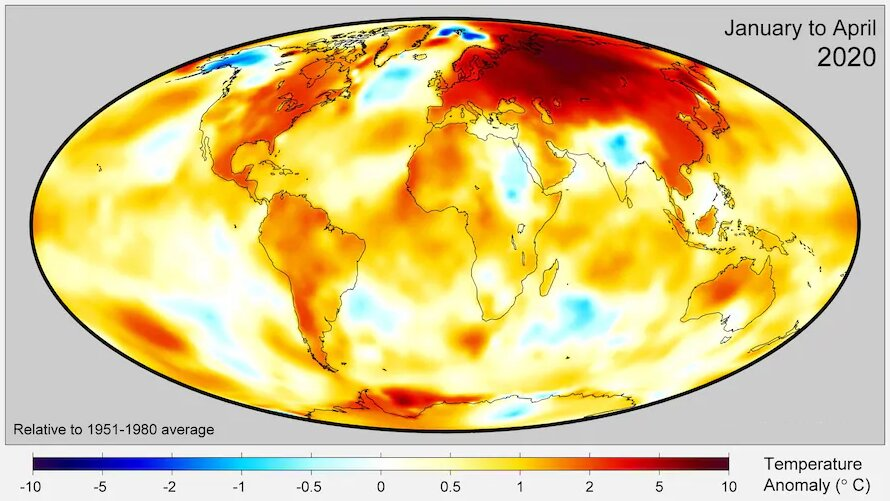
According to a new study, the fire regimes in the Arctic are changing rapidly, with zombie fires becoming more frequent
Fires occurring in the once-frozen tundra are also becoming frequent.
The fires in the Arctic spreading to areas which were formerly fire-resistant is a more worrying feature.
Key takeaways
The reason for this anomaly is that temperatures in winter and spring were warmer than usual during 2019-20.
The fires and record temperatures have the potential of turning the carbon sink into a carbon source and increasing global warming.
Peatlands do not regrow quickly after a fire, so the carbon released is permanently lost to the atmosphere.
As peatlands release more carbon, global warming will increase which will thaw more peat and cause more wildfires.
Arctic fires will affect the global climate over the long term.
Do you know?
Peatlands are wetlands that contain ancient, decomposed and partially decomposed organic matter.
Nearly half the world’s peatland-stored carbon lies between 60 and 70 degrees north, along the Arctic Circle.
Zombie Fire is a fire from a previous growing season that can burn slowly without smoke under the ground which is made up of carbon-rich peat.
When the weather warms, the fire can reignite.
These are also known as holdover fires.
Miscellaneous
World Habitat Day
World Habitat Day 2020 was observed on 5 October, 2020
Theme: Housing For All — A Better Urban Future
Objective: To reflect on the state of our towns and cities and the basic right of all to adequate shelter; (2) To remind the world of its collective responsibility for the future of the human habitat.
The Habitat Scroll of Honouraward
Launched by: United Nations Human Settlements Programme in 1989.
It is currently the most prestigious human settlements award in the world.
Aim: To acknowledge initiatives which have made outstanding contributions in various fields such as shelter provision, highlighting the plight of the homeless and improving the human settlements and the quality of urban life.
The award is presented to the winners during the Global Observance of World Habitat Day.
(MAINS FOCUS)
EDUCATION/ GOVERNANCE
Topic: General Studies 2, 3:
Issues relating to development and management of Social Sector/Services relating to Education, Human Resources
Government policies and interventions for development in various sectors and issues arising out of their design and implementation.
Context: There is a need to explore the contours of national education practices leading to 2047 when politically independent India becomes 100 years old.
From a teacher’s perspective, the next education practices can be viewed through the following five design principles.
Autonomy: To Excel is the key
The greatest insurance for autonomy is excellence in students’ outcomes rather than a piece of legislation.
As long as institutions continue to excel, they will earn their autonomy through social, community and citizens’ sanctions. Legislation may help.
In practice, autonomy cannot be defined by entitlement nor limited by unlawful encroachment.
By 2047, autonomy has to be imbibed as an institutional culture rather than a personal perquisite of a vice chancellor, principal or a director.
There needs to be autonomy in teaching methods, autonomy of the learner in creating her own curriculum, autonomy of thought and self-governance — Swayttata.
Learning: Technology Rich Settings
In 2047, six billion people in the world would constitute the middle class. With little money but with enormous hunger for learning, they will define the learner base for a networked global university system.
Technology will proliferate intelligence from hardware to software to everywhere.
Teachers will evolve from ring masters to zen masters, raising awareness rather than delivering content
The four core tasks of the university: creation; dissemination; accreditation and monetisation of knowledge will require a sweet synthesis of algorithm and altruism.
Learning will involve mobilisation of knowledge for a specific person; is a specific context to face specific challenges or problems.
In the ultimate analysis, learning will be about propagation of crucial questions rather than pre-determined answers. Pressure of performance will have to co-exist with the pleasure and ecstasy of learning — ananda.
Trans-disciplinarity: Coherence across fields
The new National Education Policy (NEP) roots for multi-disciplinary institutions rather than standalone schools. Multidisciplinarity involves experts from different disciplines working together, each drawing on their unique disciplinary knowledge.
However, by 2047, trans-disciplinarity rather than multi-disciplinarity will be the norm. Transdisciplinarity is about creating a coherence of intellectual frameworks beyond the disciplinary perspectives.
Knowledge in 2047 will move from discipline-based units to the unity of meaning and understanding.
The reductionist knowledge of the West that explains the whole as the sum of parts will yield space to the quest for the part less whole that the rishis of the Upanishads described as purnatwa.
Technology-Innovation: School as connecting hub
Technology-led innovation will take learning from cognition to immersion.
Traditionally, students of professional courses learnt through field and factory visits. Today, it is possible for a factory experience to be simulated in a classroom
In 2047, school will not be a brick and mortar house but a connecting hub that will digitally decode, deliver and disperse knowledge.
Disruptive innovation will enable technology to give greater access to hitherto exclusive knowledge and fulfil unmet learner needs.
Technology will not be a cosmetic add-on but serve a strategic purpose. Leading schools of the world will harness talent and technology seamlessly.
Values, mindset and culture:Nurturing minds with values
By 2047, Indian teachers will be engaged in nurturing global mindsets based on three classical values of India: satyam(authenticity), nityam (sustainability) and purnam (wholeness).
Mindsets will be based on how learners receive information and not what information they receive; on how to think rather than what to think.
Education is finally about creating and sustaining wholesome cultures rather than serving the templates of outmoded civilisations.
The most valuable outcome of education is the becoming of a competent and compassionate human being.
Conclusion
In 2047, a teacher’s role, based on five principles, will be to oversee the transformative re-birth of citizens
Context: In 2019, Haryana farmers burnt nearly a fifth of the paddy stubble generated by them, while Punjab farmers burnt nearly half of what they generated.
What is Stubble Burning?
Stubble burning is the act of setting fire to crop residue to remove them from the field to sow the next crop
It is a traditional practice in Punjab and Haryana to clean off the rice chaff to prepare the fields for winter sowing
It begins around October and peaks in November, coinciding with the withdrawal of southwest monsoon.
On December 10, 2015, the National Green Tribunal (NGT) had banned crop residue burning in the states of Rajasthan, Uttar Pradesh, Haryana and Punjab
Environmental Risks associated with Stubble burning
Air Pollution: A study estimates that crop residue burning released 149.24 million tonnes of carbon dioxide (CO2), over 9 million tonnes of carbon monoxide (CO), 0.25 million tonnes of oxides of sulphur (SOX), 1.28 million tonnes of particulate matter and 0.07 million tonnes of black carbon.
Responsible for the haze in Delhi: Crop burning contributed nearly 40% of the near-surface PM 2.5 in Delhi in 2016, which saw one of Delhi’s severest pollution episode
Soil Fertility: The heat from burning paddy straw penetrates 1 centimetre into the soil, elevating the temperature to 33.8 to 42.2 degree Celsius. This kills the bacterial and fungal populations critical for a fertile soil. The solubility capacity of the upper layers of soil has also been reduced.
Pests in atmosphere: Burning of crop residue causes damage to other micro-organisms present in the upper layer of the soil as well as its organic quality. Due to the loss of ‘friendly’ pests, the wrath of ‘enemy’ pests has increased and as a result, crops are more prone to disease.
Supreme Court on Stubble Burning
The Supreme Court, in November 2019, had directed the governments of Punjab, Haryana and Uttar Pradesh to pay farmers a financial incentive to curb the practice
In 2019, the Punjab government paid Rs 28.51 crore to 31,231 farmers, while Haryana’s paid Rs 1.63 crore to 4,000. This year, the Haryana government expects to pay as much as Rs 301 crore.
However, Supreme Court appointed Environment Pollution (Prevention and Control) Authority, or EPCA, is right in saying that an incentive of Rs 100 per quintal of grain—paid on top of the MSP during procurement by the Centre—is “not viable”.
How have governments tried to solve the issue?
Union Government: Under a 100% centrally-funded scheme, machines that help farmers in in-situ management—by tilling the stubble back into the soil—were to be provided to individual farmers at 50% subsidy and to custom hiring centres (CHCs) at 80% subsidy.
While Haryana has set up 2,879 CHCs so far and has provided nearly 16,000 straw-management machines, it has to set up 1,500 more and has to cover nearly as many panchayats it has reached so far.
Similarly, Punjab, which has provided 50,815 machines so far, will need to set up 5,000 more CHCs—against 7,378 set up already—and reach 41% of its panchayats by October 2020.
Way Ahead
Short term Solution: Giving farmers easy and affordable access to the machines which allow them to do smart straw management is the short term solution to the problem
Dual Strategy: Both in-situ (in the field) and ex-situ (elsewhere) solutions need to be considered, apart from tackling the fundamental factors prompting the practice.
Affordability of Government Measures: A key factor will be ensuring affordability of service for those hiring the machines; Haryana has reserved 70% of the machines at panchayat-run CHCs for small and marginal farmers, while Punjab has prioritised service to them.
Utilizing Crop Stubble: Instead of burning of the stubble, it can be used in different ways like cattle feed, compost manure, roofing in rural areas, biomass energy, mushroom cultivation, packing materials, fuel, paper, bio-ethanol and industrial production, etc.
The long-term solution has to be crop diversification, away from paddy
Connecting the dots:
Ashok Dalwai Committee on Doubling Farmers income
(TEST YOUR KNOWLEDGE)
Model questions: (You can now post your answers in comment section)
Note:
Correct answers of today’s questions will be provided in next day’s DNA section. Kindly refer to it and update your answers.
Comments Up-voted by IASbaba are also the “correct answers”.
Q.1 India’s first Pan India time use survey was recently released by which of the following Ministry?
Ministry of Statistics
Ministry of Agriculture
Ministry of Finance
Ministry of Commerce
Q.2 Consider the following statements:
Polygraph Testinvolves the injection of sodium pentothal
Narcoanalysis Test measures and records several physiological indicators.
Which of the above is/are correct?
1 only
2 only
Both 1 and 2
Neither 1 nor 2
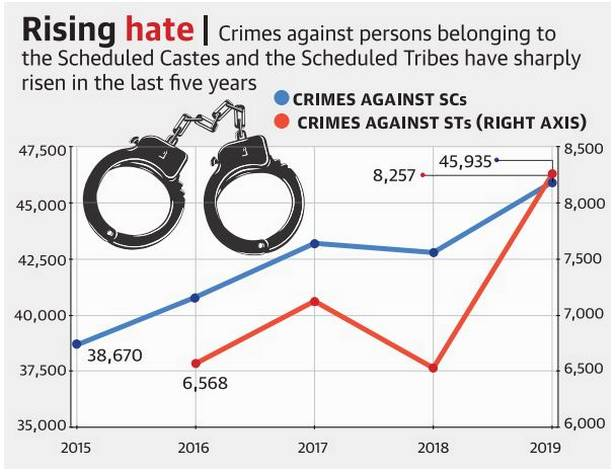
Q.3 Consider the following statements regarding Crime in India 2019 report which was recently released:
There is an increase in crimes against Scheduled Castes and women.
There is a decrease in crimes against Scheduled Tribes.
Which of the above is/are correct?
1 only
2 only
Both 1 and 2
Neither 1 nor 2
Q.4NationalCrime Record Bureau (NCRB) comes under which of the following Ministry?
Ministry of Home Affairs
Ministry of Defence
Ministry of Law and Justice
Ministry of Minority Affairs
ANSWERS FOR 5th October 2020 TEST YOUR KNOWLEDGE (TYK)