Context: Climate change has become one of the most significant threats to World Heritage properties, potentially impacting their Outstanding Universal Value, including their integrity and authenticity, and their potential for economic and social development at the local level.
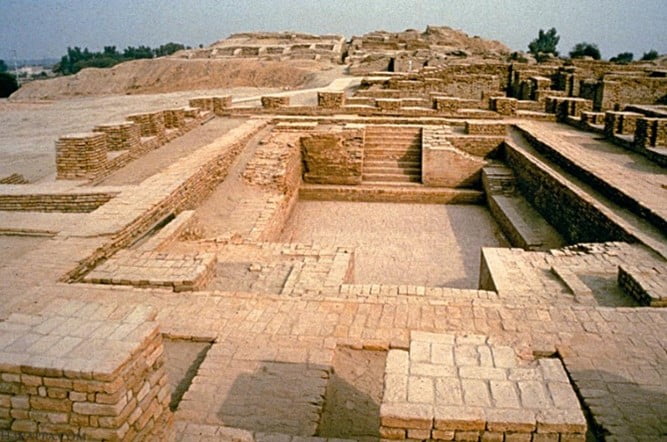
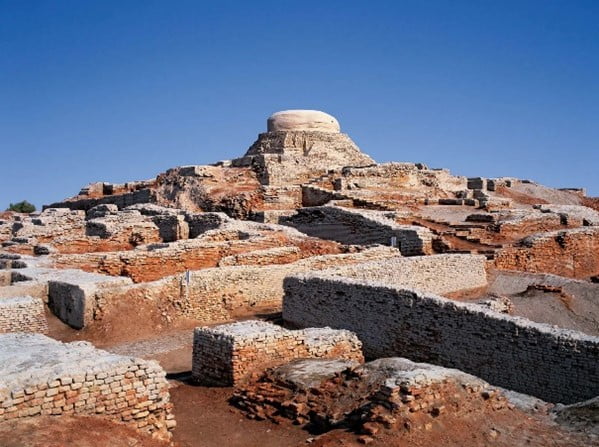
Case Study: Survival of Mohenjo Daro
One of the world’s first cities came close to being wiped off the map during tragic floods recently in Pakistan.
Though Mohenjo Daro survived, it has become a symbol of the threat global warming poses to humanity’s cultural heritage.
Built around 3000 BC by the Indus civilization in modern-day South Asia, Mohenjo Daro was not swept away by the floods, most likely thanks to the genius of its designers.
Perched high above the Indus River, the city was equipped with a primitive drainage system and sewers, meaning much of the floodwaters could be evacuated.
Nearly 1,600 Pakistanis died in the floods and 33 million others were affected in a disaster “probably” made worse by global warming, according to World Weather Attribution, a network of researchers.
The Pakistani site was “a victim” of climate change and was “very lucky” to still be around, exactly 100 years since it was first discovered in 1922.
The impacts of climate change:
Extreme weather and geological events:
Of its 1,154 World Heritage sites, “one site in five, and more than a third of natural sites, already see climate change threat as a reality”.
Floods:
The world is experiencing many more incidents of floods, hurricanes, cyclones, and typhoons. Climate-related disasters are having a significant impact on sites such as Mohenjo-Daro.
Temperature Rise:
In Australia, the protected Great Barrier Reef is experiencing bleaching episodes due to rising water temperatures.
High Erosion:
In Ghana, erosion has washed away part of Fort Prinzenstein, which is conserved as a notable slave trading post.
Forest fires:
Huge forest fires have scorched the Rocky Mountains in Canada, which are a world heritage site, and this year flames came within 15 kilometres (nine miles) of Delphi as a heatwave intensifies the severity of wildfires across the Mediterranean basin.
Landslides:
In Peru, meanwhile, landslides occurred this year at the foot of Machu Picchu in the Andes mountains.
Recently four people died and one was injured in a landslide that hit three houses in the Tharali area of Uttarakhand’s Chamoli district.
Termites and drought:
“Slow factors” that do not have an immediate impact pose “new kinds of risks in many of these sites”.
These include invasions of wood-eating termites in areas that were previously either too dry or too cold for the insects to thrive.
In other countries, the drying out of soil due to declining rainfall can have a “destabilizing” effect on some heritage sites.
Under drought conditions, “the soils contract and make the foundations move”, then “swell suddenly when it rains”, which causes cracking. When parched and hard, they absorb less water, which promotes flooding.
Water scarcity:
In Mongolia, archaeological sites have been abandoned and then looted because “the population no longer had access to water”.
Expected water shortages in the future could also lead to an increase in conflicts in which important heritage sites might be lost.
Impact on Intangible cultural heritage:
The uprooting of communities due to climate change threatens entire communities and ways of life.
This includes the practice and transmission of a host of rich intangible cultural heritage practices – from oral traditions to performing arts, social practices, rituals, festive events, traditional craftsmanship, and interactions and relationships with nature.
For instance, the changing availability of plant and animal species will lead to a loss of ecological knowledge and related language vital for the transmission of living heritage concerning food and medicinal plants.
Roadmap ahead to mitigate climate change: Global Initiatives
There is an urgent need to better understand, monitor, and address climate change threats to world heritage.
Sendai Framework:
There is a need to implement a new international approach to managing climate-driven disasters by shifting from a focus on reducing disaster losses to a comprehensive management vision – building on the Sendai Framework for Disaster Risk Reduction 2015–2030.
Early warning:
There is a requirement for an early warning system to alert protected area managers of emerging problems.
Global assessment of climate risk:
A global assessment of climate risk to all World Heritage sites is required so that the most vulnerable sites can be identified and resources for preparedness and resilience can be directed to the most at-risk sites.
Sustainable Development Goals:
Target 11.4 of the SDGs calls for “strengthening efforts to protect and safeguard the world’s cultural and natural heritage” and directly reflects the World Heritage Convention, which was the first international treaty to link these two elements.
Paris Agreement:
In the Paris Agreement, the new emphasis on preventing deforestation will increase the importance of forest conservation efforts in World Heritage sites, their buffer zones, and surrounding areas.
Reductions in fossil fuel use:
It will have the added benefit of reducing the number of World Heritage sites threatened by oil and gas exploration and development.
Further monitoring is required to better understand the effects of climate change on heritage sites and other natural hazards. The study has identified areas with urgent need for adaptation planning. The iconic nature of such sites can be used to promote awareness of the need to take action to mitigate climate change.