It is the range of orbits around a star within which a planetary surface can support liquid water given sufficient atmospheric pressure
Exoplanet :
Also Extrasolar planet is a planet outside the Solar System.
least massive planet known is Draugr
HR 2562 b is the most massive planet known
Foreign direct investment (FDI): Ordinance enabling FDI in coal mining
Part of: GS Prelims and GS-III- Economy
In News
The decision was taken to boost domestic production of Coal to one billion tonnes by 2023-24 as it leads to cheaper inputs and increase in competitiveness
About Ordinance:
Ordinances are laws that are promulgated by the President of India on the recommendation of the Union Cabinet, which will have the same effect as an Act of Parliament.
They can only be issued when Parliament is not in session.
They enable the Indian government to take immediate legislative action
Foreign direct investment (FDI)
Investment from a party in one country into a business or corporation in another country
Foreign direct investment can be made by expanding one’s business into a foreign country or by becoming the owner of a company in another country.
North East Natural Gas Pipeline Grid: CCEA approves Viability gap funding
Part of: GS Prelims- Geography and GS-III- Economy,GS-I- Geography
In News
The 1,656-km pipeline will connect Guwahati in Assam to major cities in the region such as Itanagar, Dimapur, Kohima, Imphal, Aizawl and Agartala covering all eight states in North-Eastern region
The project is critical towards implementing the government’s Hydrocarbon Vision 2030 for the North-East
Implementation Agency: Indradhanush Gas Grid Limited (IGGL)- a joint venture company of five CPSEs (IOCL, ONGC, GAIL, OIL and NRL)
Migration and Mobility Partnership Agreement signed between India and France
Part of: GS Prelims and GS-II- International Affairs
In News
The Agreement was signed in March, 2018 during the State Visit of the French President to India.
Validity of Agreement: seven years.
It incorporates provision for automatic renewal and a monitoring mechanism through a Joint Working Group.
Significance: It is a major milestone in enhancing people-to-people contacts, fostering mobility of students, academics, researchers and skilled professionals and strengthening cooperation on issues related to irregular migration and human trafficking between the two sides.
Amma Vodi’ scheme
Part of: GS Prelims- Government Schemes and GS-II- Governance, Education
In News
Under the scheme, a financial assistance of ₹15,000 will be given (directly deposited into bank account) to nearly 43 lakh mothers or guardians who send their children to school (government, private aided, private unaided schools/junior colleges)
Orphans and street children studying in schools through voluntary organisations have also been covered under the scheme and the money will be given to the organisations.
Only for the deserving sections: School and college dropouts are not eligible for this scheme and neither are government employees and income-tax payers.
Impact of the Scheme: Student enrolment has already increased by 30% in the current academic year after the announcement of the scheme.
MAINS FOCUS)
Indian Polity Federalism
TOPIC:General Studies 2:
Functions and responsibilities of the Union and the States, issues and challenges pertaining to the federal structure.
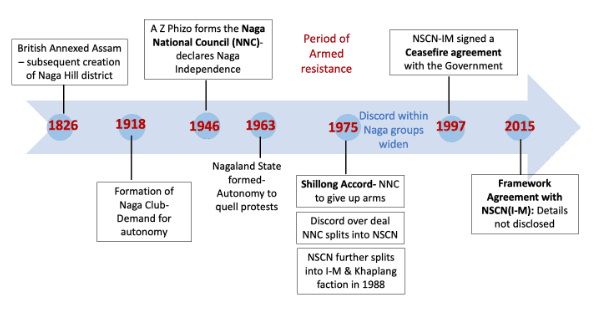
Naga Peace Process: Stuck due to inflexibility of NSCN(I-M)
Context:
The government announced ‘Christmas Gift’ deadline for concluding talks with Naga groups has passed without any concrete results on the progress made since government Framework Agreement with NSCN(I-M) in 2015
Origin of the Issue and the timeline of the events
The assertion of Naga Nationalism began during Colonial period and continued in Independent India. Below is the pictorial representation of the timeline
Daily Current Affairs IAS | UPSC Prelims and Mains Exam – 9th January 2020
What are the key demands of the Naga groups?
Greater Nagalim(sovereign statehood) i.e redrawing of boundaries to bring all Naga-inhabited areas in the Northeast under one administrative umbrella.
It includes various parts of Arunachal Pradesh, Manipur, Assam and Myanmar as well.
The Government of India recognised the unique history, culture and position of the Nagas and their sentiments and aspirations. The NSCN(Isak-Muivah) also appreciated the Indian political system and governance.
Significance: It shows the governments strong intent to resolve the long standing issue and adoption of diplomatic peaceful approach by Naga Society to fulfil their aspirations.
Reasons for not accepting Naga Demand of Separate Flag & Separate Constitution
Regressive: Yezhabo is far less liberal than what Indian Constitution presently offers for Naga people. It is regressive and some of its provisions are against modern Constitutional values of liberty, equality & rule of law
Challenges of Wider Acceptance: Yezhabo also proposes Naga leader Muivah as the over-arching figure of Naga politics, development and destiny which will not be acceptable to Naga Citizenry which are spread in adjoining states of Manipur, Arunachal Pradesh and Assam
Sets a Bad Precedent: Acceding to the demand of Separate Flag will set a dangerous precedent whereby other states also demand similar provisions
Identity Politics: Acceding to these demands is akin to giving racial and ethnic identity an equal footing with National Identity which will act as catalyst to Identity Politics in rest of India.
Weakens National Integrity: The overall National Consciousness and National integration process will be weakened.
Failure of Article 370: Working of Article 370 which had provided for separate Flag and Constitution has shown that such type of measures has not yielded results but has instead widened the gap between regional society and Indian mainstream.
Why the agreement has not been finalised yet?
It was signed only with NSCN (I-M) which in uneasy ceasefire since 1997. The agreement excluded half a dozen more groups, besides Naga citizenry. This has weakened the process
Inflexibility by NSCN(I-M) over the contentious issue of Naga Flag and Naga constitution—Yezhabo. Muivah who is now 85 has decided he cannot die leaving a legacy of surrender
Union government’s and the North-East’s political energy has been considerably spent on allaying the fears over CAA (Citizenship Amendment Act) and the proposed NRC (National Register of Citizens) thus diluting the focus on Naga peace talks
Steps taken by government over last 2-3 years to fast track the process of finalising the agreement
Talks with I-M has clearly spelt out disarmament, rehabilitation and assimilation of cadres and leaders through induction in paramilitary forces and political structures (expanded legislature in Nagaland)- thus ensuring smooth integration into Indian political system
Legislative and administrative autonomy for Naga regions outside Nagaland has been a part of talks with the Naga leadership
A breakaway faction of I-M’s arch enemies, NSCN’s Khaplang, joined the peace process with government in 2019
Government-led outreach programs to bring on board non-Naga people in Manipur, Arunachal Pradesh, and Assam, promising much development as a trade-off for offering Naga people in these states more legislative representation and administrative autonomy
The State government that has decided to prepare the Register of Indigenous Inhabitants of Nagaland (RIIN) but later due to pressure from various fractions, the decision has now been put on hold.
Way Ahead
The government will whittle away at I-M’s political, administrative and military structure and strive to reduce I-M’s heft along with Muivah’s and also stoke other lines of leadership.
Reaching a consensus with broader Naga Citizenry and also convincing the non-Naga people in adjoining states of Arunachal Pradesh, Manipur & Assam is necessary to ensure sustainable workable agreement.
Connecting the dots:
What would be the consequence if Naga peace deal is not signed at the earliest in the backdrop of growing tensions over CAA-NRC in North east?
Impact of acceding to demand of Nagalim on other States in North East.
Indian Polity Federalism
TOPIC:General Studies 2:
Functions and responsibilities of the Union and the States, issues and challenges pertaining to the federal structure.
Indian Constitution – Unitary tilt & Future Federal Challenges
Context:
Kerala Legislative Assembly passing a resolution stating that Citizenship Amendment Act (CAA) passed by Parliament contradicts the basic values and principles of the Constitution.
West Bengal Government had put anti-CAA advertisements on its websites using public funds which was later withdrawn on order of High court.
Several States have declared that they will not participate in NPR (National Population Register) exercise which will be used as basis for NRC (National Register of Citizens)
In this background where Centre and States are on conflicting stands it becomes important to analyse the Constitutional features of Federalism.
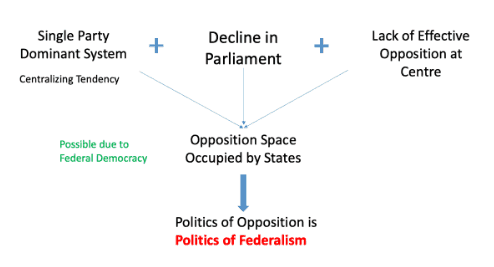
The below pictorial representation explains the plausible reason for the emergence such type of opposition by States
Daily Current Affairs IAS | UPSC Prelims and Mains Exam – 9th January 2020
Some of the features of Federalism in India:
Division of Powers: Presence of Union List, State list and Concurrent list
Written Constitution
Supremacy of the Constitution
Rigidity of the Constitution
Independent Judiciary
Bicameralism
However, there are various other features that makes the Constitution tilted towards Centre (Unitary bias)
Single Constitution
Single Citizenship
Integrated Judiciary
Flexibility of the Constitution under Article 368
Appointment of State Governors by the State
All India Services – Controlled by Centre but deputed in State administrative set up
Emergency Provisions
No equality of State representation in Rajya Sabha
Parliament’s authority over State List
Veto Over State Bills
Article 256 of the Constitution obligates the State government to ensure implementation of the laws made by Parliament. If the State government fails to do so, the Government of India is empowered to give “such directions to a State as may appear… to be necessary” even resulting in dismissal of the State government and imposition of Presidents Rule under Article 356 & 365.
Why was the Constitution structured with Unitary Bias?
The Indian Constitution is not based on American Model but based on Canadian Model. The reason why India adopted Canadian model was because:
The way federal governments are formed is by way of disintegration and not by the way of agreement amongst the states coming together like in American Federation
The States have no right to secede from the federation. Giving this right would have further strengthened the “fissiparous tendencies” in newly born Nation which was reeling under the aftereffects of Partition. Thus to avoid such secession tendencies a Strong centre was created.
Working of Federalism
However, Indian working of Constitution has shown that Federalism is not just limited to legal space where there is division of Power between Centre & State governments but Federalism has peculated into Public participation in Democratic process.
Federalism has been reflected in people’s voting behaviour. There are examples of huge vote swings between national and State elections, separated by only a few months, in the same constituencies. This indicates that people make distinction between regional concerns and National concerns.
As shown in the diagram above, the emergence of Single Party Dominance system since 2014 along with vacating of Opposition Space (partly due to decline in Parliament) has allowed regional & State governments to occupy this space.
This opposition by State governments now poses a threat to Federalism and questions the bias provided for in the original Constitution especially when India is integrated now more than ever (declining fissiparous tendencies)
Decline of Parliament involves
Using disruption as a tactic to oppose legislative discussions and stall executives agenda
Misuse of Office of Speaker to push forward ruling party’s agenda without meaningful debates (ex: Certifying bills as Money bill so as to avoid scrutiny by Rajya Sabha)
Tyranny of Political Parties: The presence of Tenth Schedule prohibits legislators to freely air their opinion. Instead they are supposed to follow their Party’s dictates thus prioritising Political Party’s interest over and above the Public interest
Criminalization of Politics: 43% of the 17th Lok Sabha members (2019 general elections) have criminal charges against them according to Association of Democratic reforms
Less number of time spent on legislative deliberations: In fact, in the last 10 years, the lower House has met for an average of 70 days a year.
Lack of Leader of Opposition since 16th Lok Sabha: With no political party gaining 10% of the strength of the Lower House, the position has remained vacant. This has effectively weakened the opposition voice in various platforms & committees which hold government accountable
But All is not Gloomy, this is because
There is thrust by the Central government on Cooperative & Competitive Federalism, in spite of having majority in Lok Sabha
Political and Administrative leadership realizes that there has to be decentralization where States will act as engines of growth and Centre will act as facilitator of growth. The 42% devolution of funds from Central pool of taxes to State is a reflection of this sentiment
The example of GST Council clearly shows that Constitution provides an outlet for Sates to engage collaboratively with Centre so as to get its concerns addressed.
Federalism is a Basic Structure of Constitution: Examples of Indian Judiciary reversing some of the Central government’s decisions like the imposition of Article 356, reversing President’s or Speaker’s decision (Arunachal Pradesh, Maharashtra, Karnataka) shows that Federalism will be an integral of our system.
Connecting the dots
Will the emergence of single party system good or bad for Democracy and economic development?
Is opposition necessary in a Democratic Polity especially it when it creates obstacles in economic development weakening Indian hand to deal with China.
(TEST YOUR KNOWLEDGE)
Model questions: (You can now post your answers in comment section)
Note:
Correct answers of today’s questions will be provided in next day’s DNA section. Kindly refer to it and update your answers.
Comments Up-voted by IASbaba are also the “correct answers”.
Q.1) The term ‘Goldilocks Zone’ is often seen in the news in the context of (UPSC 2015)
(a) the limits of habitable zone above the surface of the Earth
(b) regions inside the Earth where shale gas is available
(c) search for the Earth-like planets in outer space
(d) search for meteorites containing precious metals
Q2) Which of the following is/are the possible consequence/s of heavy sand mining in riverbeds?
Decreased salinity in the river
Pollution of groundwater
Lowering of the water-table
Select the correct answer using the code given below :
(a) 1 only
(b) 2 and 3 only
(c) 1 and 3 only
(d) 1 ,2 and 3
Q3)Match List-I with List-II and select the correct answer using the codes given below the lists:
List-I (Minerals) List-II (Mining area)
Graphite 1. Bellary
Lead 2. Didwana
Salt 3. Rampa
Silver 4. Zawar
Select the correct answer using the code given below :
(a) A-3; B -4; C-1; D-2
(b) A-1; B -4; C-2; D-3
(c) A-3; B-1; C-4; D-2
(d) A-2; B-3; C-1; D-4
Q4) Ecological research over the last quarter of the century has established the deleterious effects of habitat fragmentation due to mining, highways and such other intrusions on forests. When a large block of forests gets fragmented into smaller bits, the edges of all these bits come into contact with human activities resulting in the degradation of the entire forests. Continuity of forested landscapes and corridors gets disrupted affecting several extinction-prone species of wildlife. Habitat fragmentation is therefore considered as the most serious threat to biodiversity conservation. Ad hoc grants of forest lands to mining companies coupled with rampant illegal mining is aggravating this threat.
What is the central focus of this passage?
(a) Illegal mining in forests
(b) Extinction of wildlife
(c) Conservation of nature
(d) Disruption of habitat
Q5) What is the purpose of maintaining the continuity of forested landscapes and corridors?
Preservation of biodiversity.
Management of mineral resources.
Grant of forest lands for human activities.
Select the correct answer using the codes given below.
(a) 1 only
(b) 1 and 2
(c) 2 and 3
(d) 1, 2 and 3
ANSWERS FOR 08 JAN 2020 TEST YOUR KNOWLEDGE (TYK)
1
B
2
C
3
D
4
B
5
D
6
A
7
A
MUST READ
About the growing public protests across the world