IASbaba's Daily Current Affairs Analysis

Archives
(PRELIMS Focus)
Category: History and Culture
Context:
- Union Minister of Ports, Shipping & Waterways (MoPSW) led a vibrant celebration of Assam Day at his official residence, paying rich tributes to Chaolung Sukapha.

About Chaolung Sukapha:
- Founder of Ahom kingdom: He was a visionary 13th-century ruler who founded the Ahom kingdom that ruled Assam for six centuries.
- Other names: He is widely referred to as the architect of “Bor Asom” or “greater Assam”.
- Establishment of first principality: It was in Charaideo that Sukapha established his first small principality, sowing the seeds of further expansion of the Ahom kingdom.
- Administration: He divided the kingdom into territorial units called khels or phoids, each under an officer responsible for supplying a fixed number of paiks.
- Military system: Paiks are the able-bodied male population who owed labour and military service to the state. Every adult male between sixteen and fifty was registered as a paik and served the king for part of the year in agriculture, construction, or war. In return, he was allotted land for personal cultivation.
- Emphasis on guerrilla tactics: He emphasized guerrilla tactics suited to the terrain of rivers, jungles, and hills.
- Association with tribal communities: Sukapha developed very amiable relationships with the tribal communities living in Assam — especially the Sutias, the Morans and the Kacharis.
- Relevance: Sukapha’s significance, especially in today’s Assam lies in his successful efforts towards assimilation of different communities and tribes. He adopted a policy of conciliation and assimilation rather than annihilation.
Source:
Category: Environment and Ecology
Context:
- A rare striated grassbird was recorded in Chaprala Wildlife Sanctuary in Gadchiroli district, marking a major range extension for the species in Maharashtra.
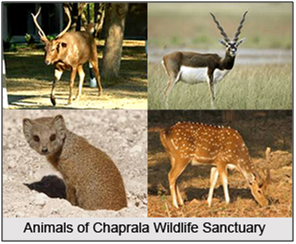
About Chaprala Wildlife Sanctuary:
- Location: It is located in the Gadchiroli district of Maharashtra.
- Establishment: Chaprala Wildlife Sanctuary was officially notified as a wildlife sanctuary in February 1986.
- Area: It covers an area of approximately 134.78 sq.km (52.05 square miles).
- Boundaries: The Markhanda and Pedigundam hills flank the sanctuary from northeast and south, and the Pranhita River flows along its western boundary.
- Rivers: It is located on the bank of the confluence of the Wardha and Wainganga rivers. During the monsoons, river water swells and enters the sanctuary.
- Tanks: Additionally, several water bodies, including the Murgikunta, Raikonta, and Komatkunta tanks, further contribute to the sanctuary’s biodiversity.
- Vegetation: It is dominated by southern tropical dry deciduous forests interspersed with grasslands.
- Flora: The dominant tree species include teak, Arjun, salai, mahua, bel, dhawada, tendu, sissoo, and semal.
- Fauna: It is inhabited by Tiger, Leopard, Wild boar, Sloth bear, Wild dogs, Langurs, Blackbuck, Spotted Deer, Sambar, Jackal, Mongoose, etc. The sanctuary also supports a diverse aquatic fauna, including fish, prawns, and turtles.
Source:
Category: Defence and Security
Context:
- INS Aridhaman, India’s third indigenously built nuclear-powered submarine, is set to be commissioned soon and it is in the final stages of its trial.
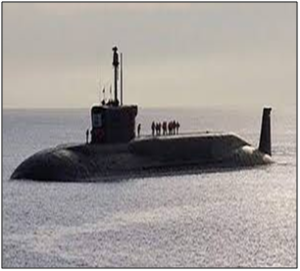
About INS Aridhaman:
- Nature: It is the second Arihant-class submarine.
- Construction: It is being built under the Advanced Technology Vessel (ATV) project to build nuclear submarines at the Ship Building Centre in Visakhapatnam.
- Significance: It is the second nuclear-powered ballistic missile submarine (SSBN) being built by India and it reinforces the commitment to the no-first-use (NFU) policy and credible minimum deterrence.
- Structure: It has a length of 112 m (367 ft) overall, a beam of 15 m (49 ft), and a draft of 10 m (33 ft). It also features an underwater communications system.
- Payload: With a displacement of 7,000 tonnes and a length of 125 metres, it has the capacity to carry a larger number of K-4 missiles. The hull features twin flank-array sonars and Rafael broadband expendable anti-torpedo countermeasures.
- Crew: It can accommodate about 95 crew members, including officers and sailors.
- State of the art systems: It will be fitted with a combination of two sonar systems – USHUS and Panchendriya. USHUS is a state-of-the-art sonar meant for Kilo-class submarines. Panchendriya is a unified submarine sonar and tactical control system, which includes all types of sonar (passive, surveillance, ranging, intercept and active).
- Strategic capability: The submarine enhances India’s strike capability and extends its patrolling range into deeper oceans, which is crucial for protecting trade routes and projecting influence in the Indian Ocean Region.
Source:
Category: Government Schemes
Context:
- Members of the Bonda community in Odisha’s Malkangiri are set to transition from fragile thatched huts to permanent pucca houses under the PM-JANMAN Scheme.

About PM-JANMAN Scheme:
- Nomenclature: PM-JANMAN stands for Pradhan Mantri Janjati Adivasi Nyaya Maha Abhiyan.
- Launch: PM JANMAN was launched on 15th November 2023, a day also celebrated as Janjatiya Gaurav Divas.
- Objective: It aims to enhance the socio-economic conditions of Particularly Vulnerable Tribal Groups (PVTGs) by providing comprehensive development interventions and by recognizing their unique contribution to national and global development.
- Beneficiaries: The scheme targets 75 PVTG communities across 18 states and 1 Union Territory (Andaman & Nicobar Islands) as its beneficiaries.
- Budgetary Outlay: The total budgetary outlay for the scheme is Rs 24,104 crore, with the central share being Rs 15,336 crore and the state share being Rs 8,768 crore.
- Coverage Period: The scheme extends from 2023-24 to 2025-26.
- Focus areas: The scheme is aimed at providing PVTG households and habitations with:
- basic facilities such as safe housing, clean drinking water and sanitation,
- improved access to education, health and nutrition,
- road and telecom connectivity, and sustainable livelihood opportunities.
- In addition, saturation will also be ensured for schemes like Pradhan Mantri Jan Arogya Yojana (PMJAY), Sickle Cell Disease Elimination, TB Elimination, 100% immunisation, PM Poshan, PM Jan Dhan Yojana, etc
- Implementation: The scheme (comprising Central Sector and Centrally Sponsored Schemes) will be implemented by the Ministry of Tribal Affairs, in collaboration with the State governments and the PVTG communities.
- Other provisions: The plan also includes the establishment of Van Dhan Vikas Kendras for trading in forest produce, off-grid solar power systems for 1 lakh households, and solar street lights.
Source:
Category: Science and Technology
Context:
- NCPOR has become the anchor of India’s polar and oceanic exploration, said Hon’ble Governor of Goa, while speaking at the Antarctica Day celebrations at Goa.

About National Centre for Polar and Ocean Research (NCPOR):
- Nature: It is India’s premier R&D institute for polar and ocean sciences, spearheading the Indian Antarctic, Arctic, and Southern Ocean research programs.
- Establishment: It was founded on 25 May 1998 as the National Centre for Antarctic and Ocean Research (NCAOR), and it was renamed NCPOR later.
- Nodal Ministry: It works under the Ministry of Earth Sciences, Government of India
- Headquarters: Its headquarters is located in Vasco da Gama, Goa.
- Composition: The governing Body comprises of 13 members and the Chairman (ex-officio) of governing body is Secretary, Ministry of Earth Sciences.
- Mandate: It facilitates scientific research activities in Antarctica, Arctic and in Indian Ocean sector of Southern Ocean. It also helps in management of Indian Antarctic Research Bases “Maitri” and “Bharati”, and Indian Arctic base “Himadri”.
- Associated with strategic projects: It also works on strategically vital projects like Mapping of Exclusive Economic Zone (EEZ), Continental shelf surveys, and the Deep Ocean Mission.
- Data Management and global collaboration: It conducts climate modelling, and is setting up the first Polar and Ocean Museum. It also participates in international polar science networks, Arctic policy dialogues, and climate monitoring programs.
Source:
(MAINS Focus)
(UPSC GS Paper III – “Environment, Conservation, EIA, Pollution & Environmental Governance”; GS Paper II – “Judiciary, Separation of Powers, Rule of Law”)
Context (Introduction)
The Supreme Court’s review in CREDAI vs Vanashakti overturning its earlier ruling that outlawed ex post facto environmental clearances has raised deep concerns about weakening environmental safeguards, diluting the EIA framework, and eroding decades of jurisprudence rooted in precaution and accountability.
Main Arguments
- Judicial Reversal: The majority held that retrospective clearances may serve “public welfare,” effectively reopening the door for projects begun illegally to obtain post-facto approvals.
- Circular Logic: Violations such as starting construction without an EC become the justification for granting a clearance—turning illegality into a ground for validation.
- Departure from Precedent: Long-standing rulings—from Common Cause to M.C. Mehta—had held that prior EC is mandatory and retrospective approval causes irreparable environmental harm.
- Undermining Precautionary Principle: The shift dilutes a bedrock principle of environmental law that requires preventive action even when risks are uncertain.
- Contradicting State Assurances: Despite the Union government earlier claiming before the Madras High Court that the 2017 post-facto window was a “one-time” measure, the 2021 SOP reopened it, enabling continued regularisation.
Challenges / Criticisms
- EIA Framework Hollowed Out: Prior EC, meant to ensure scientific appraisal, public hearings, and environmental limits, is reduced to a procedural afterthought.
- Incentivisation of Illegality: Developers may deliberately bypass environmental scrutiny, confident that violations can later be cured with fines.
- Weakening Regulatory Deterrence: Voluntary compliance replaces enforceable discipline, diminishing the authority of environmental regulators.
- Threat to Rule of Law: Bending rules to validate mass violations creates a governance culture where the scale of wrongdoing becomes a reason for leniency.
- Climate Vulnerability Ignored: In a period of intensifying climate risks, the judgment signals judicial retreat from environmental protection.
Way Forward
- Reaffirm Prior Scrutiny: Courts should restore the principle that no project may commence without an EC, preserving the preventive nature of the EIA regime.
- Tighten Post-Facto Exceptions: If allowed at all, retrospective ECs must be strictly limited to unforeseeable emergencies and not routine violations.
- Strengthen Regulatory Capacity: Empower MoEFCC, State PCBs, and expert appraisal bodies with resources for real-time monitoring and enforcement.
- Ensure Public Participation: Public hearings and transparent scientific assessments must remain central to the EC process.
- Judicial Consistency: The Court must align future rulings with its rich jurisprudence on Article 21, precautionary principle, and intergenerational equity.
Conclusion
The review judgment marks a worrying dilution of India’s environmental governance architecture. By legitimising violations, it erodes the EIA’s preventive foundation and weakens regulatory deterrence at a time when ecological fragility demands stronger, not weaker, accountability. Upholding environmental rule of law is essential for the credibility of both institutions and constitutional protections.
Mains Question
- “The Supreme Court’s reversal on ex post facto environmental clearances risks dismantling the preventive foundation of India’s environmental regulation.” Discuss. (250 words, GS-III / GS-II)
(UPSC GS Paper III – “Environment, Climate Change, Conservation, Mitigation, Energy Transition, NDCs”; GS Paper II – “Policy, Governance, International Commitments”)
Context (Introduction)
India is preparing its new Nationally Determined Contributions (NDCs) under the Paris Agreement for the 2035 horizon. The article proposes a seven-point energy transition strategy to peak emissions by 2035 and strengthen India’s decarbonisation credibility.
Main Arguments
- Higher Emissions Intensity Reduction: India should target a 65% reduction in emissions intensity by 2035, signalling a credible path to peaking emissions around 2035 and reinforcing global trust in India’s decarbonisation pathway.
- Expanded Non-Fossil Capacity: Raise the non-fossil capacity share to 80% by 2035, lifting total generation capacity to 1,600 GW, with solar and wind contributing 1,200 GW and storage scaling to ~170 GW.
- Phasing Down Unabated Coal: No new unabated coal plants should be commissioned after 2030; coal capacity should peak at 293 GW before declining, with eventual retention dependent on affordable carbon capture and storage (CCS).
- Accelerated Electrification: Deepen electrification across transport, targeting 100% electric traction in railways, 50% electric city buses, and full transition of electric three-wheelers within a few years.
- Operationalising Carbon Markets: The Carbon Credit Trading Scheme (CCTS) starting 2026 must expand coverage to power and medium-scale industries, tightening emission intensity norms in line with net-zero goals.
- Electricity Pricing Reforms: High renewable penetration needs dynamic pricing, exchange-based power procurement, and time-of-day tariffs to manage variability and enhance grid efficiency.
- Mobilising Finance: India must attract $62 billion annually until 2035 for renewables and grid expansion, with 80% domestic mobilisation and 20% foreign capital, supported by stronger MDB financing.
Challenges / Criticisms
- Financing Constraints: Large upfront investment needs may strain domestic savings and private capital flows without predictable policy stability.
- Technological Uncertainty: Cost-effective CCS, battery storage and large-scale grid integration remain uncertain and require accelerated innovation.
- Coal-Dependent States: Jharkhand, Odisha and Chhattisgarh face employment risks, requiring transition planning, retraining and diversification.
- Behavioural Resistance: Electricity pricing reforms, especially time-of-day tariffs, may face public pushback due to lack of awareness.
- Institutional Fragmentation: Climate governance remains dispersed, with the need for stronger inter-ministerial coordination.
Way Forward
- Revive PM’s Council on Climate Change: Act as the apex body to approve national plans, coordinate inter-governmental action and conduct periodic review.
- State-Level Transition Plans: Prepare just transition frameworks for coal-producing states, linking reskilling, MSME diversification and green industries.
- Green Industrial Policy: Promote domestic manufacturing of solar modules, wind turbines, batteries and electrolyzers to reduce import dependence.
- Grid Modernisation: Invest in smart grids, battery storage, pumped hydro, and inter-state transmission corridors to handle 50% variable renewables.
- Global Climate Diplomacy: Link India’s enhanced NDCs with finance guarantees, concessional capital pools, and MDB reforms to de-risk private investment.
Conclusion
India’s next decade will determine its long-term climate trajectory. A credible, finance-backed seven-point strategy—anchored in higher ambition, technological shifts, coal phase-down, and institutional cohesion—can place India firmly on the path toward a resilient, low-carbon, Viksit Bharat by 2070.
Mains Question
- “India’s upcoming NDCs provide an opportunity to embed a long-term energy transition strategy. Discuss the key elements required to scale up India’s climate ambition while ensuring economic growth and energy security.” (250 words, GS-III)