IASbaba's Daily Current Affairs Analysis

Archives
(PRELIMS Focus)
Category: Science and Technology
Context:
- An Ebola outbreak in the Democratic Republic of Congo is now over, Congolese health officials and the U.N.’s World Health Organization said recently.

About Ebola:
- Nature: It is a severe and often deadly disease caused by a group of viruses known as orthoebolaviruses (formally ebolavirus).
- Discovery: Orthoebolaviruses were discovered in 1976 in the Democratic Republic of the Congo and are found primarily in sub-Saharan Africa.
- Nomenclature: It gets its name from the Ebola River, which is near one of the villages in the Democratic Republic of Congo where the disease first appeared.
- Other names: It is also known as a hemorrhagic fever virus because it can cause problems with the clotting system of the body and lead to internal bleeding as blood leaks from small blood vessels.
- Vulnerable species: Ebola can occur in humans and other primates (gorillas, monkeys, and chimpanzees).
- Hosts: The virus is transmitted to people from wild animals (such as fruit bats, porcupines, and non-human primates).
- Transmission: It spreads in the human population through direct contact with the blood, secretions, organs, or other bodily fluids of infected people and with surfaces and materials contaminated with these fluids. Ebola cannot be transmitted by air.
- Symptoms: These include fever, diarrhoea, vomiting, bleeding, and often, death.
- Fatality rate: The average Ebola disease case fatality rate is around 50%. Case fatality rates have varied from 25–90% in past outbreaks.
- Treatment: There is no known cure for Ebola. Experimental treatments have been used, but none have been fully tested to see if they work well and are safe.
- Recovery and therapy: Recovery seems to depend in part on how much virus a person was initially exposed to, how early treatment is started, and the patient’s age and immune response. Current therapy consists of maintenance of fluid and electrolyte balance and the administration of blood and plasma to control bleeding.
Source:
Category: Government Schemes
Context:
- The Union Minister for Ports virtually flagged off India’s first all-electric green tug, which is being developed under the Green Tug Transition Programme (GTTP).

About Green Tug Transition Programme (GTTP):
- Launch: It was launched by the Ministry of Ports, Shipping and Waterways in 2024.
- Objective: It aims to transition India’s harbour tug fleet from conventional diesel-powered vessels to greener alternatives.
- Key Technologies: The initial focus will be on Green Hybrid Tugs, with future adoption of battery-electric, methanol, hydrogen, and ammonia.
- Timeline: It will be completed in a phased approach from 2024-2040, aiming for at least 50% green tugs by 2030.
- Nodal Agency: National Centre of Excellence in Green Port & Shipping (NCoEGPS) will act as the nodal entity for this programme.
- Phased implementation: It will be achieved through a phased approach spanning five phases from 2024 to 2040.
- First phase: During phase 1 (2024-27), 16 green tugs will be deployed, wherein two green tugs each will be stationed at DPA, Paradip Port Authority, Jawaharlal Nehru Port Authority and V.O. Chidambaranar Port Authority and one tug each will be deployed at the remaining eight major ports.
- Significance: It will boost ‘Make in India’, promote domestic shipyards, create jobs, and help in meeting climate commitments (such as SDGs and target of net-zero by 2070).
- Aligns with Maritime India Vision 2030: It aligns with Maritime India Vision 2030 and supports the National Centre of Excellence in Green Port & Shipping (NCoEGPS).
Source:
Category: Science and Technology
Context:
- Indian researchers have discovered a massive galaxy that existed when the universe was just 1.5 billion years old and named it Alaknanda, after the Himalayan river.

About Alaknanda Galaxy:
- Distance from Earth: Alaknanda is located about 12 billion light-years away and shows a textbook spiral structure.
- Age: It formed when the universe was only about 10% of its current age, roughly 1.5 billion years old.
- Discovery: It is discovered by researchers at National Centre for Radio Astrophysics- Tata Institute of Fundamental Research (NCRA–TIFR), Pune.
- Telescope used: The discovery was made using NASA’s James Webb Space Telescope (JWST), the most powerful piece of observation equipment put into space.
- Structure: The galaxy has two well-defined spiral arms wrapping around a bright central bulge, spanning approximately 30,000 light-years in diameter.
- Nomenclature: It is named after the Himalayan river Alaknanda, which is considered the sister river of Mandakini (Hindi name for the Milky Way). The name reflects its resemblance to a distant sister of the Milky Way.
- Uniqueness: Early galaxies were expected to be chaotic, clumpy, hot, and unstable, but Alaknanda stands out as a mature and well-ordered spiral system.
- Significance: Its structure adds to growing evidence that the early universe was far more evolved than previously believed. The galaxy’s unexpected maturity suggests that complex galactic structures began forming much earlier than current models predict.
Source:
Category: Economy
Context:
- Academics protest against Bill to revamp Indian Statistical Institute, which is considered the gold standard of statistical research in India.
About Indian Statistical Institute:
-
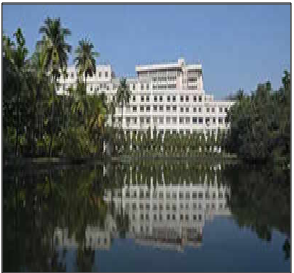
- Establishment: The Indian Statistical Institute (ISI) was founded by Professor P.C. Mahalanobis in Kolkata on 17th December, 1931.
- Objective: It aims to advance statistical research, provide academic training, support national planning through data-driven approaches, and apply statistical science across sectors such as agriculture, economics, demography, and public policy.
- Nodal ministry: It comes under the Ministry of Statistics and Programme Implementation (MoSPI).
- Headquarters: Its headquarters is located in Kolkata, with centres in Delhi, Bengaluru, Chennai, and Tezpur.
- Regulated by Act of Parliament: The ISI Act 1959 primarily applies to the ISI, its governing body, employees, and students. The ISA Act 1959 declared the ISI an institution of national importance.
- Significance: The Act aimed to recognize the ISI’s contributions to national development and provide it with the necessary autonomy and support to carry out its functions effectively.
- Governing body: It is governed by a 33-member Council which has elected members, government representatives, UGC nominee, and senior academic leaders. The Director appointed by the Council and ISI has substantial autonomy in academics, appointments, and administration.
- Journal: It publishes the renowned journal Sankhyā and offers degree programs in statistics and related sciences.
- Key highlights of Indian Statistical Institute Bill, 2025:
-
- It replaces the 1959 Act and transforms ISI from a registered society into a statutory body, similar to IITs/IIMs.
- The President of India becomes the Visitor and the Board of Governance (BoG) will be chaired by a Visitor-nominated chairperson based on Centre’s recommendation.
- It proposes a New Academic Council Structure, which will be led by the Director, comprising division and centre heads. Further, the council will act as an advisory body making academic recommendations to the BoG.
- The search-cum-selection committee will be constituted by the Union government and it will undertake the task of appointing the Director.
Source:
Category: Environment and Ecology
Context:
- Recently, a Rainbow Water Snake was spotted for the first time in Uttar Pradesh’s Dudhwa Tiger Reserve, highlighting the region’s ecological richness.
About Dudhwa Tiger Reserve:
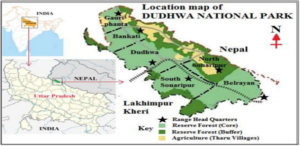
- Location: It is located on the Indo-Nepal border in the district of Lakhimpur-Kheri in Uttar Pradesh.
- Establishment: It was established in 1988 and covers an area of 1,284 sq.km.
- Spread: It includes the Dudhwa National Park and two nearby sanctuaries, viz. Kishanpur and Katerniaghat, besides forest areas of North Kheri, South Kheri, and Shahjahanpur forest divisions in its buffer.
- Topography: It is a typical Tarai-Bhabar habitat of the upper Gangetic plains biogeographic province.
- Rivers: The Sharda River flows by the Kishanpur WL Sanctuary, the Geruwa River flows through the Katerniaghat WL Sanctuary, and the Suheli and Mohana streams flow in the Dudhwa National Park, all of which are tributaries of the mighty Ghagra River.
- Vegetation: The vegetation is of the North Indian Moist Deciduous type, containing some of the finest examples of Sal forests in India.
- Uniqueness: It is the only place in U.P. where both Tigers and Rhinos can be spotted together.
- Fauna: The main mammals spotted here are Tiger, leopard, Swamp deer, Rhinoceros, chital, hog deer, barking deer, Sambhar, wild boar, and Ratel. There are about 400 species of birds in the park, such as the Florican and black-necked storks.
- Flora: It consists of Sal Forest along with its associate tree species like Terminalia alata (Asna), Lagerstroemia parviflora (Asidha), Adina cordifolia (Haldu), Mitragyna parviflora (Faldu), Gmelina arborea (Gahmhar), Holoptelea intgrifolia (Kanju), etc.
Source:
(MAINS Focus)
(UPSC GS Paper III – “Environment, Conservation, Urbanisation, Pollution, Disaster Management, Climate Change”)
Context (Introduction)
World Soil Day 2025 highlights the theme “Healthy Soils for Healthy Cities”, drawing attention to the critical but overlooked role of urban soils in climate resilience, flood control, food systems, biodiversity, and public health as global urbanisation accelerates.
Main Arguments
- Urban Climate Regulation: Healthy soils covered with vegetation help combat heat islands, absorb heat, and sequester carbon—acting as natural air conditioners for urban spaces.
- Flood Prevention: Urban soils function as sponges, absorbing rainfall, filtering water, and recharging aquifers—vital as cities face more intense climate-driven floods.
- Urban Food Systems: Fertile soils underpin rooftop farms, community gardens, and short food chains that enhance urban nutrition and local resilience.
- Biodiversity Support: Soil ecosystems host billions of organisms, sustaining decomposers, pollinators, and plant life essential to urban ecological balance.
- Human Well-Being: Soil-rich green spaces provide mental and physical health benefits, reducing stress and encouraging outdoor activity (“Vitamin N”).
Challenges / Criticisms
- Widespread Soil Degradation: Nearly one-third of global soils are degraded, with urban soils hit hardest by contamination, compaction, and erosion.
- Soil Sealing by Infrastructure: Excessive use of concrete and asphalt suffocates soil life, blocks infiltration, and increases flood risk.
- Loss of Organic Matter: Construction, pollution, and poor landscaping degrade soil fertility, affecting vegetation growth and food safety.
- Industrial Contamination: Heavy metals, chemicals, and waste severely reduce urban soil quality, threatening human health and ecological integrity.
- Low Public Awareness: Soil remains an invisible resource; urban citizens and municipalities often overlook its critical ecosystem services.
Way Forward
- Urban Soil Restoration: Promote soil testing, compost addition, organic amendments, and enforce restrictions on further soil sealing.
- Green Infrastructure Expansion: Develop parks, rain gardens, bioswales, tree belts, and permeable pavements to manage floods and heat.
- Strengthen Urban Agriculture: Encourage community gardens, rooftop cultivation, and balcony plantations to improve soil health and food resilience.
- Responsible Soil Management: Promote reduced chemical input, mulching, native species planting, and topsoil conservation in urban planning.
- Soil Literacy & Composting: Integrate soil education in schools, community workshops, and household composting to build a culture of soil stewardship.
Conclusion
Healthy cities are built not just on steel and concrete but on living soils that regulate climate, sustain biodiversity, absorb floods, nurture gardens, and improve human well-being. As urbanisation accelerates, protecting and restoring soils must become a central pillar of India’s environmental and urban policy.
Mains Question
- “Urban soils are critical yet overlooked components of climate resilience and urban sustainability.” Discuss the ecological, social, and planning imperatives of protecting urban soils in Indian cities. (250 words)
(UPSC GS Paper II – “Devolution of Powers, Local Governance, Municipalities, Federalism, Accountability”)
Context (Introduction)
The debate on whether Indian cities require structural reform in governance has intensified as major metros face prolonged absence of municipal elections, weak mayors, parastatal dominance, and excessive State-level control, undermining urban accountability and service delivery.
Why Are Indian Mayors Invisible?
- Structural Centralisation: Indian cities are effectively governed by Chief Ministers’ offices, not municipal leaders — reversing the logic of the 74th Amendment.
- Historical Drift: Unlike pre-1960s India where Mayors were politically influential, today’s system sidelines them due to a State Assembly–centric political culture.
- Weak Municipal Mandate: Mayors lack executive authority over budgets, personnel, planning, leaving them overshadowed by bureaucrats and parastatals.
- Party Hierarchy Domination: MLAs/MPs as ex-officio members reduce corporators and Mayors to subordinates within party structures, not autonomous local representatives.
- Low Public Demand: Urban citizens rarely prioritise municipal empowerment, enabling political elites to ignore or delay municipal elections.
Why Has the 74th Amendment Not Delivered?
- Supply-Driven Reform: Decentralisation was introduced top-down, without societal mobilisation, resulting in weak local accountability.
- Parallel Bureaucratic Structures: Multiple parastatals (BDA, BWSSB, MMRDA, DDA, HMDA, etc.) fragment authority and limit municipal agency.
- No Financial Autonomy: Municipalities have tiny revenue bases; ward offices struggle to access funds even for basic functions.
- Political Resistance: State leaders are reluctant to devolve power, seeing cities as territory to manage, not jurisdictions to empower.
Issues with Current Reorganisation Experiments (e.g., BBMP split, GHMC merger)
- Election Postponement Tool: Frequent restructuring is often a pretext to delay elections, reducing democratic legitimacy.
- Symbolic, Not Functional: Splitting or merging corporations does not matter when CM–bureaucracy dominance remains unchanged.
- Jurisdictional Confusion: Delhi’s arrangement shows the failure of overlapping authorities without clear functional demarcation.
- Governance Not Geography: The issue is power distribution, not the size or number of municipal bodies.
What Should Urban Governance Reform Focus On?
- Institutional Clarity: Clearly demarcate responsibilities of municipalities, parastatals, and State agencies to eliminate overlapping mandates.
- Fiscal Empowerment: Ensure direct revenue streams, predictable transfers, and ward-level budgeting to make local governments functional.
- Political Realism: Reform must engage with actual political structures — addressing the dominance of MLAs and CMs in city affairs.
- Empowered Mayoral System: Strengthen stable, directly elected or meaningfully empowered Mayors with executive authority.
- Citizen Demand: Urban residents must push for decentralisation; without popular pressure, political elites will not devolve power.
Conclusion
India’s cities cannot be governed effectively through State-centric control, bureaucratic dominance, and weakened municipalities. Genuine reform requires empowering local governments with clear authority, finances, and accountability — not cosmetic restructuring. Democratic urban governance will remain elusive unless the political system and citizens both recognise the city as a legitimate, autonomous sphere of government.
UPSC Mains Question
- Indian cities suffer from “too much State control and too little local autonomy.” Discuss the structural reasons behind the weakness of urban local bodies and suggest reforms to make city governance more accountable and effective. (250 words)