IASbaba's Daily Current Affairs Analysis

Archives
(PRELIMS Focus)
Category: Economy
Context:
- The Karnataka government has amended its land revenue law to modernise an age-old system of land records (Jamma Bane) in the scenic Coorg region.
About Jamma Bane Lands:
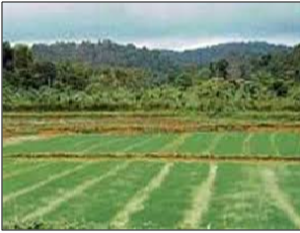
- Location: Jamma Bane refers to a unique hereditary land tenure system found exclusively in the Kodagu (Coorg) district of Karnataka.
-
- Distinctiveness: The word Jamma means hereditary. It is distinctly different from other classes of land holdings in the state.
- History: These Jamma lands were originally granted by erstwhile kings of Coorg and the British — between 1600 and 1800 — to local communities in return for military service.
-
- Types of lands: These lands comprise both wetlands, used for paddy cultivation, and forested highlands, which have transformed into the now-famous coffee estates of Coorg.
- Ownership: The Jamma Bane land ownership was historically recorded in the name of the original grantee (the Pattedar). Even after generations, records often remained in the ancestor’s name, leading to modern legal hurdles.
- Relevant Acts: The Coorg Land Revenue and Regulations Act, 1899 was in place to govern land ownership in the region till the introduction of the Karnataka Land Revenue Act, 1964.
- Recent legal developments:
- Modernisation Act: In January 2025, the Karnataka government passed the Karnataka Land Revenue (Second Amendment) Act, 2025.
-
-
- Purpose: The amendment aims to modernise land records, allowing current joint family members to be officially recognised as owners. This simplifies bank loan approvals, land sales, and inheritance processes.
-
- Judicial rulings:
- The ownership rights of the people of Kodagu over the Jamma Bane lands in the region was recognised by a full bench of the Karnataka HC in 1993 in Chekkera Poovaiah vs State of Karnataka.
-
- In 2024, the Karnataka HC upheld the Karnataka Land Revenue (Third Amendment) Act, 2011 which gave full ownership rights over Jamma Bane lands in Kodagu to Kodava families.
Source:
Category: Environment and Ecology
Context:
- The latest crocodile census has recorded an increase in the crocodile population in Odisha’s Similipal National Park.
About Similipal National Park:
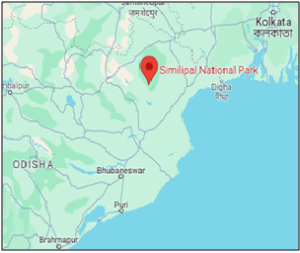
- Location: It is situated in the Mayurbhanj district of Odisha.
- Area: It covers an area of approximately 2750 sq.km.
-
- Nomenclature: The park is named after the Simul (silk cotton) tree, which grows in abundance here.
- Uniqueness: Not only a National Park, Similipal is also a Tiger Reserve, Wildlife Sanctuary, Biosphere Reserve, and also a part of the Mayurbhanj Elephant Reserve. Situated in the Deccan Peninsular Bio-geographic Zone, it harbours a unique blend of Western Ghats, Eastern Ghats, and eastern Himalayan biodiversity.
-
- Aesthetic places: It has some beautiful waterfalls like Joranda and Barehipani. It is surrounded by high plateaus and hills, the highest peak being the twin peaks of Khairiburu and Meghashini (1515 m above mean sea level).
- Tribes: It is also home to various tribes, including Kolha, Santhala, Bhumija, Bhatudi, Gondas, Khadia, Mankadia, and Sahara.
- Vegetation: The forest is predominantly moist mixed deciduous forest with tropical semi-evergreen forest in areas with suitable microclimatic conditions and sporadic patches of dry deciduous forests and grasslands.
- Flora: Sal is the dominant tree species here. It houses 7% of the flowering plants and 8% of India’s orchids. The park also has extensive grasslands that are grazing grounds for many of the herbivores.
- Fauna: It is known for the tiger, elephant, and hill mynah. It holds the highest tiger population in Odisha. It is the only tiger reserve in the country to boast of melanistic tigers. Apart from the tiger, the major mammals are the leopard, sambar, barking deer, gaur, jungle cat, wild boar, four-horned antelope, giant squirrel, and common langur.
Source:
Category: Science and Technology
Context:
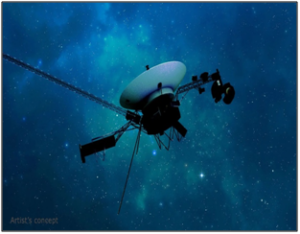
- Nearly 50 years after launch in 2026, Voyager 1 will mark yet another first by reaching a distance where Earth is a full day away at the speed of light.
About Voyager 1:
-
- Launching agency: It is a space probe launched by NASA (National Aeronautics and Space Administration) in 1977.
- Objective: It aims to explore the outer planets in our solar system, specifically Jupiter and Saturn.
-
- Milestone: In August 2012, it became the first human-made object to enter interstellar space after crossing the heliopause—the boundary where the Sun’s solar wind meets the interstellar medium.
- Uniqueness: It is the first spacecraft to travel beyond the solar system and reach interstellar space. It is currently the most distant human-made object from Earth, located over 15 billion miles away. Signals take approximately 22.5 hours one-way to reach the probe.
- Instruments: The instruments of Voyager 1 included Cosmic Ray Subsystem, Plasma Wave Subsystem, Infrared Interferometer Spectrometer and Radiometer (IRIS) etc.
- Significant Discoveries:
- Jupiter: Discovered active volcanoes on the moon Io and identified a thin ring around the planet along with two new moons, Thebe and Metis.
- Saturn: Identified five new moons and the G-ring.
-
- Golden Record: Carries a 12-inch gold-plated copper disk containing sounds and images representing life and culture on Earth as a message to extraterrestrial life.
Source:
Category: Geography
Context:
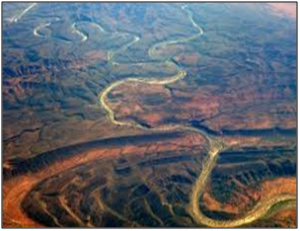
- The Finke River, known to the Arrernte people as Larapinta, is believed to be the world’s oldest river system, even older than the dinosaurs.
About Finke River:
-
- Location: It is a major but intermittent river of central Australia.
- Course: It starts in the MacDonnell Ranges in the Northern Territory. It forms where two smaller creeks, Davenport and Ormiston, meet. It flows for about 600 kilometers (370 miles) towards the Simpson Desert in South Australia.
- Uniqueness: It is often called “the oldest river in the world.”
- Origin: A combination of geological records, weathering profiles, and radionuclide measurements in the surrounding sediments and rocks has enabled scientists to date this river system to the Devonian (419 million to 359 million) or Carboniferous (359 million to 299 million) period.
- Antecedent River: It is believed to be an antecedent river, meaning its course predates the uplift of the MacDonnell Ranges. As the mountains rose, the river maintained its path by cutting through them, creating deep gorges like Palm Valley.
-
- Unique biodiversity: Palm Valley along the river is home to the Red Cabbage Palm, a relic species from a much wetter prehistoric climate.
- Appearance: Most of the time, the Finke River looks like a series of waterholes. But after heavy rains, it can turn into a powerful, fast-flowing river. During big floods, its water can even reach the Macumba River and eventually Lake Eyre.
- Cultural significance: Known as Larapinta by the Indigenous Arrernte people, it holds deep spiritual value in Aboriginal “Dreaming” stories.
Source:
Category: Miscellaneous
Context:
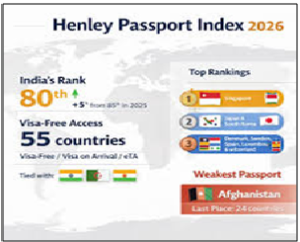
- The 2026 Henley Passport Index has shown significant shifts in global travel mobility, with Asia continuing to dominate the top ranks.
About Henley Passport Index:
-
- Nature: It is a popular ranking of global passports that measures passport strength by the number of destinations that holders can visit without a prior visa.
- Mandate: The index ranks countries based on statistics provided by the International Air Transport Association (IATA).
-
- Origin: It started in 2006 as the Henley & Partners Visa Restrictions Index (HVRI).
- Publishing agency: It is published by London-based global citizenship and residence advisory firm Henley & Partners.
- Coverage: It ranks 199 different passports against 227 travel destinations.
-
- Significance: The stronger the passport, the more countries its holders can enter without a prior visa — a privilege that reflects diplomatic ties, economic influence, and international trust.
- Key Highlights of Henley Passport Index 2026:
-
-
- The top three passports in the world come from Asia. Singapore ranks first, while Japan and South Korea are tied for second place.
-
- India’s passport also saw improvement, climbing five spots to 80th position.
-
- Afghanistan is at the bottom of the list, ranked 101st, with visa-free access to 24 destinations.
Source:
(MAINS Focus)
GS-III – Indian Economy and issues relating to planning, mobilization of resources, growth, development, and employment; effects of liberalization on the economy; infrastructure and investment models.
Context (Introduction)
Despite global headwinds in 2025—including rising protectionism, tariff shocks from the U.S., and geopolitical uncertainty—India demonstrated economic resilience, aided by reforms, macro-stability and domestic demand.
- Core Idea
Budget 2026-27 is critical to convert this resilience into sustained medium-term growth while maintaining fiscal prudence. It must strengthen domestic growth levers by:
- Prioritising productive capital expenditure
- Enhancing export competitiveness
- Unlocking private investment
- Ensuring policy certainty all while adhering to the fiscal consolidation glide path and containing debt risks.
Key Growth Challenges Identified
- Global Trade Uncertainty
- Tariff volatility, trade diversion and weakening global demand threaten exports.
- Need for calibrated export support amid protectionist trends.
- Investment and Credit Bottlenecks
- Over-reliance on bank credit.
- Underdeveloped corporate bond market limiting long-term finance.
- Structural Tax and Dispute Pendency
- High pendency at CIT(A) level.
- Long-drawn tax litigation hurting investor confidence.
- Competitiveness Constraints
- Inverted duty structures.
- Customs frictions and compliance costs.
- Transfer Pricing uncertainty for Global Capability Centres.
- Strategic Vulnerabilities
- Dependence on imported critical minerals, semiconductors, and clean-energy inputs.
Why It Matters
- Capex-led growth crowds in private investment and raises potential output.
- Exports provide demand diversification in a volatile global economy.
- Defence and clean energy spending generate strong multiplier effects.
- Efficient dispute resolution improves ease of doing business and tax buoyancy.
- Financial deepening lowers cost of capital and boosts productive investment.
- Sustained growth is essential to achieve Viksit Bharat 2047 aspirations.
Way Forward:
- Strengthen Productive Capex
- Raise defence capex share to ~30% (from ~26.4%).
- Increase DRDO allocation by at least ₹10,000 crore.
- Expand defence industrial corridors beyond Uttar Pradesh and Tamil Nadu.
- Leverage defence exports (already ~65% driven by private sector).
- Export Competitiveness Push
- Enhance allocation for RoDTEP (currently ~₹18,233 crore).
- Reduce customs tariff slabs to correct inverted duty structures.
- Improve trade facilitation for AEO-certified firms, including new companies.
- Critical Minerals & Strategic Tech
- Operationalise National Critical Mineral Mission (NCMM).
- Introduce critical minerals tailings recovery programme.
- Provide dedicated financing windows for mineral security.
- Financial Sector Deepening
- Expand corporate bond market:
- Lower qualifying thresholds.
- Include unlisted corporates.
- Raise insurance investment caps beyond 25%.
- Relax “Approved Investment” ratings (AA to A-).
- Resolve Tax Disputes
- Prioritise disposal of:
- High-value cases
- Older appeals (>5 years)
- Cases with complete submissions
- Introduce dual-track dispute resolution (fast-track + detailed track).
- Address ~40% vacancy at CIT(A) level.
- Support Sunrise Sectors
- Scale PLI outlay from ₹120 crore to ₹1,000 crore for drones.
- Set up ₹1,000 crore drone R&D fund.
- Provide clear Transfer Pricing guidance for Global Capability Centres.
Conclusion
Budget 2026-27 must act as a bridge between reform momentum and long-term transformation. By combining fiscal prudence with targeted growth-enablers, resolving structural bottlenecks, and strengthening competitiveness, the Budget can crowd in private investment, stabilise growth amid global uncertainty, and place India firmly on a high, durable growth trajectory.
Mains Question
- “In a phase of global trade fragmentation, strategic supply-chain vulnerabilities and tightening fiscal space, Budget 2026-27 assumes a pivotal role in sustaining India’s growth momentum.” Critically examine (250 words)
GS-II: Government policies and interventions and issues arising out of their design and implementation; Structure and functioning of the Executive and the Judiciary.
GS-III: Science and Technology—developments and their applications; indigenisation of technology.
Context (Introduction)
Artificial Intelligence (AI) represents a general-purpose technology comparable to railways or electricity in its capacity to reshape economies and state power. For India, AI adoption is not merely a technological choice but a governance and developmental imperative. The real challenge lies in moving from ad-hoc innovation to institutional precision.
Core idea
India’s ability to harness AI will depend on whether it is embedded into state capacity, public institutions and long-term capital mobilisation, rather than remaining confined to fragmented private adoption.
Sector-wise Case Examples
- Courts (Judicial Governance)
India has over 47 million pending cases (National Judicial Data Grid).
- AI tools for case clustering, precedent analysis and automated scheduling can compress timelines from years to months.
- Pilot use of SUPACE (Supreme Court Portal for Assistance in Courts Efficiency) shows potential, but weak institutional scaling limits impact.
- Taxation and Public Finance
- AI-based analytics in GST compliance and income-tax risk profiling have improved detection, yet fragmented datasets reduce precision.
- Countries like Estonia use AI to predict tax evasion patterns, lowering enforcement costs—India risks lagging without interoperable data systems.
- Education (Human Capital Formation)
- India’s learning crisis (ASER findings) makes adaptive learning platforms crucial.
- AI-enabled personalised learning and continuous teacher feedback can offset large class sizes, but lack of foundational schooling reform constrains outcomes.
- Defence and National Security
- AI-driven autonomous systems, surveillance and logistics optimisation are now core to military competitiveness.
- Without indigenous AI capability, India risks strategic dependence on foreign technology in warfare domains increasingly defined by algorithms.
Key Challenges
- Weak contract enforcement raising cost of capital
- Platform concentration and foreign data monopolies
- Job displacement without reskilling frameworks
- Absence of mission-mode coordination
Way Forward
- Launch a National AI Mission with clear authority and outcomes
- Commit strategic public investment (~0.5% of GDP over five years) to crowd in private capital
- Prioritise AI deployment in governance-heavy sectors before consumer applications
- Combine innovation with privacy, bias mitigation and democratic oversight
Conclusion
AI will reward systems, not improvisation. If India replaces jugaad with precision, institutions and disciplined capital, AI can become its “railway moment”—a structural leap in governance, productivity and sovereignty rather than a missed opportunity.
Mains Question
- Artificial Intelligence has emerged as a general-purpose technology with the potential to transform governance, economic productivity and national security. Critically examine the institutional and policy challenges India faces in leveraging AI for governance and growth. (250 words, 15 marks)