
IASbaba's Daily Current Affairs Analysis

Archives
(PRELIMS Focus)
Category: Environment and Ecology
Context:
- The Union Environment Ministry launched the second nationwide dolphin estimation under Project Dolphin, including the Irrawaddy dolphin for the first time.
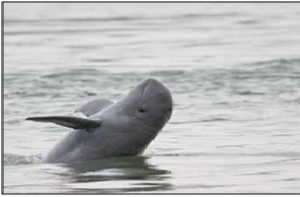
About Irrawaddy Dolphin:
-
- Nature: It is a euryhaline species of oceanic dolphin found in discontinuous subpopulations near sea coasts and in estuaries and rivers in parts of the Bay of Bengal and Southeast Asia.
- Scientific Name: Its scientific name is Orcaella brevirostris.
-
- Habitat: Irrawaddy dolphins prefer coastal areas, particularly muddy, brackish waters at river mouths and deltas, and do not appear to venture far offshore.
- Global distribution: It is found in three rivers in South and Southeast Asia– the Irrawaddy (Myanmar), the Mahakam (Kalimatan, Indonesia), and the Mekong (Cambodia).
- Distribution in India: They occur mainly in Chilika Lake (Odisha); but they are also reported in the Sundarbans region.
- Uniqueness: It has an instantly recognisable, charismatic rounded face and head with no beak; they look like baby belugas, only with a dorsal fin. They have expressive faces thanks to their moveable lips and have creases around their necks as they are able to move their heads in all directions.
- Appearance: They are grey all over but lighter on the belly. The dorsal fin is small; their flippers are long and large, with curved leading edges and rounded tips, and their tails are also large.
- Teeth: Irrawaddy dolphins have narrow, pointed, peg-like teeth about 1 cm in length in both the upper and lower jaws.
- Ecology: It is considered an edge species as it thrives in ecotones (transition zones between marine and freshwater ecosystems).
- Cooperative Fishing: In Myanmar, they are famous for “cooperative fishing” where they help local fishermen herd fish into nets.
- Spy-hopping: They often rise vertically out of the water to observe their surroundings
- Conservation status: It is classified as ‘Endangered’ under the IUCN Red List.
Source:
Category: History and Culture
Context:
- Recently, Telangana started preparing for the biennial Sammakka-Saralamma Jatara, one of the world’s largest indigenous spiritual gatherings.
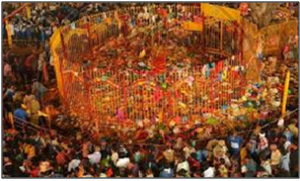
About Samakka-Saralamma Jatara:
-
- Nature: It is a tribal festival of honouring the goddesses celebrated in the state of Telangana, India.
- Location: Medaram is a remote place in the Eturnagaram Wildlife Sanctuary, a part of Dandakaranya, the largest surviving forest belt in the Mulugu.
- Other names: It is also known as Medaram Jatara.
-
- Frequency: It is held every two years (biannually). It is celebrated during the time the goddesses of the tribals are believed to visit them.
- Significance: It is recognized as the world’s largest indigenous spiritual gathering and India’s second-largest fair after the Kumbh Mela.
- History: In this festival people from all walks of life join together to commemorate the revolt led by Sammakka and Saralamma, a mother-daughter duo, against imposing taxes on the tribal populace during a period of drought by the Kakatiya rulers in the 12th century.
- Ritual: People offer Bangaram or gold of a quantity equal to their weight to the goddesses and take holy bath in Jampanna Vagu, a tributary to River Godavari.
- Associated tribe: The rituals related to the Goddesses are entirely conducted by Koya tribe priests, in accordance with Koya customs and traditions.
- Animistic roots: The festival remains largely free of Vedic or Brahmanic influence, centering on nature and ancestral worship
Source:
Category: Science and Technology
Context:
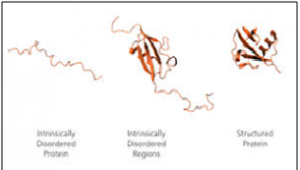
- Researchers have developed a deep-learning tool named Disobind that can predict how intrinsically disordered proteins (IDP) latch on to their binding partners.
About Disobind Tool:
- Development: It is developed by the researchers of National Centre for Biological Sciences (NCBS), Tata Institute of Fundamental Research, Bengaluru.
-
- Nature: It is open-source and freely available for researchers worldwide.
- Objective: It analyses the protein sequences and uses protein language models (a form of AI trained on millions of known protein sequences).
- No structural info needed: It does not require any structural information or sequence alignments, making it super convenient.
- High accuracy: Disobind outperformed popular tools like AlphaFold-multimer and AlphaFold3 in tests on new protein pairs. Disobind delivered consistently higher accuracy when tested on new protein pairs it had not seen before.
- Applications: Applications of the tool could span from disease biology to drug design.
About Intrinsically Disordered Proteins:
-
- Definition: Intrinsically disordered proteins are defined as proteins or regions of proteins that lack a fixed or ordered three-dimensional structure under biological conditions.
- Other names: They are also called natively unfolded or intrinsically unstructured proteins.
- Importance: These are important for cellular signalling and regulation.
- Functions: They are shape shifting molecules vital to cellular communication. They don’t form a fixed structure. They guide signalling networks. They also help proteins move and find partners within the cell, regulate which genes are switched on or off.
- Significance: They support protein folding and quality control, and assemble flexible cellular hubs called condensates.
Source:
Category: Government Schemes
Context:
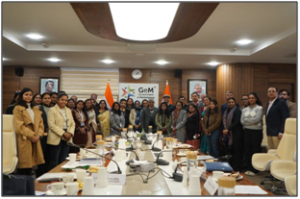
- Recently, the Government e-Marketplace (GeM) marked seven years of the Womaniya initiative.
About Womaniya Initiative:
-
- Launch: It was launched on 14 January 2019.
- Nature: It is a flagship programme aimed at strengthening the participation of women-led Micro and Small Enterprises (MSEs) in public procurement.
- Objective: The initiative seeks to develop women entrepreneurship to achieve gender-inclusive economic growth.
- Market access: It allows women to sell products like handicrafts, handlooms, jute, and home décor directly to various government ministries and departments without intermediaries.
- Milestone: In January 2026, the initiative celebrated seven years, reporting that women-led MSEs have fulfilled orders worth over ₹80,000 crore on the GeM Portal.
- Procurement targets: It helps fulfil the mandatory government norm requiring at least 3% of total annual procurement by central ministries/PSUs to be from women-owned enterprises.
- GeM & UN Women Partnership: A recent MoU between GeM and UN Women India aims to enhance gender-responsive procurement and align with Sustainable Development Goal 5 (Gender Equality).
- Digital inclusivity: The platform currently hosts over 2 lakh registered women-led MSEs, accounting for roughly 4.7% of the total order value on GeM.
- Significance: It addresses the “triple challenge” of access to markets, finance, and value addition. It also aligns with national missions like Aatmanirbhar Bharat and Make in India by integrating local value chains.
Source:
Category: Geography
Context:
- Recently, an artificially-triggered avalanche was filmed cascading down Russia’s highest mountain, Mount Elbrus.
About Mt Elbrus:
-
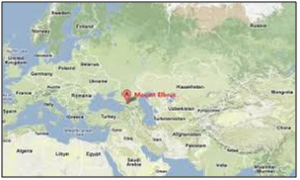
- Location: It is located in southwest Russia and is part of the Caucasus Mountains.
- Formation: It is believed that the Caucasus Mountains were formed due to the northward collision of the Arabian Plate with the Eurasian Plate. Geological studies have revealed that Mount Elbrus was formed over 2.5 million years ago and the volcano had been most active during the Holocene Epoch.
- Elevation: It has an elevation of 18,510 feet (5,642 meters). It makes up part of the Prielbrusye National Park. It is the highest point in Russia as well as the highest point in all of Europe.
- Uniqueness: It is one of the Seven Summits of the world, which are the tallest mountains on each of the seven continents.
- Volcano: Mount Elbrus is an inactive volcano that consists of two principal summits, both of which are dormant volcanic domes.
- Climate: The climate of Elbrus is generally cold. Even during summer, nighttime temperatures are around -8°C (18°F).
- Major glaciers: These include Bolshoi Azaou and Irik Glacier.
- Major rivers: Many Russian rivers like the Baksan, Malka, and Kuban rivers originate from Bolshoi Azaou and Irik Glacier glaciers.
Source:
(MAINS Focus)
GS II: Government policies and interventions for development in various sectors and issues arising out of their design and implementation; Issues relating to development and management of Social Sector/Services relating to Health.
GS III: Science and Technology – developments and their applications and effects in everyday life; Intellectual Property Rights.
Context (Introduction)
India’s pharmaceutical sector sits at the intersection of TRIPS obligations, public health imperatives, and global geopolitics of medicines. Persistent concerns over evergreening by multinational pharmaceutical firms, high prices of life-saving drugs, and unequal access—especially in the Global South—have revived debates on how India should deploy its patent regime in the public interest.
Core Idea
India’s patent framework is TRIPS-compliant yet welfare-oriented, allowing the State to balance innovation incentives with access to medicines. Contrary to claims of “weak IPR enforcement”, TRIPS itself permit public-health-centric flexibilities, which India is legally entitled to invoke to prevent abuse of patent monopolies.
Key Governance & Policy Challenges
- Evergreening of patents: Minor modifications used to extend monopoly without enhanced therapeutic efficacy
- High cost of patented medicines, particularly oncology and chronic disease drugs
- Under-utilisation of statutory powers despite clear legal backing
- Global pressure from pharmaceutical lobbies in the Global North
- Manufacturing–access gap in developing countries lacking domestic pharma capacity
Why It Matters
- Right to Health (Article 21) obliges State intervention
- Public health emergencies require rapid access to affordable drugs
- India’s role as “Pharmacy of the Global South” strengthens South–South cooperation
- Prevents anti-competitive outcomes and market distortion
- Reinforces India’s credibility in rules-based multilateralism under WTO–TRIPS
India’s Legal & Strategic Options
- Section 3(d), Patents Act – Prevents evergreening without enhanced efficacy
- Section 47(4) – Government use of patented drugs without patentee consent
- Section 84 – Compulsory licensing for unmet public health needs
- Section 66 – Revocation of patents prejudicial to public interest
- Section 102 – Eminent domain over patents with compensation
- Section 92A – Export of generics to countries with insufficient manufacturing capacity
- Competition Act, 2002 – Addresses abuse of dominant position
- TRIPS flexibilities – Public health safeguards recognised under WTO law
International Dimension
- Supports access to medicines in Africa and other Global South regions
- Counters monopolistic practices of Global North pharma innovators
- Aligns with India’s leadership in health diplomacy and vaccine equity
Way Forward
- Institutionalise regular patent audits in health-critical sectors
- Proactive use of compulsory licensing and government use provisions
- Integrate competition law scrutiny with patent enforcement
- Develop a transparent public-interest patent policy framework
- Parallel investment in domestic pharmaceutical R&D and manufacturing
Conclusion
India’s patent regime is not anti-innovation but anti-abuse. A calibrated and confident use of TRIPS-compliant flexibilities allows Bharat to protect public health, uphold constitutional values, and maintain credibility in the global intellectual property order—while still fostering genuine innovation.
Mains Question
- “India’s patent regime provides several flexibilities to reconcile intellectual property protection with public health imperatives. Elaborate. (250 words)
GS II: Government policies and interventions for development in various sectors and issues arising out of their design and implementation.
GS III: Major crops – cropping patterns in various parts of the country, different types of irrigation and irrigation systems, storage, transport and marketing of agricultural produce and issues and related constraints; food security and related issues
Context (Introduction)
India’s reform momentum—spanning GST, IBC, DBT and FTAs—now confronts its most politically sensitive frontier: food and fertiliser subsidies. Despite falling inflation and improved macro stability, agriculture growth is slowing, and distorted price incentives continue to undermine crop diversification, soil health, and fiscal efficiency.
Core Idea
India’s subsidy regime, while rooted in food security and farmer welfare, has become economically inefficient and environmentally damaging. The current structure disproportionately favours rice–wheat systems and urea-intensive farming, crowding out pulses, oilseeds, fruits and vegetables—key to nutrition security and sustainable agriculture.
Key Issues and Distortions
- Food subsidy (~₹2 trillion):
- Economic cost of rice ≈ ₹42/kg, wheat ≈ ₹30/kg, yet distributed free to ~56% of population under PDS
- According to World Bank PPP estimates, extreme poverty fell to 5.3% in 2022, questioning blanket coverage
- Fertiliser subsidy (~₹2 trillion):
- Urea overuse due to price controls; imbalance in N:P:K ratio
- Excessive phosphatic and potassic fertilisers contaminate groundwater and raise GHG emissions
- Cropping distortions: MSP + procurement + subsidised power and fertilisers bias farmers towards rice, wheat, sugarcane
- Fiscal stress: Combined subsidies ≈ 8–8.5% of Union Budget
Why It Matters
- Governance: Subsidy inefficiency crowds out productive public investment
- Health & Nutrition: PDS calorie security ≠ nutrition security
- Agriculture & Environment: Soil degradation, water stress, emissions
- International Commitments: Climate action and trade competitiveness require subsidy reform
Way Forward
- Gradual PDS rationalisation: Reduce coverage from 56% → 40% → 25%, protect antyodaya households
- Direct Cash Transfers: Replace in-kind food for non-poor with cash/vouchers
- Crop-neutral incentives: Shift support towards pulses, oilseeds, millets, fruits, vegetables
- Fertiliser reform: Expand nutrient-based subsidy (NBS), move towards DAP/MOP pricing reform
- DBT to farmers: Merge fertiliser subsidies with PM-KISAN-type income support
Conclusion
Completing India’s reform journey requires moving from input-heavy, distortionary subsidies to income support and nutrition-focused welfare. Political courage, phased implementation, and DBT-backed reforms can align fiscal prudence, farmer welfare, nutrition security, and environmental sustainability—true to the spirit of “Reform Express”.
Mains Question
- Food and fertiliser subsidies in India have moved from being instruments of social protection to sources of economic, nutritional and environmental distortion. Discuss the political economy constraints in rationalising these subsidies and suggest a reform pathway that balances fiscal prudence, farmer incomes, nutrition security and sustainable agriculture. (250 words, 15 marks)