
IASbaba's Daily Current Affairs Analysis

Archives
(PRELIMS Focus)
Category: Environment and Ecology
Context:
- According to a recent report by the sandalwood development committee, globally, the estimated annual demand for sandalwood stands at 5,000 to 6,000 tonnes.

About Indian Sandalwood:
-
- Scientific Name: Its scientific name is Santalum Album (Family: Santalaceae).
- Nature: It is a hemi-parasitic tree, meaning it derives some of its nutrients from the roots of other host plants.
- Other names: It is known by the name “Chandan” and “Srigandha” in India.
- Habitat: It is primarily found in Tropical Dry Deciduous Forests.
- Significance: It is one of the oldest and precious sources of natural fragrance.
- Required climatic conditions:
- Soil: Sandalwood grows better in slight alkaline condition soil pH Range between 6.7. to 7.5.
-
-
- Climate: It thrives in hot and humid climates.
-
- Temperature: The ideal temperature for the growth of Sandalwood is between 12 degrees Celsius to 35 degrees Celsius.
- Drainage: It requires good drainage and does not stand water logged ground.
-
- Maturity: It is a long-duration crop, taking nearly 20 years to develop quality heartwood, which is the primary source of sandalwood oil.
- Endemism: It is native to India, Indonesia, and Australia.
- Regeneration: It freely produces seed and natural regeneration occurs both via seedlings and through root suckers after trees have been uprooted and the stump removed from the ground.
- Uses: Sandalwood and its essential oils have very high commercial values because of its use in aromatherapy, soap industry, perfumery, cosmetics, and pharmaceuticals.
- Major growing states: Sandalwood is mostly grown in states of Karnataka, Andhra Pradesh, Gujarat, Bihar, Telangana, Madhya Pradesh, Maharashtra, and Tamil Nadu in India.
- Reasons for decline in sandalwood production: Illegal logging and smuggling, habitat loss due to deforestation, Slow growth and long maturation cycle, Pests and diseases.
Source:
Category: Government Schemes
Context:
- The Union Home Minister recently launched the second phase of the Vibrant Villages Programme, which will cover 1,954 border villages in 15 states and 2 Union territories.
About Vibrant Villages Programme-II:
-
- Nature: It is a Central Sector Scheme (100% centre funding).
- Objective: It aims to create better living conditions and adequate livelihood opportunities to ensure prosperous and safe borders, control trans-border crime and assimilate the border population with the nation.
- States covered: It is implemented across 15 States and 2 Union Territories. These include Arunachal Pradesh, Assam, Bihar, Gujarat, J&K. Ladakh, Manipur, Meghalaya, Mizoram, Nagaland, Punjab, Rajasthan, Sikkim, Tripura, Uttarakhand, Uttar Pradesh and West Bengal.
- Nodal ministry: It is launched by Ministry of Home Affairs (MHA).
- Financial outlay: It has a total outlay of Rs 6,839 crore to be implemented till the FY 2028-29.
- Approach: It is designed to ensure comprehensive and sustainable development of border villages through a saturation-based and convergence-driven approach.
-
- Infrastructure development: It shall provide funds for infrastructure development within the village or a cluster of villages like education infrastructure like SMART classes, development of tourism circuits.
- Use of cooperatives: It focuses on value chain development through cooperatives, SHGs, etc. to create diverse & sustainable livelihood opportunities in the border areas.
- Community activities: It emphasizes enhancing vibrancy in these villages by organizing activities including fairs & festivals, awareness camps, celebration of National days.
- National integration: It assimilates remote border populations into the national mainstream economically and culturally under the vision of Viksit Bharat@2047.
- Focus areas: It focuses on 4 core infrastructure themes:
-
- All-weather road connectivity (PMGSY-IV)
- Telecom connectivity (Digital Bharat Nidhi)
- Television connectivity (BIND scheme)
- Electrification (RDSS)
Source:
Category: Polity and Governance
Context:
- Recently, the 23rd Foundation Day of the National Commission for Scheduled Tribes (NCST) was celebrated in New Delhi.

About National Commission for Scheduled Tribes (NCST):
-
- Nature: It is a constitutional body established to safeguard the rights and interests of India’s tribal population.
- Establishment: It was established by amending Article 338 and inserting a new Article 338A by the 89th Constitutional Amendment Act, 2003.
- Separation: It was bifurcated from the erstwhile combined National Commission for Scheduled Castes and Scheduled Tribes on 19 February 2004.
-
- Mandate: It aims to investigate and monitor all matters relating to safeguards provided for STs under the Constitution or any other law.
- Headquarters: Its headquarters is located in New Delhi.
-
- Structure: It includes a Chairperson, Vice-Chairperson, and three members appointed by the President for 3-year terms. The Chairperson holds Cabinet Minister status, with the Vice-Chairperson as Minister of State and members as Secretaries
- Key functions:
-
-
- To monitor safeguards provided for STs under the Constitution or under other laws;
- To inquire into specific complaints relating to Rights & Safeguards of STs;
- To advise in the Planning Process relating to Socio-economic development of STs;
- To submit report to the President annually and other times on welfare Measures required related to Socio-economic development of STs;
-
- To discharge such other functions in relation to STs as the President may by rule specify.
Source:
Category: Defence and Security
Context:
- Defence Minister recently inaugurated the 13th edition of Exercise MILAN-2026 at Visakhapatnam, marking the start of the premier multilateral naval exercise.
About Exercise MILAN 2026:
-
- Nature: It is a multilateral naval exercise initiated by the Indian Navy to enhance maritime cooperation, interoperability and trust among friendly navies in the Indo-Pacific region.
- Mandate: It serves as a platform for joint training, operational coordination and strategic dialogue on maritime security challenges.
- Launch: It was launched in 1995 at Port Blair with four navies (Indonesia, Singapore, Sri Lanka, and Thailand). It shifted to Visakhapatnam in 2020 due to better infrastructure.
- Edition: It is the 13th edition of India’s flagship biennial multilateral naval exercise.
- Host: It is currently being hosted by the Eastern Naval Command in Visakhapatnam from 15 to 25 February 2026.
- Significance: It is the largest-ever edition, marking a historic “maritime convergence” by coinciding with the International Fleet Review (IFR) 2026 and the Indian Ocean Naval Symposium (IONS) Conclave of Chiefs.
- Theme: Its theme is “Camaraderie, Cohesion, and Collaboration”.
- Scale of participation: Over 74 nations and delegates are participating, with approximately 85 warships (including 19 foreign vessels) and over 60 aircraft.
- Operational scope:
-
-
- Harbour Phase: Seminars, Subject Matter Expert Exchanges (SMEE), and cultural exchange at the specially built MILAN Village.
-
- Sea Phase: Advanced drills including Anti-Submarine Warfare (ASW), Air Defence, and Search and Rescue (SAR).
- Strategic significance:
- MAHASAGAR Vision: It is a major operational manifestation of PM Modi’s 2025 vision—Mutual and Holistic Advancement for Security and Growth Across Regions—extending the earlier SAGAR policy.
-
- Preferred Security Partner: Positions India as a net security provider and a leading maritime power in the Indo-Pacific.
- Indigenous Showcase: Displays India’s “Builder’s Navy” capabilities, featuring INS Vikrant (indigenous aircraft carrier) and Visakhapatnam-class destroyers.
- Defence Diplomacy: For the first time, nations like Germany, Philippines, and the UAE are participating with assets.
Source:
Category: Geography
Context:
- Recently, the Prime Minister of Finland said that Finland and India, together with global partners, can lead sustainable and human-centric technological progress.
About Finland:
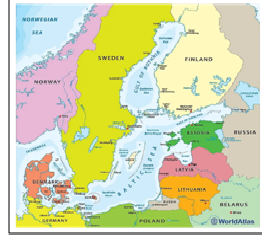
- Location: It is located in Northern Europe.
- Bordering countries: These include Norway (north), Sweden (northwest) and Russia (east).
- Bordering water bodies: It is bounded by the Gulf of Finland (south), Gulf of Bothnia (southwest) and Baltic Sea.
- Capital: The capital city of Finland is Helsinki.
-
- Membership: It is a member of the European Union (EU) and NATO.
- Climate: It has a severe climate due to its northern location. Winter is the longest season, with temperatures in the north falling as low as -22 °F (-30 °C).
-
- Terrain: It is heavily forested and contains some 56,000 lakes, numerous rivers, and extensive areas of marshland.
- Lakes: It is also known as the “Land of a Thousand Lakes”. The largest lake of Finland is Lake Saimaa.
- Highest point: The highest point of Finalnd is Mount Halti (1,328 m).
- Natural resources: The country consists of copper, iron ore, nickel, cobalt, and chromium.
Source:
(MAINS Focus)
(UPSC GS Paper II – Issues relating to development and management of Social Sector/Services relating to Education; Government policies and interventions for development in various sectors and issues arising out of their design and implementation.)
Context (Introduction)
India, with over 1,300 mother tongues and 121 recognised languages (Census 2011), faces a crucial educational moment. UNESCO’s 2025 report Bhasha Matters highlights that mother-tongue-based multilingual education (MTB-MLE) is central to inclusive, equitable, and effective learning outcomes.
- Language is not merely a medium of communication but a carrier of identity, knowledge, and culture. With nearly 44% of Indian children entering school in a language different from the medium of instruction (NCERT, 2022), linguistic mismatch becomes a structural barrier to foundational literacy and numeracy.
Why ‘Bhasha’ Matters in Education
- Learning Outcomes and Foundational Skills: Globally, over 250 million learners lack access to education in a language they understand. In India, children forced to decode unfamiliar languages struggle with conceptual clarity, leading to cumulative learning deficits and higher dropout risks.
-
- Mother-tongue instruction improves comprehension, participation, and confidence, strengthening Foundational Literacy and Numeracy (FLN) — a priority under NEP 2020.
- Cultural and Cognitive Development: Language safeguards intergenerational knowledge systems, especially among tribal and indigenous communities. Loss of language implies erosion of cultural identity and epistemic diversity.
- Equity and Inclusion: MTB-MLE reduces exclusion among tribal, rural, and marginalised communities. Linguistic inclusion promotes social cohesion and reduces systemic disadvantage.
Policy and Institutional Developments
- National Education Policy (NEP) 2020: NEP 2020 recommends the mother tongue/home language as the medium of instruction at least until Grade 5 (preferably till Grade 8), aligning pedagogy with cognitive research.
- National Curriculum Frameworks (2022–23): They reinforce multilingual classrooms and contextualised pedagogy.
- UNESCO’s Bhasha Matters (2025): The seventh State of Education Report for India outlines 10 policy recommendations, including:
- Clear state-level language-in-education policies
- Teacher recruitment and training reforms
- Multilingual materials and assessment reforms
- Sustainable financing
- Proposal for a National Mission for MTB-MLE
Best Practices and Innovations
Odisha Model
A multilingual programme covers 21 tribal languages across 17 districts, benefiting nearly 90,000 children.
Telangana’s Digital Approach
Use of DIKSHA-enabled multilingual resources demonstrates digital scalability.
National Digital Initiatives
- PM eVIDYA
- BHASHINI (AI-driven language inclusion platform)
- AI4Bharat’s community language technologies
- Adi Vaani consortium
These initiatives leverage AI and digital tools to document endangered languages, create multilingual content, and assist teachers.
Challenges and Criticisms
- Implementation Gaps: Many states lack clear language-in-education policies aligned with MTB-MLE.
- Teacher Preparedness: Shortage of trained multilingual teachers and inadequate pre-service training hinder execution.
- Assessment Misalignment: Standardised assessments often remain monolingual, undermining multilingual pedagogy.
- Resource Constraints: Developing high-quality bilingual textbooks and digital materials requires sustained funding.
- Urban Multilingual Complexity: Metropolitan classrooms often host multiple home languages, complicating implementation.
Way Forward
- Establish a National Mission for Mother-Tongue-Based Multilingual Education for inter-ministerial coordination.
- Strengthen teacher training with multilingual pedagogy modules.
- Reform assessment frameworks to align with multilingual learning.
- Ensure sustainable financing and technology integration.
- Promote community participation and indigenous knowledge systems.
Conclusion
India’s linguistic diversity is not a developmental obstacle but a strategic asset. If institutionalised through systemic reforms rather than pilot projects, mother-tongue-based multilingual education can transform foundational learning outcomes, strengthen identity, and advance equitable development. In India’s multilingual moment, ‘Bhasha’ is not just cultural heritage — it is educational justice.
Mains Question
- “Mother-tongue-based multilingual education is central to inclusive and equitable learning outcomes in India.” Examine the rationale behind this approach in the context of NEP 2020 and discuss the challenges in its effective implementation. (250 words)
Source: The Hindu
(UPSC GS Paper III – Indian Economy and issues relating to planning, mobilization of resources, growth, development and employment; Investment models.)
Context (Introduction)
RBI data show that net FDI into India remained negative for the fourth consecutive month in December 2025 (-$1.6 billion), as repatriation by foreign firms and outward investments by Indian companies exceeded gross inflows despite robust inward FDI growth.
- Foreign Direct Investment (FDI) is a stable source of long-term capital, technology transfer, and employment generation. While gross inward FDI reached a five-month high of $8.6 billion in December 2025 (17.2% YoY growth), elevated repatriation ($7.5 billion) and outward FDI ($2.7 billion) resulted in net negative flows.
Trends and Sectoral Patterns
- Gross Inflows: $8.6 billion (Dec 2025); key sources – Singapore, Netherlands, Mauritius (over 80%).
- Major Recipient Sectors: Transport, manufacturing, computer services, electricity and energy.
- Repatriation/Disinvestment: ~$7.5 billion (highest since Jan 2021).
- Outward FDI: $2.7 billion; destinations – Singapore, U.S., UAE, U.K., Netherlands.
- Investor Sentiment: Uncertainty over India–U.S. trade agreement and 50% tariffs contributed to hesitation.
The data predates the India–EU FTA and India–U.S. Interim Agreement, after which FPIs reportedly returned.
Pros of the Current Trend
- Strong Gross Inflows: Despite negative net figures, robust gross FDI inflows indicate sustained investor confidence in India’s growth prospects and manufacturing push (PLI schemes, logistics infrastructure).
- Mature Capital Ecosystem: Higher repatriation reflects profit-booking by long-term investors — a sign of business maturity and returns being realised.
- Outward FDI Signifies Globalisation of Indian Firms: Indian companies investing abroad signals rising competitiveness and integration into global value chains (GVCs).
- Sectoral Diversification: FDI inflows into manufacturing, energy transition, and transport support structural transformation and infrastructure capacity.
Concerns and Structural Risks
- Persistent Net Negative FDI: Four consecutive months of negative net FDI may indicate rising exit intensity or risk aversion.
- High Repatriation Levels: Repatriation nearing $7.5 billion suggests potential profit-taking amid global uncertainty or domestic policy concerns.
- Trade Policy Uncertainty: Investor hesitation linked to tariff disputes and trade negotiations highlights vulnerability to geopolitical risk.
- Over-Concentration of Source Countries: Heavy dependence on Singapore, Mauritius, and the Netherlands reflects routing through tax jurisdictions, raising concerns about round-tripping and treaty dependence.
- External Sector Vulnerability: Negative net FDI increases reliance on volatile portfolio flows (FPI), which are sensitive to global interest rates and risk appetite.
Broader Macroeconomic Implications
- Impacts capital account stability.
- Affects current account financing sustainability.
- Influences rupee stability amid global monetary tightening cycles.
- Signals the need for deeper structural reforms to retain long-term capital.
Way Forward
- Policy Certainty and Trade Stability: Ensure predictable tariff frameworks and swift operationalisation of India–EU FTA and India–U.S. agreements to reduce investor uncertainty.
- Deepen Manufacturing Competitiveness: Strengthen PLI schemes, logistics efficiency (Gati Shakti), and ease of doing business to retain reinvested earnings.
- Encourage Reinvestment: Provide incentives for profit reinvestment within India rather than repatriation, particularly in sunrise sectors (green hydrogen, semiconductors, EVs).
- Diversify FDI Sources: Expand investment partnerships with East Asia, Middle East (UAE, Saudi Arabia), and EU nations to reduce concentration risks.
- Strengthen Domestic Capital Formation: Boost domestic savings, deepen bond markets, and reduce overdependence on foreign capital for infrastructure financing.
Conclusion
Negative net FDI in the short term does not necessarily signal structural weakness, especially amid strong gross inflows and outward expansion of Indian firms. However, sustained outflows amid global trade volatility warrant calibrated policy responses to enhance investor confidence, deepen domestic competitiveness, and ensure external sector resilience.
Mains Question
- Net FDI inflows into India have turned negative despite strong gross foreign direct investment. Examine the factors behind this trend and analyse its implications for India’s external sector stability. Suggest measures to strengthen long-term investment flows. (250 words, 15 marks)
Source: The Hindu