
IASbaba's Daily Current Affairs Analysis

Archives
(PRELIMS Focus)
Category: Polity and Governance
Context:
- The Union Cabinet recently approved a proposal to alter the name of Kerala to “Keralam,” setting in motion the constitutional process required for the change.

About Kerala as Keralam:
-
- Constitutional provisions: Article 3 of the Constitution empowers Parliament to form new states or alter areas, boundaries, or names of existing states. It will also amend the First Schedule of the Constitution, which contains the list and names of states and Union Territories.
- Presidential recommendation: A bill for renaming a state can only be introduced in either House of Parliament with the prior recommendation of the President.
-
- State referral: Before recommending the bill, the President must refer it to the concerned State Legislature for its views.
- Non-binding views: The State Legislature must express its views within a specified timeframe. However, these views are not binding on the President or the Parliament; they can proceed even if the state disagrees.
- Simple majority: The bill requires only a simple majority (50%+1 of members present and voting) in both the Lok Sabha and Rajya Sabha to be passed.
- No Amendment under Article 368: Under Article 4, such laws are not deemed to be constitutional amendments requiring a special majority, even though they result in changes to the First Schedule.
- Process for renaming Kerala as Keralam:
-
-
- State Legislature Resolution: Kerala Assembly passed resolutions requesting the name change.
- Examination by Union Government: Ministry of Home Affairs scrutinizes the proposal and consults relevant ministries/agencies.
-
- Union Cabinet Approval: Cabinet clears the proposal for legislative action.
-
-
- President’s reference: President refers the Bill to the Legislature of Kerala for its opinion (Article 3 proviso).
-
- Parliamentary Approval: Bill introduced in Parliament after Presidential recommendation and passed by both Houses.
-
-
- Notification & Amendment: First Schedule amended; new name comes into legal effect.
-
- Reasons for the change:
-
-
- The state is called “Keralam” in Malayalam, while the Constitution records it as “Kerala.”
- The demand reflects linguistic identity and the legacy of the Aikya Kerala movement, which sought unification of Malayalam-speaking regions.
- The Assembly argued that states formed on linguistic lines (1956) should reflect native linguistic nomenclature.
-
- Historical precedents:
- 1969: Madras State became Tamil Nadu.
-
- 2007: Uttaranchal was renamed as Uttarakhand.
- 2011: Orissa became Odisha (and Oriya became Odia) via the Orissa (Alteration of Name) Act.
Source:
Category: Government Schemes
Context:
- Recently, the Union Minister of Science & Technology launched the SUJVIKA Portal during the 40th foundation day of the Department of Biotechnology.

About SUJVIKA Portal:
- Nature: It is an AI driven Biotech Product Data Portal.
- Development: It is developed by the Department of Biotechnology (DBT) in collaboration with an industry partner, the Association of Biotechnology Led Enterprises (ABLE).
-
- Mandate: It presents authenticated biotechnology product import data in a structured and accessible format.
- Target users: It is primarily aimed at Indian researchers, biotechnology startups, and industry players to facilitate evidence-based R&D planning.
- AI-driven intelligence: It is an Artificial Intelligence-enabled Trade Statistics Digital Intelligence Platform.
- Biotech data repository: The portal provides structured and authenticated data specifically on biotechnology product imports.
- Insights into biotechnology: The portal provides sector-wise insights into biochemical products, industrial enzymes, and other biotechnology imports.
- Indigenisation: It enables researchers, startups, and industry to identify high-value and high-volume imports, assess import dependency and prioritise indigenisation and R&D efforts.
- Evidence-based planning: The portal also supports evidence-based planning and promotes public–private partnerships for strengthening domestic biomanufacturing.
- Vision: The portal is a key tool in achieving India’s goal of a $1 trillion bioeconomy by 2047 (part of the Viksit Bharat vision).
- Policy linkage: It supports the BioE3 Policy (Biotechnology for Economy, Environment and Employment), which focuses on high-performance biomanufacturing.
Source:
Category: Miscellaneous
Context:
- Recently, FSSAI gave an advisory related to Chicory, whose content must be prominently displayed on front of coffee powder packs from 1 July.

About Chicory:
-
- Nature: It is a blue-flowered, woody perennial herbaceous plant mainly cultivated in temperate regions worldwide.
- Family: Chicory (Cichorium intybus) is a plant belonging to the Asteraceae family.
- Distribution: It is native to Europe and Asia; in India, it is primarily cultivated in Uttar Pradesh and Gujarat.
- Significance: There are several varieties of the chicory plant, known differently globally due to its numerous medicinal, culinary, and nutritional qualities.
- Uniqueness: It contains Inulin, a soluble fiber and prebiotic that acts as a natural sweetener. It is naturally caffeine-free and rich in beta-carotene.
-
- Additive in coffee: It is a popular additive that provides a darker colour and an earthy taste to the beverage. It is significantly less expensive than high-quality coffee.
- Existing rules: Previous FSSAI regulations (2011) stipulated that a coffee-chicory mixture must contain at least 51% coffee.
-
- Legal status: Under the Coffee Act 1942, chicory is not defined as coffee because it does not come from a rubiaceous plant.
- Other uses:
-
- Culinary: Leaves are used as salad greens (e.g., Radicchio, Belgian endive).
- Medicinal: Used in traditional medicine (folk remedies) for liver health, digestion, and as a mild laxative.
- Agricultural: Grown as a forage crop for livestock (especially sheep) due to its nutrient density.
Source:
Category: Defence and Security
Context:
- Recently, the Exercise ‘DHARMA GUARDIAN’ commenced at the Foreign Training Node, Chaubattia in Uttarakhand.

About Exercise Dharma Guardian 2026:
-
- Countries involved: It is the annual joint military exercise between India and Japan.
- Objective: The objective of the Exercise ‘DHARMA GUARDIAN’ is to strengthen military collaboration and enhance combined capabilities to undertake joint operations in a semi-urban environment.
- Significance: The exercise is held alternately in India and Japan and remains a key pillar of defence cooperation between the two nations.
- Edition: It is the 7th edition of the annual Joint Military Exercise.
- Location: It is being held at Foreign Training Node, Chaubattia, Uttarakhand, India.
- Participating units: India is represented by the Ladakh Scouts, and Japan is represented by the 32nd Infantry Regiment.
- Key tactical activities:
- Establishing a Temporary Operating Base
- Developing an Intelligence, Surveillance and Reconnaissance (ISR) grid
- Setting up Mobile Vehicle Check Posts
-
-
- Conducting Cordon and Search Operations in hostile environment
- Executing Heliborne Operations
-
- Undertaking House Intervention Drills
- Other Exercises between India and Japan:
-
-
- Malabar: India and Japan with the United States and Australia participate in the naval war gaming exercise named Malabar.
-
- JIMEX (Naval)
- SHINYUU Maitri (Air Force).
Source:
Category: Environment and Ecology
Context:
- Recently, the Periyar Tiger Reserve has initiated Phase III of All India Tiger Estimation 2025-26, aimed at assessing the tiger population across the country.
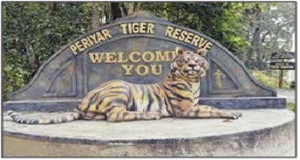
About Periyar Tiger Reserve (PTR):
-
- Location: It is located in the Idukki district of Kerala. It is set high at Cardamom Hills and Pandalam Hills of the Western Ghats, adjacent to the border with Tamil Nadu.
- Nomenclature: It is named after the Periyar River. It surrounds the Periyar Lake, which was created in 1895 by building a dam across the Periyar River.
- History: It was established in 1934 as the Nellikkampatty Game Sanctuary by the Maharaja of Travancore. In 1950, it was formally consolidated and recognized as the Periyar Wildlife Sanctuary.
-
- Establishment: In 1978, it was included in Project Tiger and renamed the Periyar Tiger Reserve, becoming India’s 10th tiger reserve.
- Terrain: The terrain is hilly and undulating with a maximum altitude of 2016 m. The highest peak is Kottamala (2016 m).
- Rivers: Two major rivers namely Periyar and Pamba drain the area.
- Dams: Mullaperiyar Dam is located within the PTR.
- Tribes: It is home to many tribal communities, including the Mannans and the Palians.
-
- Vegetation: It mainly comprises tropical evergreen forests, semi- evergreen forests, moist deciduous forests, transitional fringe evergreen forests, grasslands, and eucalyptus plantations.
- Flora: These include teak, mangoes, rosewood, jamun, jacarandas, terminalias, tamarind, royal ponciana, bamboo, etc.
- Fauna: These include elephants, wild pigs, mouse deer, barking deer, and tiger. It is also being considered as the habitat of the elusive Nilgiri Tahr.
- Unique primate diversity: All four species of South Indian primates- Lion-tailed Macaque, Nilgiri Langur, Common Langur, and Bonnet Macaque are found here.
Source:
(MAINS Focus)
(UPSC GS Paper II – Issues relating to development and management of Social Sector/Services relating to Health; GS Paper III – Conservation, environmental pollution and degradation)
Context
In contemporary India, bottled water has shifted from occasional convenience to everyday necessity due to declining trust in municipal supplies. However, recent Indian studies detecting microplastics in bottled water have raised concerns about invisible contaminants and regulatory inadequacy.
What are Microplastics and Why are They Concerning?
- Microplastics are plastic particles smaller than 5 mm, generated either as primary microplastics (industrial pellets, microbeads) or secondary microplastics formed from degradation of larger plastics. Nanoplastics, even smaller, often escape detection. Their persistence, bioaccumulation potential, and ability to carry toxic additives make them a public health concern.
Evidence from Indian Scientific Studies
- A Nagpur-based study found 72–212 microplastic particles per litre in all sampled bottled water brands, with higher contamination in locally bottled products. Similar findings in Mumbai and coastal Andhra Pradesh showed microplastics in 100% of tested samples. Globally, WHO (2019) noted insufficient evidence on health risks but emphasised the need for standardised monitoring and risk assessment frameworks.
Reasons for Presence in Bottled Water
- PET Bottle Degradation: Polyethylene terephthalate (PET) bottles fragment due to mechanical stress and ageing.
- Heat and UV Exposure: High temperatures during transport and storage (common in India) accelerate leaching of antimony and phthalates and increase particle shedding.
- Source Water Contamination: Rivers and groundwater already contain microplastics due to India’s plastic waste burden (over 3–4 million tonnes annually as per CPCB estimates).
- Bottling Process Gaps: Fragmented industry with thousands of small units weakens uniform quality control.
Health Implications
Although long-term epidemiological data are evolving, laboratory research suggests:
- Microplastics may induce inflammation and oxidative stress.
- Smaller particles may cross intestinal barriers and potentially enter bloodstream.
- They act as vectors for endocrine-disrupting chemicals (phthalates, bisphenols) and heavy metals.
- Chronic exposure combined with chemical leaching creates cumulative risks not addressed in short-duration safety testing.
Regulatory and Institutional Gaps
Packaged drinking water in India is regulated by FSSAI; BIS certification is no longer mandatory. However:
- No prescribed permissible limits for microplastics.
- No routine testing protocol for nanoplastics.
- Standards assess individual chemicals, not combined long-term exposure.
- State-level inspections (e.g., Karnataka surveys) have flagged unsafe samples, indicating enforcement deficits.
Criticisms / Broader Concerns
- Illusion of Purity: Sealed packaging fosters misplaced trust, overshadowing systemic investment in safe public water systems.
- Environmental Feedback Loop: Single-use bottles significantly contribute to India’s plastic waste crisis. Degraded plastics re-enter water bodies as microplastics, contaminating even treated sources.
- Public Health Inequity: Access to bottled water is income-dependent, potentially diverting policy focus from universal potable water access.
- Policy Lag Behind Science: Regulation remains pathogen-centric, while emerging contaminants remain outside formal standards.
- Cumulative Exposure: Daily ingestion over decades is not factored into risk assessment models.
Reforms: Efforts Taken and Needed
- Strengthening Public Supply Systems: Jal Jeevan Mission (aim: functional household tap connections to all rural households) reduces dependence on bottled water. Real-time water quality monitoring dashboards can rebuild trust.
- Updating Standards: FSSAI and BIS must mandate microplastic testing, define threshold limits, and integrate precautionary principles, learning from evolving EU and global regulatory discussions.
- Plastic Waste Governance: Plastic Waste Management Rules, 2016 (amended 2022) and Extended Producer Responsibility (EPR) mechanisms must be strictly enforced to reduce upstream plastic leakage.
- Storage and Labelling Norms: Mandatory heat-exposure warnings, improved transport standards, and periodic third-party audits.
- Research and Surveillance: National-level surveillance on microplastics in drinking water; integration with ICMR-led toxicological research to establish India-specific risk benchmarks.
Conclusion
Microplastics in bottled water exemplify a silent public health challenge emerging at the intersection of environmental degradation and regulatory inertia. Addressing it requires science-based standard setting, stronger waste governance, and renewed investment in accountable public water systems rather than unchecked dependence on packaged solutions.
Mains Question
- Microplastics are emerging as a significant contaminant in drinking water in India. Examine their sources, health implications and regulatory gaps. Suggest policy measures to address this growing public health challenge. (250 words, 15 marks)
Source: The Hindu
(UPSC GS Paper III – Conservation, environmental pollution and degradation; Environmental impact assessment; Science and Technology- developments and their applications and effects in everyday life)
Context (Introduction)
Carbon Capture and Utilisation (CCU) technologies aim to capture CO₂ from industrial sources or air and convert it into useful products. For India, the world’s third-largest emitter, CCU offers a pathway to decarbonise hard-to-abate sectors while supporting a circular, low-carbon economy.
Main Arguments
- Concept and Technological Basis of CCU: CCU captures CO₂ from power plants, cement, steel, refineries or through Direct Air Capture and converts it into fuels (methanol, synthetic fuels), chemicals (olefins), building materials (carbonated concrete) or polymers. Unlike CCS, it reuses rather than stores carbon.
- Relevance for Hard-to-Abate Sectors: India’s emissions are concentrated in cement, steel, chemicals and thermal power. Process emissions in cement (from limestone calcination) cannot be eliminated by renewables alone. CCU reduces point-source emissions and lowers carbon intensity of industrial output.
- Emission Reduction Pathways: CCU reduces emissions by:
- Capturing CO₂ before atmospheric release.
- Substituting fossil-derived feedstocks with CO₂-derived inputs.
- Permanently mineralising CO₂ in construction materials.
- Integrating with green hydrogen to produce low-carbon synthetic fuels.
- Global Policy Support: EU Experience: The EU Bioeconomy Strategy (2018) promotes sustainable use of biological and carbon resources, encouraging CO₂ as industrial feedstock. The Circular Economy Action Plan (2020), under the European Green Deal, supports industrial symbiosis and CO₂-based products. Carbon pricing under the EU ETS improves CCU viability.
- International Industry Examples: ArcelorMittal and Mitsubishi Heavy Industries, Ltd., with D-CRBN in Belgium, are converting captured CO₂ into carbon monoxide for reuse in steelmaking. The U.S. provides tax credits (e.g., 45Q) to incentivise CCU. UAE’s Al Reyadah integrates CCU with green hydrogen hubs.
India’s Current Status
- Policy Roadmaps: Department of Science & Technology has issued a dedicated CCU R&D roadmap. Ministry of Petroleum & Natural Gas released a draft 2030 CCUS roadmap identifying industrial clusters.
- Industrial Pilots
- Ambuja Cements (Adani Group)–IIT Bombay Indo-Swedish pilot for CO₂-to-fuels/materials.
- JK Cement CCU testbed for lightweight concrete and olefins.
- Organic Recycling Systems Limited (ORSL) Bio-CCU platform converting biogas CO₂ into bio-alcohols.
- Climate Commitments Alignment: Supports India’s 2070 Net Zero target and Panchamrit commitments under COP26.
Challenges / Risks
- Cost Competitiveness: CO₂ capture and conversion are energy-intensive; CCU products struggle against cheaper fossil-based alternatives without policy incentives.
- Infrastructure Gaps: Requires industrial clusters, CO₂ pipelines, purification systems, and green hydrogen availability. Infrastructure is uneven across Indian regions.
- Regulatory and Market Uncertainty: Absence of carbon pricing, lifecycle certification standards and green procurement mandates limits investor confidence.
- Risk of Limited Net Gains: If powered by fossil energy, CCU may not significantly reduce lifecycle emissions.
- Financing Constraints: High capital costs and technology risks deter large-scale private sector adoption.
Way Forward
- Introduce Market Incentives: Carbon pricing, tax credits, viability gap funding or Production-Linked Incentives for CO₂-derived products.
- Develop CCU Industrial Clusters: Integrate CCU in cement and steel hubs (e.g., Gujarat, Odisha) with shared capture and utilisation infrastructure.
- Align with National Green Hydrogen Mission: Use green hydrogen to enhance CO₂-to-fuel conversion efficiency and reduce lifecycle emissions.
- Establish Certification Frameworks: Develop lifecycle carbon accounting standards and green product labelling to create market demand.
- Strengthen R&D and PPPs: Scale pilot projects into commercial demonstration plants with blended finance and global climate funds.
Conclusion
CCU can serve as a transitional decarbonisation tool for India’s industrial economy. However, its success depends on coherent policy support, clean energy integration, cost reduction and robust regulatory standards to ensure genuine emission reductions rather than symbolic compliance.
Mains Question
- What are Carbon Capture and Utilisation (CCU) technologies?. Discuss global best practices and suggest measures to scale up CCU deployment in India. (250 words, 15 marks)
Source: The Hindu