IASbaba's Daily Current Affairs Analysis

Archives
(PRELIMS Focus)
Category: International Organisations
Context:
- The head of the International Atomic Energy Agency Rafael Grossi said recently that the IAEA is trying to arrange a new nuclear deal between the U.S. and Iran.

About International Atomic Energy Agency (IAEA):
- Nature: It is the world’s leading intergovernmental organisation for scientific and technical cooperation in the nuclear field.
-
- Genesis: The Agency’s genesis was U.S. President Eisenhower’s “Atoms for Peace” address to the General Assembly of the United Nations on 8 December 1953.
- Establishment: The IAEA Statute was approved on 23 October 1956 and came into force on 29 July 1957.
- Other names: It is widely known as the world’s “Atoms for Peace and Development” organization.
-
- Association with UN: The IAEA is an autonomous organization within the United Nations system. It reports to both the United Nations General Assembly and the UN Security Council.
- Objective: Its primary goal is to ensure that nuclear energy is not diverted for weapons purposes.
- Working: The IAEA works with its Member States and multiple partners worldwide to promote the safe, secure, and peaceful use of nuclear technologies.
-
- Member countries: The agency currently has 180 member states, reflecting its wide international mandate and credibility.
- Headquarters: Its headquarters is located in Vienna, Austria.
- Institutional Structure:
-
-
- General Conference: The General Conference, composed of all member states, meets annually to approve budgets and set general policy directions.
-
- Board of Governors: The Board of Governors, comprising 35 members, meets about five times a year to: approve safeguards agreements, carry out statutory functions, and appoint the Director General.
-
-
- Secretariat: The Secretariat, led by the Director General, handles the IAEA’s daily operations.
-
- Key functions:
- Promoting Peaceful Uses of Nuclear Energy: The IAEA encourages the use of nuclear technology for peaceful purposes, emphasizing sustainability and safety.
- Safety and Security: The agency establishes safety standards and provides assistance to ensure that nuclear operations are conducted safely and securely.
- Verification: The IAEA conducts inspections and monitoring to verify compliance with nuclear non-proliferation agreements.
- Recent initiatives:
-
-
- Atoms4Food: A joint initiative with the FAO (launched in 2024) to use nuclear techniques for enhancing crop yields, food safety, and animal health.
-
- Rays of Hope: Focuses on expanding access to radiotherapy and cancer care in low- and middle-income countries.
-
-
- ZODIAC: The Zoonotic Disease Integrated Action initiative uses nuclear-derived techniques to detect and respond to potential pandemics.
-
- Nuclear Energy Summit: In March 2026, global leaders at a summit in Paris reaffirmed nuclear energy’s role in achieving Net Zero targets.
- India and the IAEA:
-
- India maintains a Separation Plan where civilian nuclear facilities are under IAEA safeguards, while military installations remain outside its inspection purview.
- The India-Specific Safeguards Agreement (2009) allowed India to participate in international nuclear trade despite not being a signatory to the NPT.
Source:
Category: Science and Technology
Context:
- Recently, peptide therapeutics have been gaining attention in research as well as clinical practice, globally.
About Peptides:
-
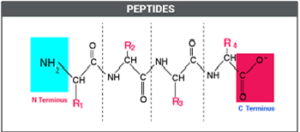
- Nature: Peptides are chains of amino acids that are naturally found in the body. The amino acids in a peptide are connected to one another in a sequence by bonds called peptide bonds.
- Peptide Bond: Fit is formed through a condensation reaction where the carboxyl group (—COOH) of one amino acid reacts with the amino group (—NH2) of another, releasing a water molecule (H20).
- Types:
-
-
- Oligopeptides: Chains of 2 to 20 amino acids (e.g., dipeptides, tripeptides).
-
- Polypeptides: Longer chains of 21 to 49 amino acids.
-
-
- Bioactive Peptides (BAPs): Short fragments (2–20 amino acids) that remain active after digestion and provide health benefits like reducing blood pressure or inflammation.
-
- Functions:
- The body makes lots of different peptides, each of which has a different role. They may provide pro-aging support, anti-inflammatory, or muscle-building properties.
-
-
- Some peptides act as hormones, which are molecules that when released from cells, affect other areas of the body.
-
- Due to the potential health benefits of peptides, many supplements are available that contain peptides that manufacturers have derived either from food or made synthetically.
- Key applications:
-
-
- Medicine: Used as hormones (e.g., Insulin, Oxytocin), neurotransmitters, and targeted cancer therapies.
- Agriculture: Developed as “green pesticides” (e.g., Spear®, derived from spider venom) that are eco-friendly and biodegradable.
- Cosmetics: Used in anti-ageing creams to stimulate collagen production and repair skin damage.
-
- Food Industry: Used as antioxidants, antimicrobial agents, and artificial sweeteners (e.g., Aspartame).
- Peptides vs. Proteins:
-
-
- Proteins and peptides are fundamental components of cells that carry out important biological functions.
- Both proteins and peptides are made up of amino acids, but peptides contain far fewer amino acids than proteins.
-
- Traditionally, peptides are defined as molecules that consist of between 2 and 50 amino acids.
-
-
- Meanwhile, proteins are long molecules made up of multiple peptide subunits, and are also known as polypeptides.
- In addition, peptides tend to be less well defined in structure than proteins, which can adopt complex conformations known as secondary, tertiary, and quaternary structures.
- Proteins can be digested by enzymes (other proteins) into short peptide fragments.
- Recent developments:
- GLP-1 Drugs: Glucagon-like peptide-1 (GLP-1) receptor agonists like Ozempic and Wegovy have gained prominence for treating Type 2 diabetes and obesity.
- Antimicrobial Breakthroughs: Recently, researchers discovered a cow-derived peptide capable of killing drug-resistant bacteria like Klebsiella pneumoniae, offering a potential alternative to traditional antibiotics.
-
- Personalised Nutrition: A recent study highlighted that bioactive peptides in fermented foods (like idli and yogurt) can offer population-specific health benefits, supporting “precision nutrition” tailored to India’s genetic diversity.
Source:
Category: History and Culture
Context:
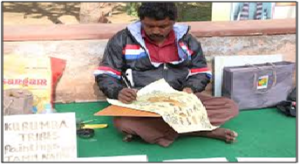
- Recently, it was observed that the Kurumba art form is facing the threat of extinction.
About Kurumba Painting:
-
- Nature: It is a prehistoric art form, estimated to be over 3000 years old. Historically, it is linked to rock art found at sites like Ezhuthupaarai in the Nilgiris.
- Origin: It originates from the Kurumba tribe in Tamil Nadu, Kerala, and Karnataka.
- Tradition: Traditionally, it was an exclusive ritualistic practice where male priests decorated temple walls and women adorned house doors, windows, and floors with kolams.
- Style: It is known for its minimalist, two-dimensional linear motifs. It uses dots, lines, and geometric shapes to create figures that resemble Warli art, but with distinct fluidity in movement.
-
- Themes: Themes are deeply rooted in the tribe’s socio-religious life. Common subjects include:
- Livelihood: Honey hunting (their traditional occupation), cattle gathering, and forest scenes.
- Culture: Tribal weddings, rituals, festivals, and spiritual beliefs.
- Nature: Local flora and fauna, such as wild animals and traditional leaf-and-wood huts.
- Use of natural pigments: The art is characterized by the exclusive use of forest-derived colours applied without water.
- Themes: Themes are deeply rooted in the tribe’s socio-religious life. Common subjects include:
- Red & White: Sourced from different types of soil.
- Green: Extracted from crushed leaves.
-
-
- Black & Yellow-Brown: Derived from the resin of the Vengai tree (Pterocarpus marsupium).
- Application of colours: Colours are applied using cloth, fine twigs, or bamboo sticks onto walls often pre-coated with cow dung.
-
- Platform: The paintings are traditionally done on walls, fabric, and handmade paper.
- Significance: This minimalist yet expressive style preserves the tribe’s cultural heritage and reflects their deep spiritual bond with nature.
- Product range: These include wall murals, decorative panels, ritual paintings, cloth artworks, etc.
Source:
Category: Polity and Governance
Context:
- Recently, the government of India held a high-level interaction with the National Shipping Board (NSB) to address sectoral challenges amid global maritime uncertainty.

About National Shipping Board (NSB):
- Establishment: It is a permanent statutory body established in 1959, under Section 4 of Merchant Shipping Act, 1958.
-
- Mandate: It advises the Central Government on all matters relating to shipping, including its development and issues arising from the Merchant Shipping Act.
- Nodal Ministry: It comes under the Ministry of Ports, Shipping and Waterways.
-
- Significance: It has played a very distinguished role in the Maritime development of the country, as its deliberation and recommendations have contributed to the evolution of a sound and pragmatic National Maritime Policy over the years.
- Composition: It consists of Chairman and Members. It consists of such Members, not exceeding sixteen as the Central Government may think fit to appoint on the Board to represent the Central Government, Ship-owners, and Seamen.
- Representation from Parliament: Among these members, six members are elected by Parliament (Four from the Lok Sabha and two from Rajya Sabha from amongst its members).
- Tenure: The Chairman and other members of the Board held office for a period of two years.
- Strategic role: The government has recently engaged the NSB to address challenges like global maritime uncertainty and to review measures for strengthening maritime capacity under the Maritime India Vision 2030 and Maritime Amrit Kaal Vision 2047.
- Focus areas: Recent deliberations have focused on promoting Green Shipping, improving the welfare and taxation of Indian seafarers, and scaling up domestic container manufacturing.
- Advisory nature: The board does not have executive powers; it provides recommendations to help evolve a pragmatic National Maritime Policy.
- Specific duties: It reviews maritime laws, suggests infrastructure improvements for ports, and monitors the welfare of Indian seafarers.
Source:
Category: Defence and Security
Context:
- Indian Naval Ship INS Trikand will participate in the 58th National Day celebrations of Mauritius.

About INS Trikand:
-
- Nature: It is a Talwar-class guided-missile frigate of the Indian Navy.
- Significance: It is the third and final ship of the second batch of Talwar-class frigates ordered by the Indian Navy.
- Construction: It was built by the Yantar shipyard in Kaliningrad, Russia.
- Operation: It is part of the Indian Navy’s Western Fleet and operates under the Western Naval Command headquartered at Mumbai.
-
- Stealth features: Incorporates a special hull design and innovative features to reduce radar, magnetic, and acoustic signatures.
- Propulsion: it is powered by four gas turbines (M7N.1E COGAG plant).
- Speed: It is capable of speeds more than 30 knots and is configured to carry a Kamov 31 helicopter.
- Aviation: Configured to carry one Kamov-31 (Airborne Early Warning) or Chetak/HAL Dhruv helicopter.
-
- Armory: It carries a supersonic BRAHMOS missile system, advanced surface-to-air missiles Shtil, an upgraded A190 medium-range gun, electro-optical 30 mm close-in weapon system, anti-submarine weapons such as torpedoes and rockets, and an advanced electronic warfare system.
- Combat system: The weapons and sensors are integrated through a Combat Management System ‘Trebovanie-M’, which enables the ship to simultaneously neutralise multiple surface, sub-surface, and air threats.
- Significance: It frequently represents India in multinational exercises like Cutlass Express and Naseem Al Bahr, enhancing interoperability with global navies. It also acts as a “First Responder” in the Indian Ocean Region (IOR), contributing to regional stability and combatting non-traditional threats like piracy.
Source:
(MAINS Focus)
Subject: General Studies-II (International Relations) & General Studies-III (Economy)
Sub-topic: Global Economic Governance, Development Models, Industrial Policy
Introduction
The Washington Consensus, coined by John Williamson (1989), promoted policies like fiscal discipline, liberalization, privatization, and deregulation as universal solutions for developing economies. Over time, crises such as the 1997 Asian financial crisis, the 2008 global recession, and rising economic nationalism exposed its limits, weakening its global dominance.
The Washington Consensus: Origins and Tenets
- The Ten Commandments (Williamson, 1989):
- Fiscal discipline
- Reordering public spending priorities
- Tax reform (broad base, lower rates)
- Liberalizing interest rates
- Competitive exchange rates
- Trade liberalization (lowering tariffs)
- Liberalization of inward FDI
- Privatization of state enterprises
- Deregulation (removing barriers to entry)
- Securing property rights
- Ideological Roots: Emerged from Reaganomics, Thatcherite structural adjustment, and debt crisis conditionality imposed by Bretton Woods Institutions (IMF, World Bank).
- Political History: Never merely technocratic—carried conditionality, bargaining power, and belief in trickle-down growth.
Failures and Flaws: The Consensus Undone
- Crisis Legacy:
- Asian Financial Crisis (1997): Exposed systemic flaws of capital account liberalization
- Global Financial Crisis (2008): Demonstrated dangers of deregulated markets
- WTO Breakdowns: Seattle (1999) and Cancún (2003) revealed North-South divides
- Damaging Dogmas:
- Rejection of Industrial Policy: WC taboo on state intervention, reinforced by WTO rules (TRIMs, TRIPS, subsidies), constrained developing countries’ policy space
- Deregulation in Weak Markets: Applied even where market institutions were absent (much of Africa, LDCs)
- Inequality Ignored: IMF’s “trickle-down” assumption proved disastrous—Structural Adjustment Programmes harmed poorest nations
- Democratic Deficit: Conceived in Western capitals without meaningful consultation with developing countries
The Success Stories That Defied the Consensus
- Historical Irony: No successfully industrialized country followed WC prescriptions during their formative years:
- Pre-WWII: United States, Japan
- Post-war: South Korea, Taiwan, Singapore
- Common Thread: State-led strategies, targeted industrial policy, infant industry protection—precisely what WC delegitimized
- China’s Rise: State-led intervention with limited political liberalization offered alternative template
- Value Addition: List’s infant industry argument (1841) and Gerschenkron’s latecomer advantages (1962) explain why protectionism aided development—WC ignored this history
The Shattering of the Myth: New Realities
- Economic Nationalism Resurgent:
- Trump Tariffs: Sweeping, punitive protectionism as geopolitical instrument
- Supply Chain Reconfiguration: Driven by dominance and national security, not efficiency
- Industrial Subsidies: US CHIPS Act, IRA—Western embrace of industrial policy
- The Implicit Bargain Broken: Free markets as prosperity engine, supply chains as neutral plumbing—both discarded
- Pragmatic Eclecticism: No new consensus, but acceptance that policy must be politically context-sensitive:
- Fiscal prudence still matters, but so does targeted public investment
- Markets need rules, institutions, buffers
- Trade is growth-enhancing, but national security justifies strategic decoupling
Two Emerging Counter-Narratives
- Post-Washington Consensus: Emphasizes public accountability, social safety nets, redistribution politics
- Beijing Consensus: State-led intervention, targeted industrial policy, limited political liberalization—attractive to some developing countries
- Value Addition: Dani Rodrik’s “augmented Washington Consensus” (2002) included institutional reforms, but implementation remained weak. Current shift is more fundamental—rejecting one-size-fits-all entirely.
Lessons for Developing Countries
- Context Sensitivity: No ready-made template—each nation must find its own path
- Policy Space Essential: WTO flexibility, strategic use of exceptions, infant industry protection where feasible
- New Imperatives: Digital trade, climate resilience, AI governance demand fresh thinking
- The Toolbox Approach: Policymakers now pick instruments with explicit geopolitical and distributional aims
Conclusion
The Washington Consensus’ promise of universal development solutions collapsed due to crises, inequality, and political backlash. Today’s multipolar and fragile world requires pragmatic, context-specific policies—balancing markets with regulation and fiscal prudence with public investment. Development now depends on adaptation to national realities, not one-size-fits-all prescriptions.
UPSC Mains Practice Question
- Critically examine the rise and decline of the Washington Consensus and discuss emerging economic policy approaches in a multipolar world, highlighting key lessons for developing countries like India.
Subject: General Studies-III (Indian Economy)
Sub-topic: National Income Accounting, Economic Data, Policy Formulation
Introduction
India’s new GDP series updates the 2011–12 base and aims to correct earlier methodological flaws. Studies suggest the 2015 methodology overestimated growth by 1.5–2% after 2011 and underestimated earlier growth, masking the pre-2011 boom and post-2015 slowdown, thereby complicating policy assessment and weakening reform urgency.
Why GDP Methodology Matters
GDP estimates are not academic exercises—they shape policy decisions, investor confidence, and global perceptions.
- Policy Formulation: Interest rates, fiscal deficits, and reform agendas respond to growth signals
- International Standing: Fastest-growing economy status attracts investment and enhances bargaining power
- Historical Record: Understanding past performance guides future strategy
- Value Addition: Simon Kuznets, who developed modern national income accounting, warned that GDP measures must be interpreted with caution—it counts market transactions, not welfare or structural health
The Breakdown: When GDP Lost Touch with Reality
Until a decade ago, GDP correlated closely with macro-indicators: exports, credit, taxes, electricity consumption, IIP, and corporate sales. After the 2015 methodology revision, these relationships broke down.
- The Disconnect: Official data showed steady 6-7% growth despite:
- Demonetisation (2016)
- GST introduction (2017)
- ILFS-triggered credit meltdown (2018-19)
- Covid-19 pandemic (2020-21)
- The Puzzle Paradox: If growth was strong, why were private investment, FDI, capacity utilization, wages, and employment weak? Why rupee pressure despite “world-beating” growth?
- Occam’s Razor: A simple explanation fits all puzzles—growth was less strong than it appeared
Methodological Flaws: Two Fundamental Problems
- Inappropriate Data Sources:
- Used formal sector data to proxy informal sector performance (over 45% of economy in 2011-12)
- Informal sector hit disproportionately by three severe shocks: Demonetisation, GST, Covid
- Result: Systemic overstatement of informal sector performance
- Inappropriate Deflators:
- Used Wholesale Price Index (WPI) to deflate services production
- WPI doesn’t capture service prices—plunged due to oil price collapse
- Result: Inflation understated, real growth overstated
- “Double deflation” missing, but inappropriate indices were bigger issue
- Value Addition: The 2009 System of National Accounts recommends double deflation (separately deflating output and inputs). India’s method fell short, but using WPI for services was fundamentally flawed.
The Magnitude of Misestimation
- 2011-12 to 2023-24: Growth overstated by 1.5-2 percentage points on average
- Actual growth: 4-4.5% instead of reported 6%
- Inappropriate data and deflators contributed roughly equally
- 2004-05 to 2011-12: Growth underestimated by 1-1.5 percentage points
- The Erased Trajectory:
- “India Shining” boom (2003-2010) erased from history
- Post-2015 slowdowns (twin balance sheet problem, shocks) erased
- Replaced by picture of steady, rapid growth
Policy Consequences: Misreading That Mattered
- Complicated Macroeconomic Policy:
- Data signalled strength when economy was weak
- Suggested easing when growth was actually strong
- Wrong signals at critical junctures
- Attenuated Reform Urgency (2014-15 to 2019-20):
- Why change policy framework when producing “world-beating growth”?
- Critical reform window potentially missed
- Investor and Analyst Confusion: Endless “puzzles” requiring complex explanations—when simpler explanation was data error
- Value Addition: The “twin balance sheet problem” (stressed banks and corporates) after 2011 required structural reforms. If growth appeared robust, urgency to address this diminished.
The New Series: Hope and Caution
- Commendable Process: MoSPI’s consultative approach deserves credit
- Remaining Oddities:
- Manufacturing GVA deflator strangely negative for 10 quarters
- Unusual jump in sector’s real growth rate
- Import deflators radically different, producing sharp changes in real import growth
- The Test: Quality and plausibility of new numbers will determine if shortcomings addressed
- Complementary Effort: New methodology applies to future estimates; research on past provides benchmark for backcasting exercise
India’s Global Standing: Pride Without Statistical Crutch
- IMF Ranking (2011-2023): India was fourth-fastest growing major economy
- Revised Estimates: Still among top seven or eight
- The Point: National pride warranted without requiring statistical crutch
Conclusion
India’s GDP misestimation (2004–2024) distorted growth trends, masking both the 2000s boom and the post-2015 slowdown. This weakened reform urgency and complicated policymaking. The new series may correct this, but the episode highlights that statistical integrity is essential for credible analysis and sound economic policy.
UPSC Mains Practice Question
- Examine methodological flaws causing India’s GDP misestimation (2004–24) and assess why reliable data is crucial for evidence-based policymaking.