
IASbaba's Daily Current Affairs Analysis

Archives
(PRELIMS Focus)
Category: Science and Technology
Context:
- India’s rapid industrialisation has come at a heavy environmental cost and to address this, India needs to focus on bioremediation.
About Bioremediation:
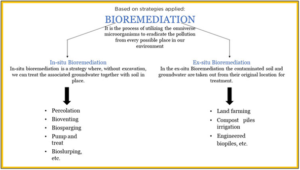
- Definition: Bioremediation is the use of living microorganisms to degrade environmental contaminants into less toxic forms.
- Significance: Bioremediation has gained significant attention in recent years due to its potential to address various environmental challenges, from oil spills to contaminated soil and groundwater.
- Working Mechanism: Bioremediation involves introducing specific microorganisms or creating conditions that favour the growth of naturally occurring microbes capable of degrading pollutants. This technique leverages the natural capabilities of bacteria, fungi, and other organisms to break down contaminants into less harmful or harmless substances.
- Common micro-organisms used: Some bacteria commonly used in bioremediation include Pseudomonas, Alcanivorax, Bacillus, and Deinococcus, as they can break down various toxic substances.
- Monitoring: Bioremediation can be monitored indirectly by measuring the oxidation-reduction potential or redox in soil and groundwater, along with pH, temperature, oxygen content, electron acceptor/donor concentrations and concentration of breakdown products (e.g. CO2).
- Types of Bioremediation:
- In Situ Bioremediation: It involves treatment of the contaminated material at the site. Prominent types of In Situ Bioremediation techniques include Bio-Venting, Bio-Sparging, Bio-Augmentation, etc.
- Ex Situ Bioremediation: It involves the removal of the contaminated material to be treated elsewhere. Prominent types of Ex Situ Bioremediation techniques include Land Farming, Composting, Bio-Piles, Bio-Reactors, etc.
- Applications of Bioremediation:
- Heavy Metal Bioremediation: It removes toxic heavy metals (lead, cadmium, chromium, copper) through degradation, absorption, and detoxification.
- Soil Bioremediation: It degrades hydrocarbons in soils contaminated with oil and petroleum products, maintaining soil health and promoting natural recovery.
- Marine Oil Spill Bioremediation: It involves use of indigenous oil-degrading microorganisms (Halomonas aquamarina, Alcanivorax) to break down oil, offering an eco-friendly alternative to chemical cleaners.
- Rubber Waste Bioremediation: Bioremediation of rubber waste includes microbial treatments which reduce pollutants such as BOD, COD, and solids, alongside sulfur removal and rubber degradation for recycling.
Source:
Category: International Conventions
Context:
- At the conference on 50 years of Biological Weapons Convention (BWC), Mr. Jaishankar said that Global South should be at centre of preparations to deal with bioweapons.

About Biological Weapons Convention (BWC):
- Nomenclature: It is formally known as “The Convention on the Prohibition of the Development, Production and Stockpiling of Bacteriological (Biological) and Toxin Weapons and on their Destruction”.
- Origin: It was negotiated in Geneva, Switzerland within the Eighteen Nation Committee on Disarmament (ENDC) and Conference of the Committee on Disarmament (CCD) from 1969 until 1971. It was opened for signature in 1972 and entered into force in 1975.
- Objective: It aims to effectively prohibits the development, production, acquisition, transfer, stockpiling and use of biological and toxin weapons. It supplements the 1925 Geneva Protocol, which had prohibited only the use of biological weapons.
- Membership: It has almost universal membership with 188 States Parties (India signed and ratified in 1974) and 4 Signatory States (Egypt, Haiti, Somalia, Syrian Arab Republic).
- Uniqueness: It is the first multilateral disarmament treaty which bans an entire category of weapons of mass destruction (WMD).
- Meeting: States Parties meet approximately every 5 years to review its operation. States Parties to BWC have strived to ensure that Convention remains relevant and effective, despite the changes in science and technology, politics and security since it entered into force.
- Measures taken by India to implement Biological Weapons Convention (BWC):
- Manufacture, Use, Import, Export and Storage of Hazardous Micro organisms, Genetically/Engineered Organisms or Cells Rules, 1989: It protects the environment, nature and health, in connection with the application of gene technology and micro-organisms.
- Weapons of Mass Destruction and their Delivery Systems (Prohibition of Unlawful Activities) Act, 2005: It Prohibits unlawful activities (such as manufacturing, transport, or transfer) related to weapons of mass destruction, and their means of delivery.
- Special Chemicals, Organisms, Materials, Equipment and Technologies (SCOMET): SCOMET list is India’s National Export Control List of dual use items, munitions and nuclear related items, including software and technology.
Source:
Category: Miscellaneous
Context:
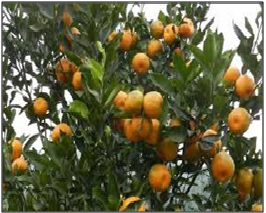
- Recently, the ‘Darjeeling Mandarin Orange’ has officially been granted the Geographical Indication (GI) tag.
About Darjeeling Mandarin Orange:
- Scientific name: It is botanically known as Citrus reticulata Blanco
- Nature: The Mandarin Orange is a major cash crop of the Darjeeling Hills and it is widely recognised for its rich aroma and flavour.
- Growing areas: It is grown in the hills of Darjeeling in West Bengal.
- Other names: It is commonly known as “suntala” is the pride of Darjeeling hills due to its delightful aroma and flavour.
- Significance: It is the third product from the region, after Darjeeling Tea and Dalley Khursani chilli, to get the tag.
- Required Climatic Conditions for its growth:
- It is cultivated at elevations ranging from 600 to 1500 meters above sea level,
- They grow successfully in all frost free tropical and sub-tropical regions upto 1,500 m. above mean sea level.
- Annual rainfall should be 100-120 cm.
- Temperature should range from 10–35°C is suitable for cultivation of the crop.
- The preferred soil is medium or light loamy soils.
Source:
Category: Defence and Security
Context:
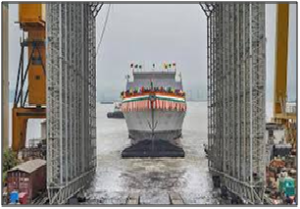
- INS Taragiri was delivered to the Indian Navy recently at MDL, Mumbai, marking a major milestone in achieving self-reliance in warship design and construction.
About INS Taragiri:
- Nature: It is a reincarnation of the erstwhile INS Taragiri, a Leander-class frigate that was part of the Indian Naval fleet from 1980 to 2013.
- Construction: It is the fourth ship of Nilgiri Class (Project 17A) built by Mazagon Dock Shipbuilding Ltd (MDL).
- Design: Designed by the Warship Design Bureau (WDB) and overseen by the Warship Overseeing Team (Mumbai), P17A frigates reflect a generational leap in indigenous ship design, stealth, survivability, and combat capability.
- Significance: Taragiri is the fourth P17A ship to be delivered to Indian Navy in the last 11 months. The experience gained from construction of first two P17A ships have enabled the build period of Taragiri to be compressed to 81 months, in comparison to 93 months taken for First of the Class (Nilgiri).
- Step towards Aatamanirbhar Bharat: With an indigenisation content of 75%, the project has involved over 200 MSMEs and has enabled employment generation of approximately 4,000 personnel directly and more than 10,000 personnel indirectly.
- Propulsion: It is configured with Combined Diesel or Gas (CODOG) propulsion plants, comprising a diesel engine and a gas turbine that drive a Controllable Pitch Propeller (CPP) on each shaft, and state-of-the-art Integrated Platform Management System.
- Weapon suit: The potent weapon and sensors suite comprises BrahMos SSM, MFSTAR and MRSAM complex, 76mm SRGM, and a combination of 30 mm and 12.7 mm close-in weapon systems, along with rockets and torpedoes for anti-submarine warfare.
Source:
Category: International Relations
Context:
- Prime Minister Narendra Modi held conversation with Sri Lankan President and assured India’s continued support under Operation Sagar Bandhu.

About Operation Sagar Bandhu:
- Nature: Operation Sagar Bandhu is India’s rapid Humanitarian Assistance and Disaster Relief (HADR) mission launched to support Sri Lanka during the devastating floods triggered by Cyclone Ditwah.
- Coordination: It is coordinated by the Ministry of External Affairs, Indian Navy, and Indian Air Force.
- Objective: It aims to provide immediate relief and essential supplies to Sri Lanka, ensuring rapid support under India’s Neighbourhood First and Vision MAHASAGAR maritime cooperation frameworks.
- Key features:
- It included immediate deployment of INS Vikrant, INS Udaigiri, and IAF C-130J aircraft with relief cargo.
- The supplies included tents, tarpaulins, blankets, hygiene kits, ready-to-eat meals, and HADR equipment.
- It ensured sea–air integrated relief for fast delivery across affected regions.
- It involved continuous monitoring with readiness for additional assistance as the disaster evolves.
About Cyclone Ditwah:
- Nature: It is a tropical cyclone that brought heavy rains to Sri Lanka and Southern India.
- Nomenclature: “Ditwah” is a name given by Yemen, as per the WMO-ESCAP (World Meteorological Organization & UN Economic and Social Commission for Asia-Pacific) cyclone naming list.
- Significance of name: The name refers to Detwah Lagoon, an ecologically significant coastal waterbody located in the Socotra Archipelago.
- Assigning of names to cyclones: Names of tropical cyclones are assigned sequentially from a pre-approved list contributed by 13 member countries, which includes Bangladesh, India, Iran, Maldives, Myanmar, Oman, Pakistan, Qatar, Saudi Arabia, Sri Lanka, Thailand, United Arab Emirates, and Yemen.
Source:
(MAINS Focus)
(GS Paper II – “Role of Judiciary; Centre–State Relations; Federalism; Coordination Mechanisms” & GS Paper III – “Cybersecurity; Internal Security; Technology Challenges”)
Context (Introduction)
The Supreme Court has directed the CBI to lead a nationwide probe into “digital arrest” scams—cybercrimes costing Indians over ₹3,000 crore—overriding State consent and highlighting the growing threat of behavioural exploitation, weak cyber policing, and transnational criminal networks.
Main Arguments
- Pan-India Crime Architecture: Digital arrest scams involve interstate mule accounts, SIM misuse, and foreign cybercrime hubs (notably Southeast Asia), necessitating a national agency with jurisdiction beyond State boundaries.
- Exceptional Circumstances: The SC invoked extraordinary powers to bypass State consent under the DSPE Act, noting the magnitude of losses (₹3,000 crore), vulnerable victims (mainly elderly), and deep institutional coordination gaps.
- Behavioural & Cognitive Exploitation: Scamsters weaponise India’s high authority bias (79% trust government), fear of law enforcement, and availability heuristics using familiar names (e.g., CJI Chandrachud) to coerce victims into compliance.
- State-Level Inadequacies: Telecom negligence in SIM issuance, poor cyber forensics, and fragmented State cybercrime cells created an enforcement vacuum that only the CBI can fill.
- National Security Angle: The Supreme Court recognised that digital arrests may be exploited in cognitive warfare—where adversaries use psychological manipulation to undermine citizen trust and destabilise society.
Challenges / Criticisms
- Federal Tensions: Centralising the probe raises concerns about cooperative federalism but was justified due to States’ uneven consent and capacities.
- Cross-Border Crime: Many scams originate from Southeast Asian cybercrime hubs; cooperation through Interpol and international MLATs remains slow and inconsistent.
- Institutional Bottlenecks: State cyber cells lack trained personnel, behavioural analysts, and cyber-forensic tools necessary to counter advanced scam networks.
- Technological Gaps: Inadequate AI/ML deployment by banks and telecom firms allows “layering” of funds through multiple mule accounts.
- Cognitive Vulnerabilities: Cultural predispositions—paternalism, fear of police, acquiescence bias (highest among 51 studied cultures)—make Indian citizens uniquely susceptible to authority-driven fraud.
Way Forward
- Centralised Cyber Command (Estonia Model): Build a unified national cyber command integrating CBI, I4C, CERT-In, RBI, and telecom regulators to respond to real-time scams.
- AI-Driven Fraud Detection (UK/US Banks): Implement machine-learning systems to flag unusual transfers, mule accounts, and rapid fund movement (layering).
- Mandatory E-KYC and SIM Regulation (South Korea Model): Enforce stricter telecom KYC, biometric validation, and real-time SIM audit to prevent identity-based fraud.
- Behavioural Risk Education (Singapore Model): Launch national behavioural-science campaigns explaining salience bias, authority bias, and coercion tactics used in digital arrests.
- Cross-Border Cyber Cooperation: Expand Interpol coordination, sign targeted cybercrime treaties with Southeast Asian nations, and set up joint investigation teams.
- Legal Modernisation: Update the IT Act to explicitly recognise digital coercion, impersonation of authorities, and online psychological manipulation as aggravated offences.
Conclusion
The Supreme Court’s intervention reflects a shift from viewing cybercrime as a technical violation to understanding its deeper cognitive, behavioural, and transnational dimensions. Protecting citizens demands not only law enforcement coordination but a whole-of-society response combining technology, regulation, behavioural science, and international cooperation.
Mains Question
- What do you understand by the terms digital slavery and digital arrest? What measures have government taken to tackle it ? Suggest reforms (250 words)
Source: The Hindu
(UPSC GS Paper III – “Environment; Pollution Control; Biotechnology; Government Policies & Interventions”)
Context (Introduction)
India’s rapid industrialisation has intensified soil, water, and air contamination. With traditional remediation methods proving costly and unsustainable, bioremediation offers a low-cost, scalable, and eco-friendly alternative, especially vital for cleaning polluted rivers, land, and industrial sites.
Main Arguments
- Industrial Pollution Crisis: Rivers like Ganga and Yamuna receive untreated sewage and industrial effluents daily, making low-cost biological clean-up essential.
- Sustainable Alternative: Traditional remediation methods are energy-intensive, expensive, and sometimes generate secondary pollution; bioremediation is nature-driven and less resource-heavy.
- Ecological Restoration: Bioremediation can address oil leaks, pesticide residues, and heavy metal contamination affecting ecosystems and public health.
- Biodiversity Advantage: India’s diverse indigenous microbial strains, adapted to local climates, offer higher efficiency than imported species.
- Economic Feasibility: Bioremediation suits resource-constrained local bodies and supports concurrent goals under Swachh Bharat, Namami Gange, and green technology missions.
Types of Bioremediation
- In situ Bioremediation: Treatment at the contamination site—e.g., spraying oil-eating bacteria directly on spills.
- Ex situ Bioremediation: Contaminated soil or water is removed, treated in controlled facilities, and returned after detoxification.
How Traditional Microbiology Combines with Cutting-edge Biotechnology
- Enhanced Microbial Identification: Modern genomics helps identify microorganisms with pollutant-degrading traits.
- Genetically Modified Microbes: GM bacteria can degrade plastics, oil residues, or persistent chemicals that natural species cannot.
- Replicating Biomolecules: Biotechnological tools enable replication of useful microbial enzymes for use in sewage treatment and agriculture.
- Nanobiotechnology: IIT researchers have developed cotton-based nanocomposites to mop up oil spills.
- Targeted Applications: Engineered enzymes and microbial consortia are tailored to degrade site-specific toxins.
Government Initiatives Supporting Bioremediation
- DBT Clean Technology Programme: Funds projects linking academia, research labs, and industry on bioremediation solutions.
- CSIR-NEERI Mandate: Develops and deploys bioremediation frameworks for polluted sites across India.
- Start-up Ecosystem Support: Organisations like BCIL and Econirmal Biotech offer microbial solutions for soil and wastewater.
- Integration with National Missions: Potential linkage with Swachh Bharat Mission, Namami Gange, Urban wastewater management reforms, and upcoming Green Technology initiatives.
Challenges to Adoption in India
- Lack of Site-Specific Knowledge: Different pollutants and soil/water conditions demand customised microbial solutions, which are often unavailable.
- Complex Pollutants: Industrial pollutants like mixed chemicals, microplastics, and heavy metals require multi-strain or advanced biotech solutions.
- Weak Standards: India lacks unified national standards for microbial applications and bioremediation protocols.
- Biosafety Risks: GM microbes need strict monitoring to prevent ecological imbalance or unintended spread.
- Capacity Gaps: Limited trained personnel, weak awareness, and insufficient local infrastructure hinder scaling.
Conclusion
Bioremediation offers India a powerful pathway to restore polluted ecosystems using indigenous biological resources. However, responsible scaling requires national standards, biosafety frameworks, localised research hubs, and public engagement to ensure that biotechnology strengthens — rather than jeopardises — ecological recovery.
Mains Question
- What is bioremediation? Explain the mechanisms involved with suitable examples. Examine its role in India’s waste management strategy and outline key government initiatives promoting its adoption. (250 words, 15 marks)
Source: The Hindu
(UPSC GS Paper III – “Indian Economy: Growth, Development, Employment; External Sector; Foreign Exchange Management”)
Context (Introduction)
The rupee has depreciated by 5.6% against the USD over the past year, with the REER falling from 108.1 (Nov 2024) to 97.5 (Oct 2025). This shift from overvaluation to undervaluation has revived debate about the economic implications of a weaker rupee.
Main Arguments
- Export Competitiveness: An undervalued rupee boosts India’s export prices, crucial when the merchandise trade deficit hit $41.7 billion in October 2025.
- Shock Absorption: Flexible depreciation helps India absorb external shocks such as Trump’s tariff actions and the risk of a China Shock 2.0.
- Reduced Import Pressure: A weaker rupee discourages non-essential imports and helps prevent cheap Chinese goods from overwhelming domestic markets.
- Correcting Past Overvaluation: Earlier RBI interventions kept the rupee artificially strong, hurting exports; the current policy corrects that imbalance.
- Better Policy Mix: Exchange rate adjustments are more effective for correcting imbalances than tariff hikes, export bans, or protectionist measures.
Challenges / Risks Associated
- Imported Inflation Risk: India’s heavy dependence on oil, gas, and fertilisers means depreciation can increase import bills if inflation rises again.
- External Debt Burden: Dollar-denominated corporate borrowings and sovereign liabilities become costlier with a weaker rupee.
- Capital Outflow Concerns: Excessive rupee weakness may trigger FPI exits, tightening liquidity and raising bond yields.
- Weak Export Elasticity: Empirical studies (RBI, ICRIER) show Indian exports respond modestly to currency depreciation due to structural bottlenecks.
- CAD Vulnerability: A widening current account deficit requires the rupee to weaken carefully, not precipitously.
Way forward
- Controlled Depreciation: RBI must allow gradual movement aligned with fundamentals, while preventing disruptive volatility.
- Structural Reforms: Exchange rate policy must complement deeper reforms in logistics, ports, FTAs, and quality standards for durable export gains.
- Reduce Import Dependence: Faster electrification of transport, diversified energy sourcing, and domestic manufacturing can cushion future depreciation risks.
- Enhance Competitiveness: Improving productivity, labour reforms, and trade facilitation remain essential for leveraging currency changes.
- Stronger Financial Buffers: Maintaining robust forex reserves and prudent external borrowing norms supports confidence during rupee adjustment phases.
Conclusion
Rupee depreciation today reflects global headwinds rather than domestic weakness. A mildly undervalued rupee is economically rational given India’s trade deficit and geopolitical shocks. Yet depreciation alone cannot substitute for structural reforms; stability, competitiveness, and import diversification must accompany a flexible exchange-rate regime.
Mains Question
- The Indian rupee witnessed significant depreciation in 2025. Critically analyse its potential benefits and risks for India’s external sector and overall macroeconomic stability. (250 words, 15 marks)
Source: Indian Express