IASbaba's Daily Current Affairs Analysis

Archives
(PRELIMS Focus)
Category: International Organisations
Context:
- For the third consecutive year, India has topped the World Anti-Doping Agency’s (WADA) global list of offenders, with 260 positive cases in 2024.

About World Anti-Doping Agency (WADA):
-
- Nature: It is an international non-governmental organization initiated by the International Olympic Committee (IOC).
- Establishment: It was established in 1999 1999, following the “Lausanne Declaration” to lead a collaborative worldwide movement for doping-free sport.
- Objective: It aims to develop, harmonize and coordinate anti-doping rules and policies across all sports and countries.
- Headquarters: Its headquarters is located in Montreal, Canada.
- Funding: It is composed and funded equally by the Olympic Movement (IOC) and governments worldwide.
- Focus areas: Its activities include scientific and social science research; education; intelligence & investigations; development of anti-doping capacity; and monitoring of compliance with the World Anti-Doping Program.
- Governance Structure:
-
-
- Foundation Board: It consists of 42-members and is the agency’s highest policy-making body. It is composed of representatives of the Olympic Movement (IOC, National Olympic Committees, International Sports Federations, and athletes) and representatives of governments from all 5 continents.
- Executive Committee: It consists of 16-member to which the Board delegates the management and running of the agency, including the performance of all its activities and the administration of its assets.
-
- Key Instruments:
-
-
- World Anti-Doping Code: The core document that harmonizes anti-doping policies, rules, and regulations across all sports and countries.
- Prohibited List: An international standard identifying substances and methods banned in sport, updated annually.
- ADAMS: The Anti-Doping Administration and Management System, a central clearinghouse for coordinating global anti-doping activities.
- Athlete Biological Passport (ABP): A tool used to monitor an athlete’s biological markers over time to detect doping indirectly.
-
- India and WADA:
-
- Compliance: India is a signatory to the UNESCO International Convention against Doping in Sport (2005), which provides the legal framework for the WADA Code.
- Institutional Framework: National Anti-Doping Agency (NADA) was established in 2005 (as a society) and it was given statutory status under the National Anti-Doping Act, 2022.
- National Dope Testing Laboratory (NDTL): The WADA-accredited facility in New Delhi responsible for sample analysis.
Source:
Category: Economy
Context:
- Recently, IMF approved funding of USD 206 million under its Rapid Financing Instrument to help Sri Lanka address urgent needs arising from the Cyclone Ditwah.

About Rapid Financing Instrument (RFI):
-
- Nature: It is an IMF emergency lending facility that provides quick, low-access financial assistance to member countries facing urgent balance-of-payments needs, especially during crises such as natural disasters, external shocks, or domestic instability.
- Organisation: It is given by International Monetary Fund (IMF).
- Eligibility: It is available to all IMF member countries. For low-income countries (LICs), a similar concessional facility called the Rapid Credit Facility (RCF) is available under the Poverty Reduction and Growth Trust (PRGT).
- Conditionality: Support is provided with limited or no ex-post conditionality (policy commitments or reviews after the loan is approved), though prior actions might be required. The borrowing country is still expected to pursue policies to address the underlying BoP problem.
- Disbursement of funds: It involves a single, rapid disbursement of funds. Repayment is expected within 3¼ to 5 years, with interest rates similar to the IMF’s standard non-concessional facilities.
- Windows: The RFI has two main windows: a regular window and a large natural disaster window (for disasters where damage is 20% of GDP or more).
- Focus areas:
-
- To provide immediate liquidity to countries facing sudden balance-of-payments (BoP) pressures.
- To prevent severe economic disruption when full-fledged IMF programmes are unnecessary or not feasible.
- To support macroeconomic stability during short-term crises.
Source:
Category: Geography
Context:
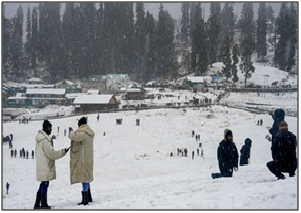
- Recently, the higher reaches of Kashmir witnessed snowfall as ‘Chillai-Kalan’ brought much-needed respite for the people of the Valley after a prolonged dry spell.
About Chillai-Kalan:
- Nature: It is the 40-day period of the harshest winter cold in Kashmir region.
- Nomenclature: Chillai Kalan is a Persian term which means “Major Cold.”
- Timeline: The Chillai Kalan (big cold) usually begins on December 21 and ends on January 30. The start of Chillai-Kalan coincides with the Winter Solstice, celebrated as the longest night of the year in Persian tradition.
- Uniqueness: During this time Kashmir Valley faces its harshest phase of the winter season, including widespread snowfall, sub-zero temperatures and intense cold waves.
- Chronology: Chillai Kalan is followed by ‘Chillai-Khurd’ (small cold)– a 20-day period of moderate winter from January 31 to February 19, and the 10-day ‘Chillai-Bacha’ (baby cold), towards the fag end of the winter season from February 20 to March 2.
- Cultural significance: According to Persian tradition, the night of 21st December is celebrated as Shab-e Yalda-“Night of Birth”, or Shab-e Chelleh. – “Night of Forty”.
- Attire: People use the Pheran (a long woollen cloak) and Kangri (a traditional earthenware fire-pot filled with hot embers) to stay warm.
- Cuisine: Traditional winter foods include Harissa (a slow-cooked mutton dish) and sun-dried vegetables (Hoke-Gaard and Wogij-Haak) to cope with supply shortages.
- Impacts: Traditionally, heavy snowfall during Chillai Kalan replenishes water reservoirs sustaining rivers, streams and lakes during the summer months. However, water bodies like the Dal Lake often freeze due to sub-zero temperatures.
Source:
Category: Science and Technology
Context:
- Recently, researchers uncovered a surprising player in autophagy that can pave the way for developing therapies for diseases such as Alzheimer’s, Parkinson’s, and cancer.

About Autophagy:
-
- Nature: Autophagy is the body’s cellular recycling system. It is a key biological process where cells clear out damaged and unwanted materials.
- Trigger factors: It is triggered by stress (fasting, starvation, hypoxia, or infection), a cup-shaped double membrane called a phagophore begins to form.
- Major functions: It recycles damaged cell parts into fully functioning cell parts. It gets rid of nonfunctional cell parts that take up space and destroys pathogens in a cell that can damage it, like viruses and bacteria.
- Types:
-
-
- Macroautophagy: The most common form, involving the formation of autophagosomes to transport large cargo to lysosomes.
- Microautophagy: The lysosome directly “swallows” cytoplasmic material by folding its own membrane inward.
- Chaperone-Mediated Autophagy (CMA): Specific proteins are identified by “chaperone” molecules and transported directly across the lysosomal membrane without forming a separate vesicle.
-
- Significance:
-
- Anti-Aging: By clearing out damaged proteins that cause cellular “clutter,” autophagy slows aging and promotes longevity.
- Neuroprotection: It removes toxic protein aggregates associated with neurodegenerative diseases like Alzheimer’s, Parkinson’s, and Huntington’s.
- Immunity: In a process called xenophagy, cells use autophagy to identify and destroy invading viruses and bacteria.
- The Cancer Paradox: It initially prevents cancer but later supports tumour growth and acts as a tumour suppressor by maintaining genome integrity and cellular homeostasis. In certain types of cancer, cells hijack autophagy for their own survival and propagation.
- Nobel connection: Yoshinori Ohsumi won the 2016 Nobel Prize for discovering the genes (ATG genes) that regulate this process.
- Relationship with Apoptosis: While autophagy is “self-eating” for survival, apoptosis is “programmed cell death” for the benefit of the organism. They are distinct but highly interconnected processes.
Source:
Category: Government Schemes
Context:
- Recently, the government launched Bharat Taxi for customers which is a cooperative-based mobility initiative aimed at providing an alternative in India’s ride-hailing sector.

About Bharat Taxi Initiative:
- Nature: It is a first-of-its-kind cooperative-driven, citizen-first national ride-hailing initiative.
- Nodal ministry: It is a government-supported initiative developed under the Union Ministry of Cooperation and the National e-Governance Division (NeGD).
- Uniqueness: It is India’s first cooperative taxi network, allowing drivers to become shareholders and co-owners.
- Operator: It is managed by Sahakar Taxi Cooperative Limited, a multi-state cooperative society registered under the Multi-State Cooperative Societies Act, 2002.
- Promoters: It is being jointly promoted by leading cooperative and financial institutions including NCDC, IFFCO, AMUL, KRIBHCO, NAFED, NABARD, NDDBand NCEL.
- Driver-Owned Fleet: Drivers can purchase shares and become cooperative members, giving them transparency and decision-making power.
- Zero Commission: Unlike private cab aggregators that take a large cut, Bharat Taxi transfers the full fare to the driver. Fares will remain predictable, with no surge charges.
- Platform Integration: Services will connect with government platforms such as DigiLocker and UMANG. Further, integration of the Bharat Taxi platform with national digital platforms such as DigiLocker, UMANG, and API Setu to enable seamless identity verification and service delivery.
- Security: Ensuring adherence to Government of India’s data protection norms and cybersecurity standards and advising on robust technical infrastructure.
Source:
(MAINS Focus)
(UPSC GS Paper II – Governance: Labour Laws, Judiciary, Fundamental Rights; GS Paper I – Society: Work Culture)
Context (Introduction)
The introduction of the Right to Disconnect Bill as a Private Member’s Bill reflects growing concern over digital overreach at workplaces, where technology has blurred boundaries between work and personal life despite India’s consolidated labour law framework.
Current Context and Rationale
- Digitalisation of Work: With smartphones, emails, and messaging platforms, work increasingly extends beyond physical offices and prescribed hours, intensifying stress, burnout, and work–life imbalance.
- Existing Labour Law Framework: India recently consolidated 29 labour laws into four labour codes, including the Occupational Safety, Health and Working Conditions Code, 2020, which regulates working hours and overtime but is largely premised on physical workplaces.
- Purpose of the Bill: The Right to Disconnect Bill seeks to protect employees from after-hours work-related communication by granting them the right to not respond to calls, messages, or emails beyond prescribed working hours.
Key Issues and Limitations of the Bill
- Undefined Concept of ‘Work’: The Bill regulates after-hours communication but does not clarify whether such digital engagement constitutes “work” under existing labour codes. This creates a conceptual gap where communication is regulated without being legally recognised as labour.
- Disconnect from Working Time Regulations: While the OSH Code governs working hours and overtime, the Bill does not integrate digital availability into this framework, weakening enforceability and reducing the right to a behavioural guideline rather than a labour standard.
- Ambiguity in Legal Nature: The Bill does not specify whether the right to disconnect is a mandatory labour standard or a contractual right that can be modified through employer policies or employment contracts.
- Absence of Constitutional Anchoring: Although the right has a clear linkage with Article 21 (Right to Life and Personal Liberty)—particularly dignity, privacy, and autonomy—the Bill does not acknowledge or articulate this constitutional basis.
Comparative Perspective: Lessons from Other Jurisdictions
- European Union Approach: EU jurisprudence treats employer control as a key determinant of working time. Periods of on-call duty or availability, even without active work, are often recognised as working time.
- France: Labour law distinguishes clearly between working time and rest time. Digital communication is regulated through collective bargaining, ensuring enforceability without redefining “work”.
- Germany: Strict working-time and rest-period regulations limit employer intrusion into personal time, supported by strong enforcement mechanisms.
- Key Insight: In effective models, the right to disconnect works because digital availability is legally integrated into working-time regulation.
Governance and Social Implications
- Work–Life Balance: Unregulated digital work erodes rest time, affecting mental health, productivity, and family life.
- Labour Rights in the Gig and Platform Economy: Ambiguity over what constitutes work disproportionately affects white-collar employees, gig workers, and remote workers.
- Legal Uncertainty: Without clarity, courts may deliver divergent interpretations, leading to inconsistent labour jurisprudence.
Way Forward
- Define ‘Digital Work’: Explicitly recognise after-hours digital communication under labour law when it involves employer control.
- Integrate with Labour Codes: Align the Right to Disconnect with working-hour and overtime provisions under the OSH Code to ensure enforceability.
- Clarify Mandatory Nature: Specify whether the right is non-derogable or subject to collective bargaining and contractual modification.
- Constitutional Anchoring: Explicitly link the right to dignity, privacy, and autonomy under Article 21 to strengthen judicial interpretation.
- Encourage Collective Bargaining: Allow sector-specific solutions through negotiated agreements, especially in IT and services sectors.
Conclusion
The Right to Disconnect Bill acknowledges that digital technologies have transformed work, but it remains conceptually incomplete. By failing to define digital labour and integrate it with existing labour laws, it risks becoming symbolic. The Bill should be seen as a starting point for a broader rethinking of labour jurisprudence in the digital economy.
Mains Question
- The Right to Disconnect reflects changing nature of work in the digital economy. Critically examine the ned for such a legislation in digital economy (250 words, 15 marks)
Source: The Hindu
(UPSC GS Paper II – Governance: Judiciary, Corporate Accountability; GS Paper III – Environment, Conservation)
Context (Introduction)
A recent Supreme Court of India judgment has reinterpreted Corporate Social Responsibility (CSR) under company law as an enforceable obligation, bringing environmental and wildlife protection—especially conservation of the Great Indian Bustard—within its legal and constitutional ambit.
CSR in India: Concept and Evolution
- Statutory Framework: CSR in India is governed by the Companies Act, 2013, mandating eligible companies to spend 2% of average net profits on specified social activities. Initially framed as a compliance-based social spending requirement, CSR was often treated as discretionary philanthropy.
- Judicial Reframing: The Supreme Court has now read CSR as a legal duty, not charity, placing it within the constitutional framework of Article 51A(g) (duty to protect the environment). Corporations, as legal persons, are seen as sharing constitutional environmental obligations.
Significance of the Judgment for CSR and Environment
- From Discretion to Obligation: By holding that CSR spending on environmental protection discharges a constitutional duty, the Court strengthens the enforceability of CSR, especially where corporate activity contributes to ecological harm.
- Environmental and Wildlife Protection within CSR: The judgment explicitly includes wildlife conservation and habitat restoration within CSR’s scope, enabling conservationists to seek corporate funding for long-term ecological recovery.
- Operationalising Conservation Finance: In the context of the Great Indian Bustard, CSR funds can support recurring costs such as grassland restoration, breeding programmes, and maintenance—areas often underfunded by public budgets.
- Balancing Development and Ecology: By revising priority conservation areas and operationalising expert committee recommendations, the Court seeks to reduce conflict with renewable energy expansion while retaining corporate accountability.
Key Issues and Limitations of CSR-Centric Conservation
- Lack of Specificity: The judgment does not clarify which companies must contribute, how much, by when, and for which projects, leaving implementation dependent on executive action and existing CSR compliance mechanisms.
- Weak Accountability and Audit Trails: CSR enforcement still relies on disclosure and penalties under company law, which may be insufficient to ensure outcome-based environmental results.
- Risk of Uneven Burden: Without clear project-linked liability, CSR obligations may fall disproportionately on some firms, while others contributing indirectly to environmental damage escape responsibility.
- Implementation Capacity Constraints: Grassland restoration, undergrounding of power lines, and rerouting infrastructure require technical capacity, inter-agency coordination, and timely execution—beyond mere funding availability.
- Dynamic Ecology Challenge: Species like the Great Indian Bustard are migratory; infrastructure risks extend beyond mapped priority zones, complicating targeted CSR deployment.
Governance Implications of Making CSR Enforceable
- Prevention and ‘Polluter Pays’ Principle: The ruling nudges CSR closer to environmental liability principles, where corporate funding supports prevention and recovery from ecological harm.
- Corporate Accountability Beyond Profit: It reinforces the idea that corporations are social actors with responsibilities extending beyond shareholders to ecosystems and future generations.
- Judicialisation of CSR: While strengthening environmental protection, increased judicial interpretation risks uncertainty unless backed by clear executive guidelines.
Way Forward
- Clear CSR–Environment Guidelines: Issue sector-specific rules linking CSR obligations to environmental externalities, with defined contribution norms and timelines.
- Outcome-Based CSR Monitoring: Shift from expenditure-focused reporting to ecological outcome indicators, with independent audits.
- Project-Linked Corporate Responsibility: Align CSR spending with location-specific environmental impacts, especially for infrastructure and energy projects.
- Institutional Coordination: Strengthen coordination among environment ministries, State governments, regulators and utilities to translate funding into timely action.
- Complement, Not Substitute, Public Funding: CSR should supplement, not replace, State responsibility for conservation and ecological restoration.
Conclusion
By embedding environmental protection within the legal meaning of CSR, the Supreme Court has strengthened corporate accountability. However, the effectiveness of this shift will depend not on doctrine alone, but on clear rules, robust enforcement, and the State’s capacity to convert corporate funding into measurable ecological outcomes.
Mains Question
- The recent Supreme Court judgment has redefined Corporate Social Responsibility (CSR) as an enforceable environmental obligation. Examine the significance of this interpretation and discuss the challenges in using CSR as a tool for ecological conservation in India.(250 words, 15 marks)
Source: The Hindu