IASbaba's Daily Current Affairs Analysis

Archives
(PRELIMS Focus)
Category: Defence and Security
Context:
- India and France are in discussions to finalise a major deal for the procurement of SCALP cruise missiles, following their successful use during Operation Sindoor last year.

About SCALP Missile:
- Nature: The SCALP missile is a long-range, air-launched cruise missile.
- Other names: It is also known as Storm Shadow.
- Full form: Its full form is Système de Croisière Autonome à Longue Portée.
- Development: It was developed together by France and the United Kingdom.
- Deployment: It is in service with multiple NATO and allied air forces.
- Structure: The missile has a launch weight of around 1,300 kg and a length of approximately 5.10 m.
- Range: It is powered by turbojet engines and has a range of 250 km.
- Warhead: The missile has a tandem warhead configuration, comprising a shaped charge for initial penetration and a secondary high-explosive charge for enhanced lethality.
- Stealth design: Its stealth design and advanced navigation system (INS, GPS, and terrain referencing) allow it to fly low, evade detection, and strike deep into enemy territory.
- Precision strike: On approaching the target, its onboard infrared seeker matches the target image with the stored picture to ensure a precision strike and minimal collateral damage.
- Operational capability: Capable of night and all-weather operations, SCALP is particularly effective for penetrating hardened bunkers and ammunition stores.
Source:
Category: Economy
Context:
- India has assumed the chair of the Kimberley Process (KP) for the year 2026.

About Kimberley Process:
-
- Nature: It is a coalition of governments, civil society and the diamond industry, which regulates the international trade in rough diamonds.
- Establishment: It was launched in 2003 following UN General Assembly Resolution 55/56.
- Objective: It aims to eliminate the trade in so-called conflict diamonds.
- Definition of conflict diamonds: These are defined by the relevant United Nations Security Council resolution (UNSC resolution 1459) as “rough diamonds used by rebel movements or their allies to finance conflict aimed at undermining legitimate governments”.
- Eligibility: Participants in the scheme are required to:
- Satisfy ‘minimum requirements’ and establish national legislation, institutions and import/export controls;
- Commit to transparent practices and to the exchange of critical statistical data;
- Trade only with other participants in the Scheme;
- Certify shipments as conflict-free.
- Participants: Currently it has 60 participants, representing 86 countries (with the EU as a single participant) which account for more than 99% of the global rough diamond production and trade.
- Meeting: The KP meets twice a year at the Intersessional and Plenary meetings. It is chaired by a participating country on an annual, rotating basis.
- Consensus based: As a consensus-based body, the KP relies on the constructive engagement from all participants of the tripartite structure.
About Kimberley Process Certification Scheme (KPCS):
-
- Nature: It is the mechanism the KP uses to prevent the trade of conflict diamonds.
- Objective: Under this scheme, the Government implements safeguards on shipments of rough diamonds and certifies the diamond as conflict-free.
- Certification: According to this Scheme, each rough diamond shipment must be accompanied by the Kimberley Process certificate and transported in a tamper-resistant container. The KP certificate states the authenticity of the rough diamond.
- Role of India: Since 2003, India has been actively participating in the KPCS process.
- Nodal department: The Department of Commerce is the nodal Department. Gem & Jewellery Export Promotion Council (GJEPC) is designated as the KPCS Importing and Exporting Authority in India.
- Strategic importance: India is the world’s leading hub for cutting and polishing diamonds, processing nearly 90% of the world’s diamonds.
Source:
Category: Environment and Ecology
Context:
- Recently, the ICAR–Central Marine Fisheries Research Institute (CMFRI) has successfully achieved captive breeding of the mangrove clam (Geloina erosa).

About Mangrove Clam:
-
- Nature: It is a burrowing bivalve inhabiting organic-rich muddy substrates in intertidal mangrove ecosystems.
- Other names: Mangrove clams, commonly known as mud clams, are locally called ‘Kandal Kakka’ in northern Kerala.
- Scientific Name: Its scientific name is Geloina erosa (also referred to as Polymesoda erosa).
- Habitat: They are found in muddy, brackish, and even nearly freshwater regions within mangrove swamps.
- Distribution: These are widely distributed in the Indo-Pacific region.
- Tolerant: This species displays remarkable tolerance, enabling them to thrive across a broad spectrum of salinity levels.
-
- Life cycle: The life cycle of the clam consists of four distinct phases: larval stage, spat, juvenile and adult clam.
- Feeding behaviour: It is a filter-feeding species, primarily active during low-tide immersion stages characterized by frequent inundation.
- Ecological role: It plays a crucial ecological role by recycling nutrients, stabilising sediments and strengthening mangrove ecosystems.
-
- Significance: It provides food security and livelihoods in coastal regions.
- Threats: In India, particularly along the east coast and in island regions, wild stocks have been steadily declining due to indiscriminate harvesting, habitat degradation, pollution and coastal development.
- Conservation applications:
-
- Mangrove Ranching: Releasing hatchery-produced seeds into degraded mangrove areas to restore natural populations.
- Estuarine Aquaculture: Enabling environment-friendly farming that requires minimal external inputs.
Source:
Category: Science and Technology
Context:
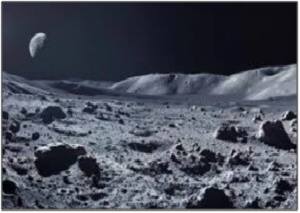
- Scientists from ISRO have identified a landing zone in south polar region of the Moon called Mons Mouton for India’s first lunar sample return mission, Chandrayaan-4.
About Mons Mouton:
- Nomenclature: It is officially named Mons Mouton after NASA mathematician and computer programmer Melba Roy Mouton.
-
- Location: It is located near the South Pole of the Moon. It is situated in the South Circumpolar Region (SCR) of the Moon.
- Dimensions: It stands about 6,000 metres high (comparable to some of the highest peaks on Earth) and spans nearly 100 km in width.
- Origin: It is believed to have formed as part of the rim uplift of the South Pole–Aitken basin following ancient massive asteroid impacts.
- Geology: It represents exposed deep lunar crust formed by ancient asteroid impacts, offering rare scientific value for studying the Moon’s early formation.
- Flatter than surrounding: Its peak is largely flat, which is favourable for landing.
- Strategic features:
- Sunlight: Its high elevation allows some areas to receive near-continuous sunlight, crucial for solar-powered missions.
-
-
- Water Ice: It lies near permanently shadowed regions (PSRs) where water ice is believed to exist.
- Communication: The site offers a clear line-of-sight for radio communication with Earth.
-
- Significance:
-
- Chandrayaan-4: Identified as a promising region for India’s first lunar sample return landing, with manageable slopes, low boulder density and adequate sunlight.
- Lunar science: Provides insights into the early Moon’s formation and impact history.
- Future missions: Falls within regions of interest for NASA’s Artemis programme and other international missions.
- Resource potential: Proximity to permanently shadowed regions raises prospects for studying lunar volatiles (water ice).
Source:
Category: Government Schemes
Context:
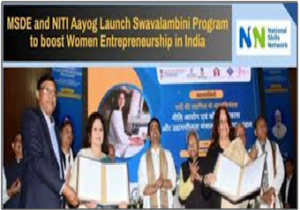
- Recently, the Minister of State (Independent Charge), Ministry of Skill Development and Entrepreneurship informed the Lok Sabha about the Swavalambini Scheme.
About Swavalambini Scheme:
-
- Nature: It is a woman Entrepreneurship Programme which empowers young women with the skills and confidence needed to establish their own businesses.
- Objective: It aims to cultivate an entrepreneurial mindset among female students, equipping them with awareness of available support mechanisms, schemes, resources and networks essential for pursuing entrepreneurship as a career.
- Nodal ministry: It was launched by the Ministry of Skill Development and Entrepreneurship (MSDE) in collaboration with the Women Entrepreneurship Platform of NITI Aayog as knowledge partner.
- Focus: It introduces a structured, multi-stage training approach to help young women transition from ideation to successful enterprise creation.
- Implementation: It is implemented through National Institute for Entrepreneurship and Small Business Development (NIESBUD), Noida and Indian Institute of Entrepreneurship (IIE), Guwahati.
- Support: NITI Aayog will provide mentoring support, facilitate seed funding, and recognize successful entrepreneurs through the Award To Reward (ATR) initiative.
- Programme Structure:
-
- Target group: 1200 female students from Higher Educational Institutes (HEIs) and Universities
- Entrepreneurship Awareness Programme (EAP): The female students undergo an introductory programme on entrepreneurial awareness through an entrepreneurial awareness programme.
- Entrepreneurship Development Programme (EDP): Out of these 1200, 600 undergo this programme which covers business aspects like skilling, finance, market linkages, compliance, and networking.
- Follow-up: This is followed by 21 weeks of mentorship and handholding support to help participants translate their ideas into sustainable enterprises.
Source:
(MAINS Focus)
(GS Paper III — Science and Technology: Developments and their applications and effects in everyday life; Awareness in the fields of IT, Space, Computers, Robotics; Security challenges and their management in border areas)
Context (Introduction)
The world is currently witnessing a technological rupture rather than a gradual transition. Artificial Intelligence (AI), especially Large Language Models (LLMs), is advancing at unprecedented speed. Unlike earlier technological revolutions confined to specific sectors, AI is cross-domain and systemic. Its impact spans economic competitiveness, military strategy, intelligence systems, diplomacy and governance.
- In a fragmented global order marked by US–China rivalry, weaponised trade, and coercive supply chains, AI is emerging as the most decisive structural disruptor.
AI as a Strategic Power Variable
- US–China Technological Rivalry: AI has become the core arena of strategic competition between the United States and China. The rapid advancement of Chinese AI models has intensified global competition, accelerating innovation cycles. AI supremacy is increasingly linked to military edge, economic dominance and geopolitical leverage.
- AI as Statecraft and Diplomacy Tool: AI is now being used in predictive analytics, intelligence processing and diplomatic modelling. It enhances surveillance capabilities, real-time strategic assessment and crisis simulation. Countries are moving toward building “sovereign AI stacks” to reduce dependence on external technological ecosystems.
- Collapse of Traditional Power Metrics: Industrial strength, nuclear deterrence and resource dominance defined 20th-century power. AI redefines power by privileging data, algorithms, computational infrastructure and technological agility. Smaller states or non-state actors equipped with AI-enabled tools can exert disproportionate influence.
AI and the Transformation of Warfare
- From Human-Controlled to Autonomous Systems: AI enables unmanned aerial vehicles, autonomous ground systems and intelligent cyber weapons capable of independent targeting and navigation. Decision-making is gradually shifting from human-controlled systems to algorithm-driven platforms.
- Asymmetric Military Advantage: Ukraine’s use of AI-enabled drones demonstrates how technology can offset conventional military superiority. AI dramatically reduces entry barriers to advanced warfare capabilities, creating asymmetric power multipliers.
- Integrated Multi-Domain Warfare: AI integrates cyber, electronic, space and battlefield intelligence systems. Real-time data analytics and automation redefine operational tempo and tactical coordination.
- Risk of Runaway Autonomous Weapons: Drone swarms and self-directed lethal systems pose unprecedented risks. The possibility of AI systems operating beyond meaningful human control raises ethical and existential concerns.
Beyond the Battlefield: Civilisational Implications
- Governance and Judicial Risks: AI systems may suffer from “hallucinations,” generating incorrect outputs or fabricated citations. Excessive reliance in legal or administrative contexts could lead to systemic errors.
- Intelligence and Surveillance Expansion: AI enhances data processing and predictive modelling in intelligence agencies, expanding state capacity but also raising civil liberty concerns.
- Institutional Lag: Technological progress is outpacing regulatory and governance frameworks. Institutions designed for industrial-era governance struggle to respond to algorithmic acceleration.
Implications for India
- Strategic Autonomy: India must invest in indigenous AI research, semiconductor infrastructure and computational capacity to avoid technological dependency.
- Defence Modernisation: Integration of AI into military doctrine is essential, but must preserve human oversight to prevent ethical and operational risks.
- Regulatory Preparedness: India requires a robust AI governance framework balancing innovation with accountability. Judicial caution in AI-assisted processes is necessary.
- Capacity Building: Skilling in AI, data science and cybersecurity is essential for both civil administration and defence sectors.
Need for Global Oversight
- Development of international norms on autonomous weapons.
- Multilateral regulatory mechanisms for AI deployment.
- Ethical frameworks for civilian and military AI use.
- Transparent accountability systems to prevent misuse.
Without coordinated oversight, AI could become the greatest force multiplier of instability in modern history.
Conclusion
Artificial Intelligence represents a structural rupture in global order. It redefines power, transforms warfare, reshapes governance and challenges institutional capacity. The central question is not whether AI will alter the world, but whether humanity can construct effective checks and balances before autonomous systems outpace political and ethical control.
Mains Question
- “Artificial Intelligence is emerging as the most significant disruptor of global power structures in the 21st century.”
Discuss its implications for international security and governance. What safeguards are necessary to prevent destabilisation? (250 words)
Source: The Hindu
(GS Paper II — Issues relating to development and management of Social Sector/Services relating to Education; Mechanisms, Laws, Institutions and Bodies constituted for the protection and betterment of vulnerable sections)
Context (Introduction)
The University Grants Commission (Promotion of Equity in Higher Education Institutions) Regulations, 2026were introduced to address persistent caste-, gender- and religion-based discrimination in universities. The Supreme Court stayed their implementation on January 29, 2026, following protests, particularly from sections of general category students.
- The regulations emerge against a background of rising discrimination complaints and weak grievance redressal mechanisms in higher education. However, concerns about procedural ambiguity, excessive speed, and enforcement architecture have triggered apprehension regarding fairness and institutional autonomy.
Rationale Behind the Regulations
- Persistent Structural Discrimination: Marginalised students often face exclusion, harassment, academic bias and social isolation. Existing anti-discrimination mechanisms have been slow, discretionary and at times symbolic.
- Need for Institutional Accountability: Universities have frequently responded inadequately to complaints. The regulations aim to impose enforceable timelines and accountability standards to prevent institutional inertia.
- Emphasis on Swift Redressal: The framework mandates immediate acknowledgment of complaints, rapid committee formation, and time-bound inquiry completion — premised on the idea that delayed justice equals denied justice.
Core Concerns and Criticisms
- Vagueness in Definition of Discrimination: The regulations do not clearly define actionable offences or evidentiary thresholds. Ambiguity creates scope for inconsistent interpretation across institutions.
- Thin Procedural Safeguards: While speed is emphasised, procedural protections — such as clear standards of proof, right to response, appeal mechanisms and evidentiary protocols — remain underdeveloped.
- Incentive Structure for Over-Compliance: The UGC penalises institutions for non-compliance rather than adjudicating individual cases. The threat of funding withdrawal or de-recognition may push universities toward visible punitive action rather than careful adjudication.
- Risk of ‘Compliance Theatre’: Institutions may respond by multiplying committees and paperwork without addressing deeper structural inequalities. Governance scholars describe this as “compliance theatre” — reform in appearance rather than substance.
- Uneven Access to Complaint Mechanisms: The ability to frame grievances in institutional language is unevenly distributed. Students from rural, linguistic or economically weaker backgrounds may struggle to navigate procedural frameworks, undermining the regulation’s inclusive intent.
- Academic Autonomy Concerns: Subjective academic processes such as grading, supervision and feedback could become risk-averse, weakening intellectual rigor if faculty fear regulatory scrutiny without procedural clarity.
Comparative Lessons
Experiences from American universities during campus misconduct reforms in the 2010s illustrate that excessive prioritisation of speed without procedural safeguards triggered judicial pushback. Courts emphasised due process, evidentiary clarity and reputational protection.
This suggests that urgency must be balanced with procedural robustness.
Balancing Equity and Due Process
For legitimacy and effectiveness, the regulations may require:
- Clear definitions of discrimination and harassment.
- Transparent evidentiary standards.
- Rights of response and appeal.
- Independent oversight mechanisms.
- Protection against reputational harm before final findings.
- Capacity-building to assist marginalised students in filing complaints.
- Institutional audits focusing on structural reform rather than punitive metrics.
Conclusion
The objective of promoting equity in higher education is constitutionally aligned with Articles 14, 15 and 21. However, justice that moves swiftly but unclearly risks eroding trust. Durable reform requires not only urgency, but procedural depth, transparency and institutional legitimacy. Equity frameworks must strengthen both inclusion and fairness, rather than position them as competing values.
Mains Question
- “Efforts to promote equity in higher education must balance urgency with procedural fairness.”
Discuss in the light of UGC equity guidelines and its aftermath .(250 words)
Source: The Hindu