
IASbaba's Daily Current Affairs Analysis

Archives
(PRELIMS Focus)
Category: Environment and Ecology
Context:
- A six-member National Green Tribunal (NGT) special bench recently ruled that it did not find “any good ground” to interfere in Great Nicobar mega infrastructure project.
About Great Nicobar Project:
-
- Nature: It is an about Rs.80,000 crore mega infrastructure initiative aimed at transforming the southernmost island of the Andaman and Nicobar archipelago into a strategic and economic hub.
- Launch: It was conceived by the NITI Aayog and launched in 2021.
- Implementation: It is being implemented by the Andaman and Nicobar Islands Integrated Development Corporation (ANIIDCO).
-
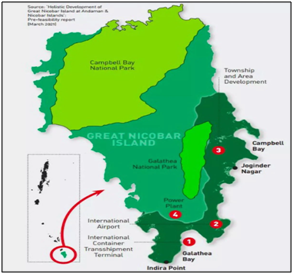
- Project overview: It involves development at Galathea Bay, Pemmaya Bay, and Nanjappa Bay. The island is approximately equidistant from Colombo (Sri Lanka), Port Klang (Malaysia), and Singapore, placing India at the centre of regional sea trade.
- Key infrastructure components:
-
-
- International Container Transhipment Terminal (ICTT): Aimed at enabling Great Nicobar to become a major player in the regional and global maritime economy by participating in cargo transhipment.
- Greenfield International Airport: To enhance civilian connectivity, tourism, and provide dual-use defence capability.
- Greenfield Township: To support the projected population and economic activities.
- Gas and Solar-Based Power Plant: To meet the energy requirements of the new infrastructure.
- Tribal Safeguards: Development requires mandatory consultation with tribal welfare bodies (Andaman Adim Janjati VikasSamiti (AAJVS), Ministry of Tribal Affairs), as per the Jarawa (2004) and Shompen (2015) Policies. Consultation with the National Commission for Scheduled Tribes (NCST) under Article 338A(9) confirms tribal interests will be protected.
- Environmental Safeguards: The project includes 8 wildlife corridors for safe animal movement. Compensatory afforestation for felled trees is planned in Haryana, as the islands already have over 75% forest cover.
-
- Alignment: It aligns with India’s Maritime Vision 2030 and Amrit Kaal Vision 2047.
- Strategic significance:
-
-
- Chokepoint Proximity: The island’s location near the Malacca, Sunda, and Lombok Straits—critical waterways connecting the Indian Ocean to the Pacific enables India to monitor vital sea lanes for global trade and energy supply.
- Maritime Domain Awareness: It strengthens India’s capacity to track naval movements, particularly concerning China’s increasing presence in the Indian Ocean Region (IOR) and the military facility being built on the Coco Islands (Myanmar), located just 55 km north of India’s Andaman & Nicobar Islands.
-
- First Line of Defence: The Andaman & Nicobar Islands serve as India’s first line of maritime defence, sharing sea boundaries with Myanmar, Thailand, Indonesia, and Bangladesh.
-
-
- Military Deterrence: The project facilitates the deployment of additional military forces, larger warships, aircraft, missile batteries, and troops, enabling close surveillance and building strong military deterrence.
-
- Concerns and challenges:
-
-
- Ecological Fragility: The project requires diverting ~130 sq. km of forest land and felling nearly one million trees in a biodiversity hotspot.
-
- Threat to Wildlife: Galathea Bay is a critical nesting site for the endangered Leatherback Sea Turtle and the Nicobar Megapode.
- Tribal Rights: Concerns have been raised regarding the displacement and cultural disruption of the Shompen (a Particularly Vulnerable Tribal Group or PVTG) and the Nicobarese tribes.
-
- Seismic Risk: The island sits in Seismic Zone V, making it highly vulnerable to earthquakes and tsunamis, as evidenced by the permanent subsidence of 15 feet during the 2004 tsunami.
Source:
Category: History and Culture
Context:
- A commemorative coin and commemorative postage stamp were recently released by the Government of India to mark 100 years of the Ol Chiki script.
About Ol Chiki Script:
-
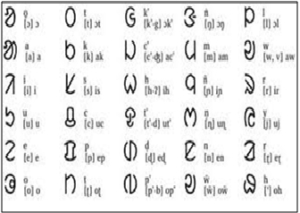
- Invention: The Ol Chiki script was invented by Pandit Raghunath Murmu (revered as Guru Gomke) in 1925 to provide a distinct script for the Santhali language, which was previously written in Roman, Devanagari, Oriya, or Bengali scripts.
- Phonetic Nature: It is a fully phonetic, alphabetic script where each symbol corresponds to a specific sound.
- Structure: It consists of 30 letters (6 vowels and 24 consonants) and is written from left to right.
-
- Scientific Design: It accurately represents unique phonetic elements like glottal stops, which borrowed scripts struggled to capture. The characters are inspired by nature and daily objects (e.g., animals, hills, rivers).
- Family: The Ol Chiki script accurately represents glottal stops and specific vowel patterns inherent to Santhali, which belongs to the Austroasiatic language family.
- Geographic Reach: It is the primary medium for Santhali speakers across Jharkhand, Odisha, West Bengal, Bihar, and Assam.
-
- Literary Milestone: The first book in Ol Chiki, High Serena (1936), and works like Bidu-Chandan reflect Santhali culture and identity.
- Constitutional Status: The Santhali language, written in Ol Chiki, was included in the Eighth Schedule of the Constitution of India through the 92nd Constitutional Amendment Act in 2003.
- Democratic Accessibility: In a landmark move for linguistic justice, the Constitution of India was translated into Santhali using the Ol Chiki script in December 2025.
Source:
Category: Polity and Governance
Context:
- Supreme Court asked FSSAI to consider introducing mandatory front-of-package warning labels (FOPL) on packaged food products high in sugar, salt and saturated fat.
About Food Safety and Standards Authority of India (FSSAI):
- Nature: It is an autonomous statutory body established under the Food Safety and Standards Act, 2006.
-
- Nodal ministry: It was established under the Ministry of Health and Family Welfare, Government of India.
- Objective: It aims to consolidate various food laws (like the Prevention of Food Adulteration Act, 1954) into a single reference point for food safety and standards.
- Composition: It consists of a chairperson (appointed by the Central Government) and 22 members, of which one-third must be women.
- Mandate: It is responsible for setting food standards, regulating the manufacture, storage, distribution, sale, and import of food, and ensuring the availability of safe and wholesome food for human consumption.
- Standards Development: It formulates standards for various food products, ensuring they are safe for consumption.
- Food Safety Management Systems: It provides guidelines for businesses to implement effective food safety management practices.
- Licensing and Registration: It manages the licensing process for food businesses, ensuring they comply with food safety regulations.
- Surveillance and Monitoring: Regular inspections and audits are conducted by FSSAI to assess compliance with food safety standards.
- Consumer Awareness: Initiatives to educate the public about food safety, hygiene, and nutrition are a key focus area.
- Accreditation: FSSAI directly monitors compliance of food regulations and it is also responsible for the accreditation of food testing laboratories throughout India.
- Labs: It has notified 14 referral labs, 72 State/UT labs across India, and 112 NABL approved commercial labs, all of which are situated throughout the country.
- Key Initiatives: These include the Eat Right India movement promoting healthy food choices, the State Food Safety Index (SFSI) evaluating state performance on food safety, and Food Safety on Wheels (FSW) providing mobile testing and awareness.
Source:
Category: Defence and Security
Context:
- INS Tarangini is among several Indian and foreign naval vessels that arrived in Visakhapatnam for the international fleet review and MILAN exercise beginning soon.

About INS Tarangini:
-
- Nature: It is the Indian Navy’s first Sail Training Ship (STS).
- Construction: It was built by Goa Shipyard Limited and was commissioned on 11 November 1997.
- Objective: The primary role of the ship is to foster time-honoured virtues of courage, camaraderie, and endurance in officer cadets embarking on a naval career.
- Nomenclature: The name of the ship is derived from the Hindi word Tarang (wave), it means “the one that rides the waves”.
- Historical achievement: It became the first Indian naval ship to navigate the globe in 2003-2004.
- Classification: The ship is a ‘three-masted barque’ signifying that she is square-rigged on the fore and mainmast and fore-and-aft-rigged on the Mizzen mast.
- Endurance: The ship has excellent endurance and can remain at sea continuously for a period of over 20 days.
- Carrying capacity: It has a complement of eight officers and thirty-eight sailors as permanent crew and can accommodate and impart sail training to 30 cadets.
- Significance: It provides an ideal setting for firsthand experience of the natural elements by imparting training which includes sailing, setting and furling of sails, watch-keeping, and sail manoeuvres.
Source:
Category: Geography
Context:
- More than 150 years after it sank in a powerful storm, the remains of the luxury steamer Lac La Belle have finally been found at the bottom of Lake Michigan.
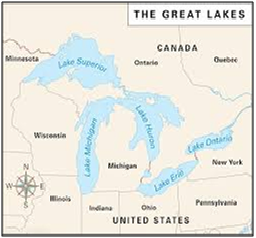
About Lake Michigan:
- Location: It is the third largest of the five Great Lakes of North America and the only one lying wholly within the United States.
-
- Uniqueness: It is the fourth largest freshwater lake and the fifth largest lake in the world, ranked by surface area.
- Length: The lake is 517 km long (north to south); it has a maximum width of 190 km.
- Surface Area: Its surface area is approximately 57,757 sq.km.
-
- Connectivity: It is connected directly to Lake Huron, into which it drains, through the broad Straits of Mackinac. This hydrologic connection through the Straits keeps the water levels of the two lakes in equilibrium, causing them to behave in many ways as though they are one lake.
- Rivers: Water flows into Lake Michigan from several rivers, including the Fox-Wolf, the Grand, the St. Joseph, and the Kalamazoo rivers, among others.
- Islands: The northern end of the lake contains all of the islands, the largest of which is Beaver Island, Michigan.
- Natural habitats: The lake boasts a variety of natural habitats, including tallgrass prairies, wide savannas, and the world’s largest freshwater sand dunes. The land adjacent to Lake Michigan is low and gently rolling, but wave-cut bluffs of rock occur in many places.
- Biodiversity: It hosts a wealth of plant and animal species, many of which are rare or endangered (such as the Hine’s Emerald Dragonfly and the Dwarf Lake Iris).
Source:
(MAINS Focus)
(GS Paper II – Issues Relating to Development and Management of Health; Government Policies and Interventions)
Context (Introduction)
The Supreme Court has directed FSSAI to consider mandatory front-of-package (FoP) warning labels on packaged foods high in sugar, salt and saturated fat amid rising non-communicable diseases (NCDs) in India.
- India currently records 101 million diabetics and 35.5% hypertension prevalence (ICMR-INDIAB 2023), with ultra-processed food consumption identified as a key dietary risk factor.
- Existing back-of-pack labelling under the Food Safety and Standards (Labelling and Display) Regulations, 2020 remains technical and poorly understood by consumers.
Harmful Effects
- Diabetes Burden: High added sugar intake is strongly associated with India’s 101 million diabetes cases and 136 million prediabetics, escalating long-term cardiovascular and renal complications.
- Hypertension Risk: Excess sodium consumption contributes to 35.5% hypertension prevalence, increasing stroke and heart disease mortality.
- Obesity Epidemic: Ultra-processed foods drive abdominal obesity (39.5% prevalence), a precursor to metabolic syndrome and NCD clustering.
- Cardiovascular Diseases: Diets rich in saturated and trans fats elevate LDL cholesterol (24% high cholesterol prevalence), worsening coronary artery disease incidence.
- Childhood Vulnerability: Aggressive marketing of high-fat, high-sugar foods to children entrenches unhealthy dietary patterns and early-onset obesity.
- Information Asymmetry: Complex nutritional labels create consumer disadvantage, limiting informed dietary choice and perpetuating unhealthy consumption.
- Economic Costs: NCD-related productivity losses and high out-of-pocket expenditure strain both household finances and public health systems.
Regulatory and Policy Measures
- Labelling and Display Regulations, 2020: FSSAI operationalised revised labelling norms mandating declaration of total sugar, added sugar, saturated fat, and sodium per serving and per 100g/ml.
- Front-of-Pack Labelling Consultation (2023–26): An expert committee was constituted to examine FoP labelling models, including “Indian Nutrition Rating (INR)” proposals and warning label formats, with stakeholder consultations underway.
- Trans-Fat Elimination (2022): India achieved WHO’s recommended limit of <2% industrial trans-fat in oils and fats, aligning with the global “REPLACE” action framework.
- High Fat, Sugar and Salt (HFSS) Guidelines in Schools (2020, revised 2023): FSSAI restricted sale and advertisement of HFSS foods within 50 metres of school premises and promoted “Eat Right School” certification.
- Front-of-Pack Logo for Millets (2023): Introduction of “Shree Anna” branding to promote healthy grain alternatives under the International Year of Millets.
- Fortification Regulations: Strengthening mandatory fortification standards for staples like rice, wheat flour, edible oil and milk to combat micronutrient deficiencies.
- Eat Right India Movement: Nationwide behavioural campaign promoting safe, healthy and sustainable diets, including “Clean Street Food” and “Eat Right Campus” initiatives.
- Nutrient Profiling Discussions: Ongoing deliberations on adopting a science-based nutrient profiling system consistent with WHO-SEARO recommendations for regulatory enforcement.
Steps Needed
- Mandatory Warning Labels: Introduce simple, colour-coded or “high in” warning labels aligned with WHO nutrient thresholds to enable quick consumer recognition.
- Scientific Regulatory Standards: Ensure FSSAI adopts globally accepted nutrient profiling models instead of diluted or industry-influenced rating systems.
- Fiscal Measures: Impose higher taxes on sugar-sweetened beverages and ultra-processed foods to discourage excessive consumption.
- Marketing Restrictions: Ban or strictly regulate advertising of unhealthy foods to children across digital and broadcast media platforms.
- Public Awareness Campaigns: Launch nationwide nutrition literacy drives to build consumer capacity to interpret food labels effectively.
- Integration with Primary Care: Embed dietary risk screening and counselling in Ayushman Bharat Health and Wellness Centres for early prevention.
- Continuous Monitoring: Institutionalise periodic dietary surveys and impact evaluations to assess the effectiveness of labelling reforms.
Conclusion
Front-of-package labelling is a preventive public health intervention aimed at correcting India’s unhealthy food environment.
- Without complementary reforms in taxation, marketing regulation and consumer awareness, labelling alone will not curb the NCD surge.
- Strengthening food governance is essential to protect human capital, reduce health expenditure and sustain long-term economic growth.
Mains Question
- Discuss the reasons for rising non-communicable disease burden. What broader reforms are required to ensure healthier food systems to achieve human capital development ? (250 words)
Source: The Hindu
(GS Paper III – Environment and Ecology: Climate Change; Disaster Management; Sustainable Development)
Context (Introduction)
The European Scientific Advisory Board on Climate Change (ESABCC) has urged the EU to prepare for a likely 2.8°C rise in global temperatures by 2100, signalling that mitigation alone is insufficient.
- Fastest-Warming Continent: Europe is identified as the fastest-warming continent, facing recurrent floods, heatwaves and wildfires.
- Global Relevance: The advisory reflects a broader shift from exclusive focus on emissions reduction to integrating adaptation and resilience in public policy.
Climate Risks: Converging Realities for Europe and India
- Rising Temperatures: Europe’s record-breaking heatwaves (2022–25) mirror India’s prolonged heatwaves in 2023–24, with rising heat stress affecting labour productivity, health and energy demand.
- Extreme Flooding: Catastrophic floods in Germany and Belgium (2021) and recurrent floods in Assam, Himachal Pradesh and Kerala highlight intensifying hydrological volatility linked to climate change.
- Wildfires and Forest Degradation: Southern Europe’s annual forest fires resemble rising wildfire incidents in Uttarakhand and central India, reflecting ecosystem vulnerability under warming trends.
- Urban Vulnerability: Heat islands and inadequate drainage infrastructure have amplified urban climate risks in both European and Indian cities, exposing governance gaps.
- Agricultural Stress: Erratic rainfall patterns threaten food security in India, where agriculture employs ~42% of the workforce, unlike Europe where it forms a much smaller GDP share.
Why Europe’s Warning Matters for India
- Mitigation-Adaptation Shift: ESABCC’s emphasis on resilience underscores the inadequacy of emission targets alone, reinforcing India’s need to integrate adaptation into mainstream planning.
- Infrastructure Lock-in Risk: Europe’s legacy infrastructure, built for stable climates, now faces retrofitting challenges; India can avoid such lock-ins by designing climate-resilient infrastructure upfront.
- Developmental Balancing: Unlike Europe’s mature welfare systems, India must simultaneously pursue poverty reduction, infrastructure expansion and climate adaptation.
- Disaster Costs: According to global estimates, climate disasters cause annual losses exceeding $200 billion worldwide; India ranks among the top countries in climate vulnerability indices.
- Policy Learning: The EU’s institutionalised climate advisory mechanisms highlight the importance of independent scientific guidance in policymaking.
What India Must Do: Embedding Resilience in Development
- Climate-Resilient Infrastructure: Integrate resilience standards in highways, railways, housing and smart cities under schemes like PM Gati Shakti and AMRUT.
- Early Warning Systems: Strengthen forecasting and last-mile dissemination through IMD, NDMA and State disaster authorities to reduce mortality and economic losses.
- Urban Heat Action Plans: Scale up city-level heat action plans (as in Ahmedabad) across vulnerable urban centres.
- Nature-Based Solutions: Restore wetlands, mangroves and forests to buffer floods and heat, aligning with India’s LiFE and Nationally Determined Contributions (NDCs).
- Climate-Responsive Budgeting: Mainstream climate risk assessments in public expenditure frameworks to avoid maladaptive investments.
- Agricultural Adaptation: Promote drought-resistant crops, micro-irrigation and climate-smart agriculture under schemes like PMKSY and NFSM.
- Institutional Integration: Ensure inter-ministerial coordination between environment, urban development, water and agriculture ministries for holistic resilience.
Conclusion:
Europe’s advisory is a cautionary tale that climate change has entered a phase where adaptation is as critical as mitigation. For India, whose infrastructure expansion is ongoing, this is a strategic opportunity. Embedding resilience at the design stage can prevent costly retrofits and protect vulnerable populations. The lesson is clear: climate resilience must move from peripheral environmental policy to the core of economic planning.
Mains Question:
- “The era of focusing solely on climate mitigation is over; resilience must be embedded into development planning.” In the light of recent events, examine India’s preparedness and suggest measures to mainstream climate adaptation in policy making. (250 words)
Source: Indian Express