Part of: GS Prelims and GS-II – International Relations; Education
In news
Biennial South Asia Economic Focus report was recently released.
Released by: World Bank
Title of the edition: “Beaten or Broken? Informality and Covid-19”.
Key takeaways
The report includes Afghanistan, Bangladesh, Bhutan, India, Maldives, Nepal, Pakistan and Sri Lanka.
It predicts that the extended closure of schools amid the Covid-19 pandemic could reduce India’s future earnings by between 420 billion USD and 600 billion USD.
This is so because depleted learning levels of students will translate into poorer productivity.
Impact on Education
Around 5.5 million students could drop out of schools across South Asia.
391 million students have been kept out of school in primary and secondary education due to lockdown.
Dropouts and learning losses would cost South Asia as much as 622 billion USD in future earnings and GDP.
Also, due to the closure of schools, the children may have forgotten their previous learnings.
The average child in South Asia may lose 4,400 USD in lifetime earnings once having entered the labour market, equivalent to 5% of total earnings.
Impacts on Economy
Impact on Informal Sector: The report has flagged damage to businesses, consumption patterns and imposed social hardship on poor and vulnerable households, especially urban migrants and informal workers in the South Asia region.
GDP: The regional GDP of the South Asia region is estimated to contract by 7.7% in 2020. India’s GDP can contract by 9.6% in 2020-21.
Labour productivity will also take a greater hit from Covid-19 than most previous natural disasters.
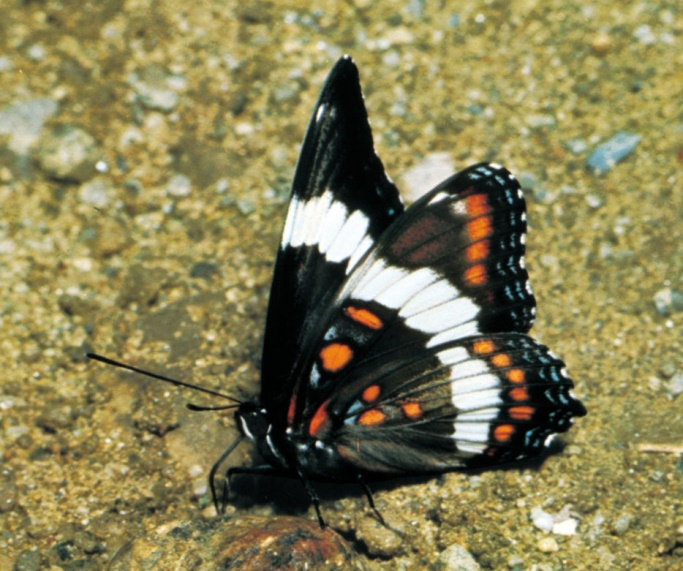
According to a recent study, rising average temperatures in the Himalayan region have driven several dozen species of butterfly and moth to habitats higher up the mountains.
Carried out by: Zoological Survey of India (ZSI)
Funded by: Ministry of Environment, Forest and Climate Change.
Key takeaways
At least 49 species of moth and 17 species of butterfly have shown considerable new upward altitude movement.
The extension of the range of Lepidoptera due to climate change has been observed all over the world as well.
The ZSI predicts a decline of as much as 91% in the suitable area for the Notodontidae family of moths in J&K, Himachal, and Uttarakhand by 2050.
The study also revealed an increase in the richness of Lepidoptera biodiversity from the Western to the Eastern Himalayas.
Important value additions
Lepidoptera
It is the order of insects that includes butterflies, moths and skippers.
The name Lepidoptera is derived from the Greek, meaning “scaly winged”.
It also refers to the characteristic covering of microscopic dust like scales on the wings.
Importance: (1)They transform large amounts of plant matter into the animal matter and in turn serve as food for many other groups of animals; (2) They aid in pollination.
The Himalayas are home to more than 35% of Lepidoptera species (butterflies and moths) found in India.
Part of: GS Prelims (Map – based) and GS-II – International relations
In news
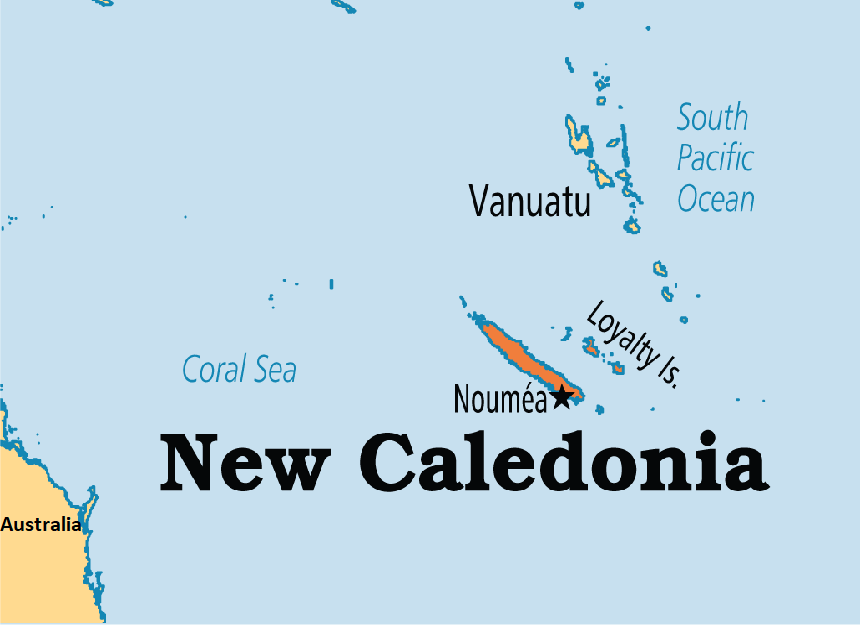
The French territory of New Caledonia voted against independence from France in a referendum held recently.
The referendum was a part of a decolonisation plan agreed in 1998, known as the Noumea Accord.
The Noumea Accord, which was concluded in 1998, provided for a practically sovereign status. Under this agreement, New Caledonia is allowed up to three referendums on independence, the latest one being the last of them.
Important value additions
New Caledonia
It is an archipelago.
It is located in the southwest Pacific Ocean.
It was discovered in 1774 by the British navigator James Cook.
It was annexed by France in 1853.
In 1946, it became an overseas territory.
By 1953, French citizenship had been granted to all New Caledonians, regardless of ethnicity.
It accounts for around 10% of the world’s nickel reserve.
Recently, scientists from the Centre for Plant Molecular Biology (CPMB) have uncovered the mechanism by which bacterium called Xoo causes disease in rice plants.
Xanthomonas oryzae pv. oryzae (Xoo) causes a serious bacterial leaf blight disease in rice.
It is also known as Bacterial blight.
Key takeaways
The most-common method of defending against rice bacterial blight is the cultivation of rice varieties with genes that confer resistance to Xoo infection.
However, this method involves breeding or gene manipulation techniques that are laborious and time-consuming.
New Approach
Scientists are working to identify and develop few molecules which are derived either from the Xoo bacterium or from the infected rice cell walls.
Treatment of rice with cellulase, a cell wall degrading enzyme secreted by Xoo induces rice immune responses and protects rice from subsequent infections by Xoo.
Important value additions
Xoo
It is a gram-negative bacterium.
Xoo infection causes huge yield losses to rice cultivation throughout the world.
Since rice paddies are flooded throughout most of the growing season, Xoo may easily spread among crops.
Bacteria travel through the water from infected plants to the roots and leaves of neighbouring rice plants.
Wind may also help spread the Xoo bacteria to other crops and rice paddies.
Miscellaneous
2020 Nobel Prize In Economics
Two American economists Paul R Milgrom and Robert B Wilson jointly won this year’s Nobel Prize in Economics.
They were awarded for improvements to auction theory and inventions of new auction formats.
The new auction formats are an example of how basic research can subsequently generate inventions that benefit society.
(MAINS FOCUS)
EDUCATION/ GOVERNANCE
Topic: General Studies 2,3:
Issues relating to development and management of Social Sector/Services relating to Education, Human Resources
Government policies and interventions for development in various sectors and issues arising out of their design and implementation.
Context: The National Education Policy 2020 has a vision to transform the Indian education landscape. It relies on a significant commitment for policy implementation from all stakeholders
There are four contributors to policy failure
Overly optimistic expectations
Implementation in dispersed governance
Inadequate collaborative policymaking
Vagaries of the political cycle
Thus, there is a need to develop a robust policy support programme and institutional mechanism, if we are to be serious about implementing any policy.
Below is the five-point implementation plan that can be considered to help implement NEP.
PM’s Task Force on Higher Education Reforms
The successful implementation of NEP requires different types of interventions.
It includes coordination and cooperation between the Centre and states; legislative interventions and augmentation of financial resources with involvement of inter-ministerial discussions; and regulatory reforms.
The PM’s Task Force on Higher Education Reforms can be an advisory body comprising experts from public and private Higher Education Institutions (HEIs) to help the PM understand and appreciate the bottlenecks, and ensure time-bound implementation with fixed accountability.
National NEP Implementation Standing Committee
This committee will consist of select vice-chancellors/directors of universities/institutes.
The Committee, located within the Ministry of Education, will be chaired by the education minister and the member-secretary will be the education secretary.
It should have ex-officio members of all major regulatory bodies to remove the hurdles faced by HEIs in the implementation of NEP.
This Committee will be tasked with creating and monitoring the NEP Implementation Plan in a time-bound manner.
It will have specific powers and functions, including thematic sub-committees and regional committees.
National Education Ministers’ Council
It will consist of Education Ministers of all states and UTs, chaired by the Union Minister for Education
The Council will serve as a forum to discuss and address implementation issues, and navigate through the diverse perspectives of state governments.
Integrating Institutions of Eminence (IoE) with NEP
In the budget 2016, the then Finance Minister promised to provide “an enabling regulatory architecture” so that “10 public and 10 private institutions” would emerge “as world-class teaching and research institutions. This led to the establishment of IoEs
Today, the vision of IoE needs to be integrated with the NEP implementation plan, and IoEs need to be empowered with more freedom, flexibility, autonomy and resources.
National Higher Education Philanthropy Council
This council can be chaired by the Education Minister with private sector participation.
Nearly 70 per cent of Indian HEIs are private, and more than 70 per cent of Indian students study in private HEIs. We must build on this reality to raise financial resources that are critical for the establishment of more private HEIs.
The Philanthropy Council could help promote a fundamental re-imagination of the tax structure to incentivise potential donors for donating to specified funds that promote establishment of Universities/Colleges
Conclusion
For successful implementation of the NEP, we will need to
Create stakeholder incentives
Formulate instruments in the form of legal, policy, regulatory and institutional mechanisms
Build reliable information repositories
Develop adaptability across HEIs, regulatory bodies and government agencies
Develop credibility through transparent actions and participation of all stakeholders
Develop sound principles of management
Connecting the dots:
Right to Education Act
Operation Digital Board
ECONOMY / GOVERNANCE
Topic: General Studies 3:
Indian Economy and issues relating to planning, mobilization, of resources, growth, development and employment.
Context: The recent embracement of atmanirbharta by India’s intellectual and policy community. This inward turn — actually return — amounts to abandoning two core principles of the post-1991 consensus:
Export-orientation on the macro-economic side
Slow but steady liberalisation on the trade side
The inward turn is based on three misconceptions of diagnosis
First, the perception is that India’s growth success since 1991 has not really been based on exports and certainly not on manufacturing exports.
This is wrong. India has been a model of spectacular export success and an exemplar of export-led growth.
Between 1995 and 2018, India’s overall export growth (in dollars) averaged 13.4% annually, the third best performance in the world amongst the top 50 exporters
Most strikingly, India’s manufacturing exports (in dollars) grew on average by a 12.1%, the third-best performance in the world, and nearly twice the world average. Only China and Vietnam surpassed India.
In each of the three decades since the 1990s, exports contributed about one-third of overall growth. As a result, India’s export-GDP ratio is currently 20 per cent, more than twice as high as in the early 1990s.
Thus, an export slowdown today is likely to have a more consequential impact on the overall economy.
Every 5 per cent of the export growth foregone will shave off 1 per cent in overall GDP growth.
Second, is a pessimistic outlook about India’s future export
Export pessimism is based on expectations of deglobalisation abroad and weak performance at home.
But India can gain market share even in a deglobalising world
In the 2010s, world exports were stagnant and yet India’s exports grew by about 3 per cent. This was true in both manufacturing and services
In present times, China’s secular ceding of low-skill export space provides further opportunity for Indian exports to expand in world market.
Also, one of the virtues of past under-performance is that the future can be more accommodating to India and less intimidating for the world.
In the Post-COVID world, activities that can be done at a distance — and tradable services are exactly that — could benefit enormously and India can tap into its comparative advantage in service exports.
Third, there is a strong belief that India’s market is big enough to sustain growth going forward and make up for the loss of opportunities overseas.
At $2.9 trillion, and as the fifth largest in the world, India’s GDP seems alluringly big.
But if the domestic market is to sustain growth, we need to look at the size of the market (say the “middle class”) with some amount of purchasing power over manufacturing goods and services.
The middle class market size is between 15 and 40 per cent of GDP, which is smaller than commonly believed
Also, there are a lot of poor people with limited purchasing power and a few people with a lot of purchasing power who, however, save a lot. Both of these factors can reduce the market for consumption.
The delusion of size is making policy-makers set their sights on the domestic market when it should be on the world market.
Conclusion
India’s growth model has been an export-led one and should not be abandoned. Moreover, India’s export opportunities in general and in specific sectors could be significant even in a post-COVID world.
Connecting the dots:
US-China Trade War
Supply Chain Resilience Initiative
(TEST YOUR KNOWLEDGE)
Model questions: (You can now post your answers in comment section)
Note:
Correct answers of today’s questions will be provided in next day’s DNA section. Kindly refer to it and update your answers.
Comments Up-voted by IASbaba are also the “correct answers”.
Q.1 South Asia Economic Focus Report was recently released by which of the following?
World Bank
Asian Development bank
World Economic Freedom
Asian Infrastructure Investment bank
Q.2 Lepidoptera species includes which of the following?
Butterflies
Moths
Frogs
Both (a) and (b)
Q.3 Noumea Accord is an Accord between which of the following?
France and New Caledonia
India and Bangaldesh
Israel and UAE
USA and Pakistan
ANSWERS FOR 13th October 2020 TEST YOUR KNOWLEDGE (TYK)
1
D
2
B
3
A
4
C
Must Read
About the Arab world and the elusive two States Solution: