
IASbaba's Daily Current Affairs Analysis

Archives
(PRELIMS Focus)
Category: Polity and Governance
Context:
- The Central Adoption Resource Authority (CARA) issued nationwide directions to strengthen adoption procedures, safeguard records and protect children’s identity.

About Central Adoption Resource Authority (CARA):
-
- Nodal ministry: It is a statutory body under the Ministry of Women and Child Development (MWCD).
- Legal Framework: It attained statutory status through Section 68 of the Juvenile Justice (Care and Protection of Children) Act, 2015.
- Primary Mandate: It acts as the nodal body for the adoption of Indian children and is responsible for monitoring and regulating both in-country and inter-country adoptions.
- Target Group: It primarily deals with the rehabilitation of Orphaned, Abandoned, and Surrendered (OAS) children.
-
- Hague Convention: It is designated as the Central Authority in India for the Hague Convention on Intercountry Adoption (1993), which India ratified in 2003.
- CARINGS Portal: It operates the Child Adoption Resource Information and Guidance System, a centralized online platform for registration, matching, and tracking of adoption applications to ensure transparency.
- Administrative Shift: Following the 2022 Juvenile Justice Amendment Act, District Magistrates (DMs) are now authorized to issue adoption orders instead of courts to decentralize and speed up the process.
- Single Parent Eligibility: A single female can adopt a child of any gender, but a single male is not eligible to adopt a girl child.
- Age Criteria: The minimum age difference between the child and either of the prospective adoptive parents must not be less than 25 years.
- Stability Requirement: For couples, at least two years of a stable marital relationship is required, and the consent of both partners is mandatory.
- Child Limit: Prospective parents with three or more children are generally ineligible to adopt, except for children with special needs or hard-to-place categories.
- Home Study Report (HSR): A social worker from a Specialized Adoption Agency (SAA) must complete an assessment of the parents’ suitability within 60 days of registration.
- Post-Adoption Follow-up: CARA mandates post-adoption follow-up reports for a period of two years to ensure the child’s well-being in the new family.
- Mission Vatsalya: Adoption services are now facilitated under the broader umbrella of Mission Vatsalya, the government’s flagship scheme for child protection services.
Source:
Category: International Organisations
Context:
- Recently, United Nations Environment Programme (UNEP) warned that the improper disposal of medicines poses serious risks to both environmental and public health.
About United Nations Environment Programme (UNEP):
- Establishment: It was founded in 1972 as a result of the United Nations Conference on the Human Environment (Stockholm Conference).
- Headquarters: Located in Nairobi, Kenya, it is the first and only major UN body headquartered in the Global South.
-
- Governing Body: The United Nations Environment Assembly (UNEA) is its supreme decision-making body, enjoying universal membership of all 193 UN member states and meeting biennially.
- Executive Leadership: It is led by an Executive Director, which is appointed by the UN Secretary-General.
- Funding: Over 95% of its operations are funded by voluntary contributions from member states, with the Environment Fund serving as its core source of flexible financing.
- Core Mandate: Acting as the “environmental pillar” of the UN, it sets the global environmental agenda and promotes the implementation of sustainable development.
- Triple Planetary Crisis: Its primary mission is to address the three-pronged threat of climate change, biodiversity loss, and pollution.
-
- Focus Areas: It prioritises 7 thematic areas, including climate change, disasters/conflicts, ecosystem management, environmental governance, and chemicals/waste.
- Key Publications: It publishes influential reports including the Emissions Gap Report, Global Environment Outlook (GEO), Adaptation Gap Report, and the Frontiers Report on emerging issues.
- Convention Secretariat: It hosts secretariats for major MEAs, such as the Convention on Biological Diversity (CBD) and the Minamata Convention on Mercury.
Source:
Category: Environment and Ecology
Context:
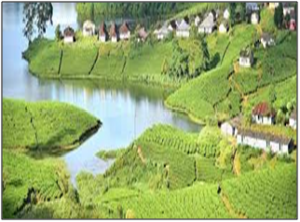
- Recently, nine species were recently discovered during a faunal survey by Zoological Survey of India (ZSI) at Megamalai Wildlife Sanctuary.
About Megamalai Wildlife Sanctuary:
-
- Location: It is situated in the Theni and Madurai districts of Tamil Nadu, within the ecologically sensitive Western Ghats.
- Tiger Reserve Status: In 2021, it was merged with the Srivilliputhur Grizzled Squirrel WLS to form the Srivilliputhur-Megamalai Tiger Reserve (SMTR), India’s 51st and Tamil Nadu’s 5th tiger reserve.
- Geographic Alias: It is often referred to as the “High Wavy Mountains” due to its undulating hilly terrain.
- Buffer Zone Role: It serves as a vital buffer zone for the Periyar Tiger Reserve in Kerala, facilitating wildlife movement between the two states. It acts as a critical corridor for the movement of Asian Elephants between the Periyar and Anamalai landscapes.
-
- River Catchment: It is the primary catchment area for the Vaigai River, a “heritage river” that is the lifeline for five southern districts of Tamil Nadu.
- Key Tributaries: Major tributaries like the Suruliyaru and Shanmuganathi originate or flow through this landscape before converging at the Vaigai Dam.
- Vegetation Gradient: It features a diverse mix ranging from scrub forests at the foothills to tropical evergreen forests and high-altitude shola grasslands at the peaks.
- Endemic Wood Snake: The sanctuary is famous for the Wood Snake (Xylophis indicus), a species “point endemic” to the Megamalai and Periyar landscape that was rediscovered after 140 years.
- Nilgiri Tahr Habitat: It hosts approximately 10% of the global population of the Nilgiri Tahr, the state animal of Tamil Nadu.
- Great Indian Hornbill: It is one of the rare places where this bird is found in ground-level forest areas.
- Endangered Primates: It is home to significant populations of the Lion-tailed Macaque and the Nilgiri Langur.
- Flora Diversity: Key plant species include the Banyan tree, Syzygium zeylanicum, and the rare Nothopegia vajravelui.
- Conservation Threats: Major challenges include habitat fragmentation due to tea and cardamom plantations, road kills, and land encroachment.
Source:
Category: Miscellaneous
Context:
- Recently, Tamil lyricist and author R. Vairamuthu has been selected for the Jnanpith Award for the year 2025.
About Jnanpith Award:
-
- Nature: It is India’s highest and oldest literary honour, established in 1961 to recognize outstanding contributions to Indian literature.
- Sponsoring Body: The award is presented annually by Bharatiya Jnanpith, a prestigious literary and research organization founded in 1944 by industrialist Sahu Shanti Prasad Jain and his wife Rama Jain.
- Eligibility: It is conferred exclusively upon Indian citizens.
- Language Scope: The award considers works in any of the 22 languages listed in the Eighth Schedule of the Indian Constitution, as well as English.
-
- Posthumous Rule: The Jnanpith Award is never given posthumously; it recognizes only living authors.
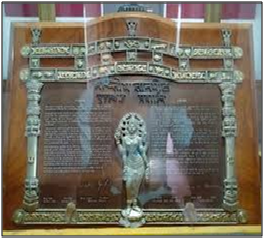
- Award Components: Winners receive a cash prize of ₹11 lakh, a citation, and a bronze replica of Vagdevi (Goddess Saraswati).
-
- First Recipient: The first award was presented in 1965 to Malayalam poet G. Sankara Kurup for his poetry collection Odakkuzhal.
- First Woman Winner: Ashapurna Devi, a Bengali novelist, became the first woman to receive the award in 1976 for her novel Pratham Pratisruti.
- English Language Milestone: In 2018, Amitav Ghosh became the first (and so far only) writer in the English language to be honored with the Jnanpith.
- Selection Shift: Until 1981, the award was given for a specific “most outstanding work.” Since 1982, it has been awarded for an author’s lifetime contribution to literature.
- Ineligibility Rule: A language that receives the award in a particular year is ineligible for consideration for the subsequent two years.
- Selection Board: The final recipient is chosen by a Selection Board consisting of 7 to 11 eminent scholars of high repute and integrity.
- Recent awardees:
-
- 58th Jnanpith Award (2023): It was jointly awarded to Sanskrit scholar Jagadguru Rambhadracharya and renowned Urdu poet and lyricist Gulzar.
- 59th Jnanpith Award (2024): It was conferred upon eminent Hindi writer Vinod Kumar Shukla, the first recipient from Chhattisgarh.
- 60th Jnanpith Award (2025): Tamil author and lyricist R. Vairamuthu has been selected for the latest 60th edition.
Source:
Category: Science and Technology
Context:
- CSIR-NCL in collaboration with a processing engineering partner is ready to scale up the Dimethyl Ether technology to an industrial scale demonstration.
About Dimethyl Ether (DME):
-
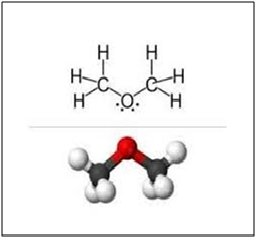
- Chemical Nature: Dimethyl Ether (CH3OCH3) is the simplest of all ethers and an organic compound that exists as a colourless, non-toxic, and slightly narcotic gas under standard atmospheric conditions.
- Diesel Alternative: It is a synthetic second-generation biofuel and a “clean-burning” alternative to mineral diesel, specifically for compression ignition (CI) engines.
- LPG Equivalent: Its physical properties (like vapor pressure) are very similar to Liquefied Petroleum Gas (LPG), meaning it can be stored, handled, and transported using existing LPG infrastructure with minimal modifications.
- High Cetane Number: It possesses a high cetane number (approx. 55–60), which is a measure of the fuel’s ignitibility under compression; this is superior to conventional diesel (cetane 40–53).
- Clean Combustion: Because its molecular structure lacks Carbon-to-Carbon (C-C) bonds, it produces virtually no soot or particulate matter during combustion.
- Emission Profile: DME engines significantly reduce emissions of Nitrogen Oxides and Sulfur Oxides, and they are almost entirely smokeless.
- Production Pathways:
- Indirect Method (Two-step): Syngas is first converted to methanol, which is then dehydrated into DME.
-
-
- Direct Method (One-step): Uses a bi-functional catalyst to convert syngas directly into DME in a single reactor.
-
- Diverse Feedstocks: It can be produced domestically from a variety of sources including natural gas, coal reserves, agricultural biomass waste, and municipal solid waste.
- Methanol Economy: It is a central component of NITI Aayog’s Methanol Economy Program, aimed at reducing India’s heavy reliance on crude oil imports.
- India’s First DME Tractor: Developed by IIT Kanpur in collaboration with TAFE, it is the first vehicle in India to run on 100% DME.
- Lubricity Challenge: DME has low viscosity and lubricity compared to diesel, which can cause wear and internal leakages in fuel injection equipment; this requires special lubricating additives.
- Energy Density: It has roughly half the energy density of diesel, necessitating fuel tanks nearly twice the size for the same range.
- Safety Features: Unlike other ethers, it is resistant to autoxidation (does not form explosive peroxides) and is highly flammable, making it a manageable but high-energy fuel.
- Aerosol Propellant: Beyond fuel, it is widely used as an ozone-friendly propellant in aerosols (like hairspray and bug spray) to replace harmful Chlorofluorocarbons (CFCs).
- Domestic Innovation: CSIR-National Chemical Laboratory (CSIR-NCL) has developed an indigenous process to produce DME from methanol dehydration, supporting the Atmanirbhar Bharat initiative.
Source:
(MAINS Focus)
Subject: Polity (Fundamental Rights) & Social Justice (Health)
Sub-Topic: Right to Life, Euthanasia, and Patient Autonomy
Introduction
The intersection of medical technology, constitutional morality, and human compassion has found its most profound expression in the Supreme Court’s recent affirmation of the right to die with dignity. By permitting withdrawal of life support from a patient in persistent vegetative state, the Court has expanded Article 21’s canopy to encompass not merely a life of dignity, but also a dignified death. This judgment navigates the delicate balance between preserving life and preventing technological prolongation of indignity.
Background: The Evolutionary Trajectory
- Recent Judgment: The Supreme Court approved withdrawal of life support (including artificial nutrition and hydration) for Harish Rana, in PVS for over 12 years following head injury.
- Constitutional Rationale: The Court observed that leveraging technology to keep terminally ill patients artificially alive forces “a life of indignity” and a “slow, agonising death.”
- Legal Expansion: The right to live with dignity under Article 21 now explicitly encompasses the right to die with dignity.
- Living Will Endorsement: The concept of a living will—allowing individuals to state treatment preferences in advance—was again affirmed for popularisation.
Judicial Precedents: A Gradual Unfolding
| Case | Year | Key Contribution |
|---|---|---|
| Smt. Gian Kaur v. State of Punjab | 1996 | Distinguished between euthanasia and suicide; held right to die not fundamental under Article 21 |
| Aruna Shanbaug Petition | 2011 | Laid down guidelines for passive euthanasia; allowed withdrawal of life support with high court approval |
| Common Cause v. Union of India | 2018 | Constitution Bench held right to die with dignity a fundamental right; recognised living wills |
| Harish Rana Case | 2025 | Approved withdrawal of artificial nutrition/hydration; reinforced compassionate end-of-life care |
Key Issues and Ethical Dimensions
- Technological Paradox:
- Medical advancements can preserve biological life indefinitely but may erode human dignity.
- The judgment warns against prolonging life “only because it is possible” through technology.
- Autonomy vs. Sanctity of Life:
- Respecting patient autonomy requires honouring advance directives.
- Balancing this with the medical profession’s ethical obligation to preserve life.
- Definitional Challenges:
- Distinguishing between active euthanasia (illegal) and passive euthanasia (withdrawal of life support).
- Determining “persistent vegetative state” and “irreversible coma” with medical certainty.
- Implementation Hurdles:
- Living wills remain poorly understood and rarely executed.
- Healthcare providers fear legal repercussions for withdrawing support.
Analysis: Constitutional and Social Implications
- Dignity as a Constitutional Value: The Preamble and Article 21 establish dignity as foundational. The judgment extends this to life’s terminal phase, recognising that loss of control over faculties can denude life of meaning.
- Global Comparisons: Countries like the Netherlands and Belgium permit active euthanasia under strict conditions. India’s position on passive euthanasia aligns with jurisdictions prioritising patient autonomy while maintaining safeguards.
- Law Commission Reports: The 241st Law Commission Report (2012) recommended passive euthanasia and living wills, contributing to the 2018 Constitution Bench decision.
- Medical Ethics: The Indian Medical Council (Professional Conduct, Etiquette and Ethics) Regulations, 2002 must evolve to provide clear guidance on end-of-life decisions.
- Compassion in Healthcare: The judgment introduces compassion into end-of-life care, acknowledging families’ emotional and financial burden in prolonging inevitable deaths.
The Way Forward: Operationalising the Right
- Legislative Framework:
- Enact comprehensive legislation on end-of-life care, passive euthanasia, and living wills to provide statutory clarity.
- Address grey areas left by judicial pronouncements.
- Living Will Awareness:
- Launch public campaigns to popularise living wills.
- Create simple, accessible formats for advance directives in regional languages.
- Medical Protocols:
- Develop standard operating procedures for hospitals on verifying and implementing living wills.
- Establish hospital-level ethics committees for end-of-life decisions.
- Training and Sensitisation:
- Train medical professionals on legal and ethical dimensions of withdrawing life support.
- Sensitise judiciary for speedy disposal of cases where no living will exists.
- Safeguards Against Abuse:
- Maintain judicial oversight for cases without advance directives.
- Ensure transparent documentation to prevent misuse by families or hospitals.
Conclusion
The Supreme Court’s affirmation of the right to die with dignity represents constitutional morality at its most humane. By recognising that life’s quality matters as much as its quantity, the judgment liberates terminally ill patients and their families from medically prolonged suffering. As technology advances, this framework ensures that human dignity remains paramount. The path ahead lies in translating judicial wisdom into accessible legislative frameworks and widespread societal awareness.
UPSC Mains Analytical Question
- “The right to life with dignity under Article 21 must logically extend to the right to die with dignity in cases of terminal suffering.” Critically examine this proposition in light of recent Supreme Court judgments and the ethical dilemmas surrounding euthanasia in India.
Subject: Social Justice (Education & Health) & Society
Sub-Topic: Role of Education in Social Empowerment, Mental Health, and Inclusivity
Introduction
Comprehensive Sexuality Education (CSE) extends far beyond biological instruction, encompassing mental well-being, consent, pleasure, and respect for diversity. In India, deeply ingrained stigmas silence conversations on intimacy, exacerbating mental health crises and marginalising LGBTQ+ communities.
With the Supreme Court in 2024-25 emphasising CSE and transgender-inclusive curricula, higher education faces an urgent imperative: to transform classrooms into safe, compassionate spaces that equip students to navigate contemporary challenges and build an equitable society.
Background: The Emerging Mandate
- Judicial Recognition: In 2024, the Supreme Court emphasised CSE programmes for open discussions on intimacy and sexual health. In 2025, it sought government responses on transgender-inclusive CSE and issued suicide prevention guidelines identifying gender/sexual orientation as grounds for discrimination.
- WHO Framework: The WHO asserts that “immense suffering” occurs when individuals lack bodily autonomy and freedom for safe, consensual, satisfying relationships.
- Current Lacunae: Despite these imperatives, Indian academia perpetuates silence on intimacy, with minimal courses or discussions addressing human sexual diversity.
Key Issues and Deficits in Academia
- Epistemic Gaps in Curricula:
- Mental health curricula remain heteronormative and cisgendered, ignoring sexual marginalisation.
- ‘Sexuality’ is reduced to heterosexual dysfunctions, erasing consent, pleasure, and sexual politics.
- Complex lived realities and structural violence against queer individuals are excluded, inhibiting cultural competence.
- Institutional Discrimination:
- Sexual minorities face inadequate support when accessing counselling services in universities.
- Psychologists appointed to address student suicides lack training to reckon with oppressive institutional contexts.
- Culture of Silence and Stigma:
- Deeply ingrained taboos perpetuate fear, anxiety, and resistance rather than informed exchange.
- The biomedical approach disregards socio-cultural factors and the dimension of pleasure.
- Pedagogical Challenges:
- Teaching sensitive topics requires navigating discomfort—as seen in Germany’s University of Münster workshop where students felt uneasy balancing personal sharing with academic detachment.
- Lack of “safer and accountable spaces” inhibits genuine learning.
Analysis: The Mental Health-Sexuality Nexus
- Student Suicide Crisis: With rising student suicides in India, gender and sexual orientation-based discrimination emerges as a critical but neglected factor. The National Crime Records Bureau (NCRB) data consistently shows student deaths, yet institutional responses remain siloed.
- Queer Marginalisation: The NALSA judgment (2014) recognised transgender rights, but educational institutions lag in implementing its spirit. CSE can operationalise constitutional values of dignity and equality.
- Global Best Practices: Germany’s DAAD fellowship experiences demonstrate that icebreaker exercises and small-group discussions on “What does intimacy mean to you?” help students connect personally with course material.
- Anti-Democratic Backlash: Globally and in India, anti-democratic movements seek to erase LGBTQ+ experiences. CSE becomes a bulwark against exclusionary ideologies.
The Way Forward: Building Compassionate Learning Environments
- Curriculum Reform:
- Integrate transgender-inclusive CSE as directed by the Supreme Court (2025).
- Move beyond biomedical models to include pleasure, consent, and socio-cultural dimensions.
- Incorporate UGC-mandated modules on gender sensitisation across disciplines.
- Train Mental Health Professionals:
- University counsellors must develop cultural and structural competence to support sexual minorities.
- Address ethical and epistemic gaps identified in current psychology curricula.
- Pedagogical Innovations:
- Begin classes with icebreaker exercises to build trust and rapport.
- Use films, workshops, and small-group discussions to create “safer and accountable spaces.”
- Balance academic detachment with personal relevance.
- Institutionalising Support Systems:
- Prioritise fostering allyship and care communities over short-term fixes like isolated events.
- Create sustained conversations rather than token workshops.
- Convergence with Mental Health Guidelines:
- Implement pan-India Supreme Court guidelines (2025) on student suicide, explicitly addressing gender and sexual orientation-based discrimination.
- Establish zero-tolerance policies for institutional discrimination against LGBTQ+ students.
Conclusion
Comprehensive Sexuality Education is not merely about biological instruction but about nurturing empathetic, critically aware citizens capable of respecting diversity. In an era of rising mental health crises and anti-democratic backlash, Indian academia must transcend silence and stigma. By integrating CSE into curricula and fostering compassionate classrooms, educational institutions can fulfil their constitutional mandate of creating an inclusive, equitable, and just society—where every student’s lived reality finds acknowledgment and support.
UPSC Mains Analytical Question
- “Comprehensive Sexuality Education is as much about mental well-being and social justice as it is about biological awareness.” In light of rising student suicides and judicial directives, analyse the role of higher education institutions in fostering inclusive learning environments that address sexuality, gender diversity, and mental health.
Source: https://www.thehindu.com/opinion/op-ed/importance-of-sex-education-in-academia/article70751393.ece