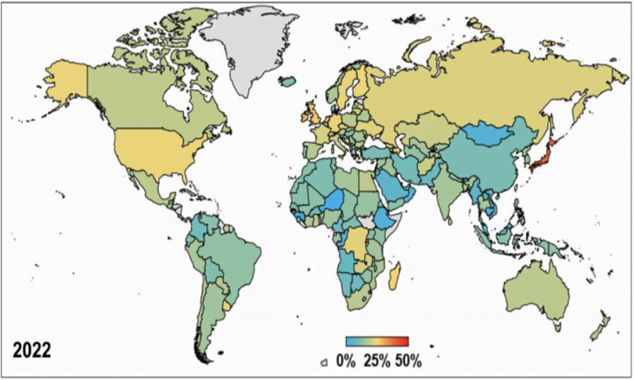
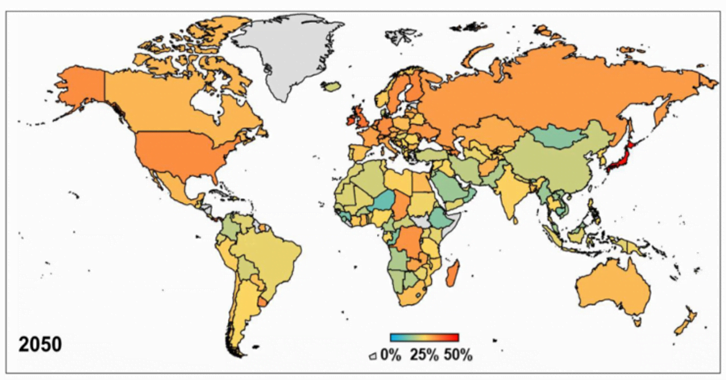
Context: A report was recently released by United Nations Institute for Water, Environment and Health (UNU-INWEH) that stated that world will lose 26% storage by 2050 to trapped sediment.
About UNU-INWEH:
UNU-INWEH was established in 1996 as subsidiary body of the United Nations University (UNU) institutes and an academic arm of the UN.
Its operations are secured through long-term host-country and core-funding agreements with the Government of Canada.
The Institute is located in Hamilton, Canada; its facilities are supported by McMaster University.
It specializes on water for development, working, primarily with countries in the Global South, and addressing water issues of global significance.
It is the UN Think Tank on Water created by the UNU Governing Council.
UNU-INWEH is the only Institute in UNU that focuses entirely and solely on water issues.
It is also the only entirely water-focused UN entity in Canada.
UNU-INWEH is linked to key processes in the UN system, and represents the entire UNU in UN-Water – a cross-agency group in the UN and international partners working on water and sanitation issues globally.
Important findings of the report:
About 50,000 large dams across the world will lose 24-28 % water storage capacity by 2050 due to sediment trapped in them.
These water reservoirs have already lost about 13-19 % capacity to sedimentation.
Sedimentation is caused when a river carrying eroded soil is blocked by a dam at its watershed.
Sediment helps to maintain the aquatic ecosystem.
Poor management Sedimentation can lead to nutritional disbalances causing eutrophication, damages in habitations downstream, choke of dam and turbine system.
Shallow water formed due to sedimentation also reduces the recreational value of the reservoirs.
United Kingdom, Panama, Ireland, Japan and Seychelles will experience highest water storage losses by 2050 losing between 35% and 50% of their original capacities.
Bhutan, Cambodia, Ethiopia, Guinea and Niger will be five least-affected countries losing less than 15 % by 2050.
Dredging can be costly and only temporary.
Dredging- to clear the mud from the bottom of a river, canal, etc. using a special machine.
Major highlights of the report in the Asia-Pacific region:
Asia has 35,252 large dams, making it the world’s most heavily dammed region.
Region has 60% of the world’s population and water storage is crucial for sustaining water and food security.
In 2022, region will lose 13% of its initial dam storage capacity.
It will lose nearly a quarter (23%) of initial storage capacity by 2050.
Loss of storage capacity of Japan’s 3,052 dams is most acute in the region.
India’s Central Water Commission reported in 2015 that-
Among 141 large reservoirs that are over 50 years old, one-quarter had already lost at least 30% of their initial storage capacity.
UNU-INWEH estimates that India’s 3,700 large dams will have lost on average 26% of their initial total storage by 2050.
China, world’s most heavily dammed nation has lost about 10% of its storage and will lose a further 10% by 2050.
The India Sanitation Coalition is a platform to promote sustainable sanitation and is funded by the Government of India and the World Health Organisation.
The National Institute of Urban Affairs is an apex body of the Ministry of Housing and Urban Affairs in Government of India and provides innovative solutions to address the challenges of Urban India.
Which of the statements given above is/are correct? (2022)
1 only
2 only
Both 1 and 2
Neither 1 nor 2
Q.2) Which one of the following best describes the term “greenwashing”? (2022)
Conveying a false impression that a company’s products are eco-friendly and environmentally sound
Non-inclusion of ecological/ environmental costs in the Annual Financial Statements of a country
Ignoring the consequences disastrous ecological while infrastructure development undertaking
Making mandatory provisions for environmental costs in a government project/programme