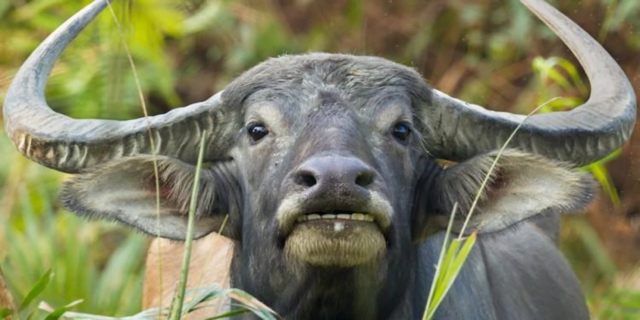
Chhattisgarh’s state animal, Wild buffalo, close to extinction
Part of: GS Prelims and GS- III – Environment
Context The sole female wild buffalo in a conservation centre at Chhattisgarh’s Sitanadi-Udanti tiger reserve died recently.
Key takeaways
- Chhattisgarh’s state animal is on the verge of extinction with less than 20 individuals of the species left in the state.
- The conservation centre had only one female and three males and now no more female wild buffalos are left in the reserve.
- The reserve is also contiguous to Khariar Forest Division of Odisha State and acts as Buffer for Sunabeda Wildlife sanctuary.
About Wild water Buffalo
- The wild water buffalo (Bubalus arnee), also called Asian buffalo, is a large bovine native to the Indian subcontinent and Southeast Asia.
- It has an ash-gray to black skin. They are both diurnal and nocturnal. Both sexes carry horns.
- It is among the heaviest living wild bovid species, and is slightly smaller than gaur.
- It is associated with wet grasslands, swamps, flood plains and densely vegetated river valleys.
- It is included in CITES Appendix III.
- It is legally protected in Bhutan, India, Nepal, and Thailand.
- IUCN Red List status: Endangered since 1986.
- The remaining population totals less than 4,000 out of which around 91% live in India, mostly in Assam.
- It is found in the following National Parks and wildlife sanctuaries:
- Assam: Kaziranga, Manas and Dibru-Saikhowa National Parks, Laokhowa Wildlife Sanctuary and Bura Chapori Wildlife Sanctuary
- Arunachal Pradesh: D’Ering Memorial Wildlife Sanctuary
- Meghalaya: Balphakram National Park
- Chhattisgarh: Indravati National Park and Udanti Wildlife Sanctuary.