Part of: GS Prelims and GS – III – Infrastructure; Environment
In news
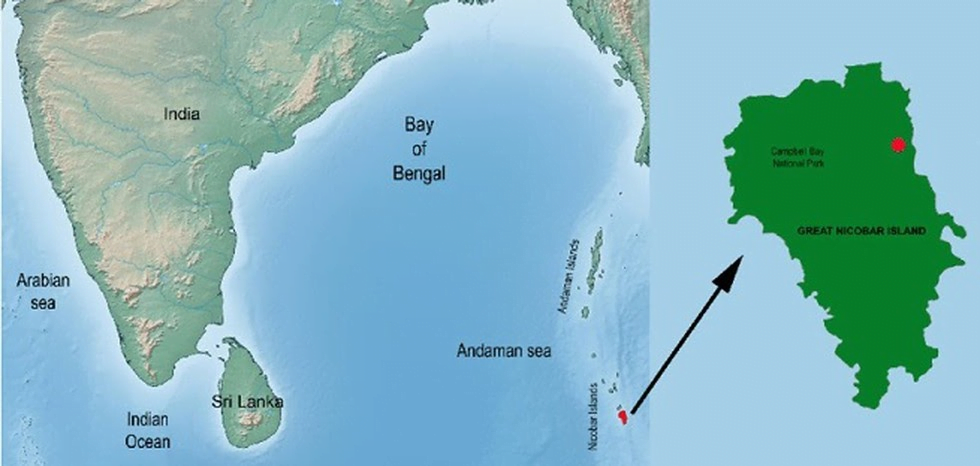
More than 150 sq. km. (18%) of land is being made available for Phase I of a NITI Aayog-piloted ‘holistic’ and ‘sustainable’ vision for Great Nicobar Island.
The overall plan envisages the use of a major portion being pristine forest and coastal systems.
Projects to be executed include an airport complex, a transshipment port (TSP) at South Bay, a parallel-to-the-coast mass rapid transport system, a free trade zone, and a warehousing complex on the southwestern coast.
Nodal agency: Andaman and Nicobar Islands Integrated Development Corporation (ANIIDCO)
National Pharmaceutical Pricing Authority (NPPA) has fixed the price of 81 medicines, including off-patent anti-diabetic drugs, helping to pass on the benefits to patients.
Key takeaways
The decision was taken because the five-year price exemption given to these medicines on account of indigenous R&D got over recently.
Revision in existing ceiling prices of scheduled formulations based on the Wholesale Price Index (WPI) was also approved by the Authority.
The revised prices will be effective from April 2021.
It also decided to retain the revised ceiling price of Heparin injection up to September 2021.
Important value additions
The National Pharmaceutical Pricing Authority (NPPA) is a government regulatory agency that controls the prices of pharmaceutical drugs in India.
It was constituted in 1997 as an attached office of the Department of Pharmaceuticals (DoP),
Part of: GS Prelims and GS – II – Policies and interventions
In news
Gram Ujala programme was recently launched in Arrah, Bihar.
Ministry: Ministry of Power
Key takeaways
Under the programme, 7 watts and 12-Watt LED bulbs with 3 years warranty will be given to rural consumers against submission of working Incandescent bulbs.
LEDs will be available for only Rs 10 each for each household.
Each household will get up to 5 LEDs.
In the first phase, 15 million LED bulbs will be distributed across villages of Aarah (Bihar), Varanasi (Uttar Pradesh), Vijaywada (Andhra Pradesh), Nagpur (Maharashtra), and village in western Gujarat.
The Gram Ujala programme will be implemented in villages of the 5 districts only.
These rural households will also have metres installed in their houses to account for usage.
Do you know?
The programme will be financed entirely through carbon credits.
It will be the first such programme in India
Carbon credits will be prepared under the Shine Program of Activities with an option for verifying under the Voluntary Carbon Standard, depending on the needs of buyers.
Carbon Credit Buyers will also be sought through an open process based on initial discussions with the market.
The balance cost and margin on the LED cost will be recouped through the carbon credits earned.
Part of: GS Prelims and GS – III – Defence and Security
In news
Acquisition Wing of Ministry of Defence (MoD) signed a contract with Defence Public Sector Undertaking (DPSU) Bharat Dynamics Limited (BDL) for the supply of MILAN-2T Anti-Tank Guided Missiles (ATGMs) to the Indian Army
Key takeaways
The Milan-2T is a Tandem Warhead ATGM with a range of 1,850 metres, produced by BDL under license from MBDA Missile Systems, France.
These missiles can be fired from the ground as well as vehicle-based launchers
These can also be deployed in Anti-Tank Role for both offensive & defensive tasks.
Induction of these missiles will further enhance the operational preparedness of the Armed Forces which will be completed in three years.
It is a step in achieving the goal of ‘Atmanirbhar Bharat’ in the defense sector.
Miscellaneous
INAS 310
Indian Naval Air Squadron (INAS) 310, The Cobras, is a maritime reconnaissance squadron of the Indian Navy based at Goa.
It was commissioned at Hyéres, France.
It holds the distinction of being the most decorated unit of the Indian Navy.
INAS 310 continues to carry out daily surveillance operations over the coastline.
In the last one year, amidst the COVID-19 pandemic, the aircraft of the squadron have delivered critical medical supplies, COVID test kits, and transported medical teams and samples, clocking close to 1000 sorties.
(Mains Focus)
ENVIRONMENT/ ECONOMY
Topic:
GS-3: Conservation, environmental pollution and degradation
GS-3: Indian Economy and issues relating to planning, mobilization, of resources, growth, development
Context: Himachal Pradesh State Water Minister repeatedly warned the Legislative Assembly that State is likely to face an acute water scarcity
Why is the state with perennial sources of water such as Sutlej and Beas rivers staring at a water crisis?
Deficient Rain and Snow: Himachal Pradesh received less snow and rain this winter. After winter, melt-water from glaciers and the snow cover regularly feeds the groundwater as well as other downhill water sources such as springs, wells, rivers etc. But water sources have already started drying up this year due to deficient snowfall.
69% less than normal precipitation: According to the Indian Meteorological Department, the state received only 59 millimetres of precipitation this winter (January 1 to February 28), which was 69 per cent less than normal.
Increasing demand: Generally, over the decades, demand for water has been growing due to increasing population in the state, with people now relying more on piped water supply schemes rather than traditional sources such as springs and bawries etc.
Climate Change: Rainfall patterns, too, have become erratic. During dry periods, water sources dry up quickly in some areas, especially in the Shiwalik hills where the water-holding capacity of the soil is low.
Similar type of situation before also
Himachal had received deficient snowfall in 2018, too, when drinking water shortage in the capital town of Shimla in summer had invited global media attention.
The situation has been better in Shimla since then because its water supply source from Gumma stream has been augmented to provide 10 million litres daily (mld) more water to the city.
The extent of the problem this year will become clearer in the coming summer months, but government claimed that it has never been so dry before in Himachal so early during the year. There are parts of Beas river which can now simply be crossed by wading through on foot
What are the proposed solutions?
Installation of hand-pumps and borewells was stopped last year in view of depleting water table. But it will be resumed now wherever necessary.
Water harvesting tanks will be built throughout the state and all MLAs are required to start building rainwater harvesting structures in their constituencies.
A large number of habitations in Himachal Pradesh are not connected by road, but the connected villages will be provided water tankers during periods of shortage
Government will try to explore the option of “snow harvesting” in the higher reaches.
Context: Recently, the Supreme Court asked the Centre to respond to a petition that challenges the constitutional validity of the Places of Worship (Special Provisions) Act, 1991.
What does the 1991 Act say?
The law was enacted to freeze the status of all places of worship in the country as on August 15, 1947.
The Act says that no person shall convert any place of worship of any religious denomination into one of a different denomination or section. It contains a declaration that a place of worship shall continue to be as it was on August 15, 1947.
Significantly, it prohibits any legal proceedings from being instituted regarding the character of a place of worship, and declares that all suits and appeals pending before any court or authority on the cut-off date regarding the conversion of the character of a place of worship shall abate.
In other words, all pending cases will come to an end, and no further proceedings can be filed.
However, any suit or proceedings relating to any conversion of status that happened after the cut-off date can continue
Penal Provision: Anyone contravening the prohibition on converting the status of a place of worship is liable to be imprisoned for up to three years, and a fine. Those abetting or participating in a criminal conspiracy to commit this offence will also get the same punishment.
What are the exception under the act?
An exception was made to keep the Babri Masjid-Ramjanmabhoomi dispute out of its ambit as the structure was then the subject of litigation.
The 1991 Act will not apply to ancient and historical monuments and archaeological sites and remains that are covered by the Ancient Monuments and Archaeological Sites and Remains Act, 1958.
It will also not apply to any suit that has been finally settled or disposed of, any dispute that has been settled by the parties before the 1991 Act came into force, or to the conversion of any place that took place by acquiescence.
What are the grounds of challenge?
Constrains Judicial Remedy: The act amounts to taking away the right of the people to seek justice through the courts and obtain a judicial remedy. The petitioner argues that the Act takes away the rights of communities such as Hindus, Sikhs, Buddhists and Jains to reclaim the sites of their places of worship through legal proceedings.
Contention on Cut-off date: The petitioner also contends that the cut-off date of August 15, 1947, is arbitrary and irrational.
Issue of Exemption: The petition contends that the legislation legalises the actions of invaders in the past who demolished places of worship. It wonders how the law could exempt the birthplace of Ram, but not that of Krishna.
Restriction on Fundamental Right to Practise Religion: The petition also said the law violates the right to practise and propagate religion, as well as the right to manage and administer places of worship.
Not in spirit of Secularism: Further, petition has argued that that act goes against the principle of secularism and the state’s duty to preserve and protect religious and cultural heritage.
What has the SC said on the status freeze?
In its final verdict on the Ayodhya dispute, the Supreme Court had observed that the Act “imposes a non-derogable obligation towards enforcing our commitment to secularism”.
The court went on to say: “Non-retrogression is a foundational feature of the fundamental constitutional principles, of which secularism is a core component.”
The court described the law as one that preserved secularism by not permitting the status of a place of worship to be altered after Independence.
In words of caution against further attempts to change the character of a place of worship, the five-judge Bench said, “Historical wrongs cannot be remedied by the people taking the law in their own hands. In preserving the character of places of public worship, Parliament has mandated in no uncertain terms that history and its wrongs shall not be used asinstruments to oppress the present and the future.”
What are the implications of the case?
Contentious Places: Some Hindu organisations have been laying claim to the Gyanvapi mosque in Varanasi and the Shahi Idgah in Mathura.
Controversy in Mathura: Civil suits have been filed in a Mathura court seeking the shifting of the 17th-century mosque from the spot that some claim is the birthplace of Lord Krishna.
Dilution of 1991 law impacts outcome: Any order that strikes down or dilutes the 1991 law on the status of places of worship is likely to influence the outcome of such proceedings.