Pakistan retained on ‘grey list’ and Iran in ‘black list’ of FATF
Part of: GS Prelims –Polity and GS-II- International organization
In news:
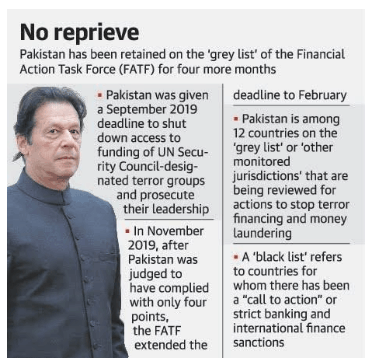
Pakistan has been retained on the ‘grey list’ of the Financial Action Task Force (FATF)
To complete the 27-point action plan it has been given by June 2020 or face being put on the ‘black list’
FATF placed Iran on its blacklist after it failed to comply with international anti-terrorism financing norms, a move that will deepen the country’s isolation from financial markets.
FATF summary report states that Pakistan must work on eight specific areas:
Identifying and investigating ”terror-financing activities
Freezing the funds of all designated terrorists
“effective, proportionate and dissuasive sanctions” against all terror entities
Daily Current Affairs IAS | UPSC Prelims and Mains Exam – 22nd February 2020
Secretariat is located at the Organisation for Economic Cooperation and Development (OECD) headquarters in Paris.
Works to set standards and promote effective implementation of legal, regulatory and operational measures
Combats money laundering, terrorist financing ,related threats to the integrity of the international financial system.
Grey list : A country is put on the grey list when it fails to curb terrorism financing and money laundering
Blacklist :Putting a country on the blacklist means shutting all doors to international finance for that country.
Scientists oppose study into ‘qualities’ of indigenous cow
Part of: GS Prelims –Sci & Tech and GS-III- conservation
In news:
Many scientists have petitioned the Department of Science & Technology (DST) to withdraw a proposal that solicits research into indigenous cows.
Concerns
The research programme appeared to endorse the belief that indigenous cows had “special” and “unique” qualities
Possibility of money being “wasted to investigate imaginary qualities derived from religious scriptures”.
Programme did not encourage fair comparison with other breeds of cows around the world or other bovine species within India
Proposal was drafted unscientifically
From Prelims Point of View:
Background:
Government has recently unveiled a programme to research on ‘indigenous’ cows. (SUTRA PIC or Scientific Utilisation Through Research Augmentation-Prime Products from Indigenous Cows) led by the Department of Science and Technology
Aims
To perform scientific research on complete characterisation of milk and milk products derived from Indian indigenous cows
Scientific research on nutritional and therapeutic properties of curd and ghee prepared from indigenous breeds of cows by traditional methods; development of standards for traditionally processed dairy products of Indian-origin cow
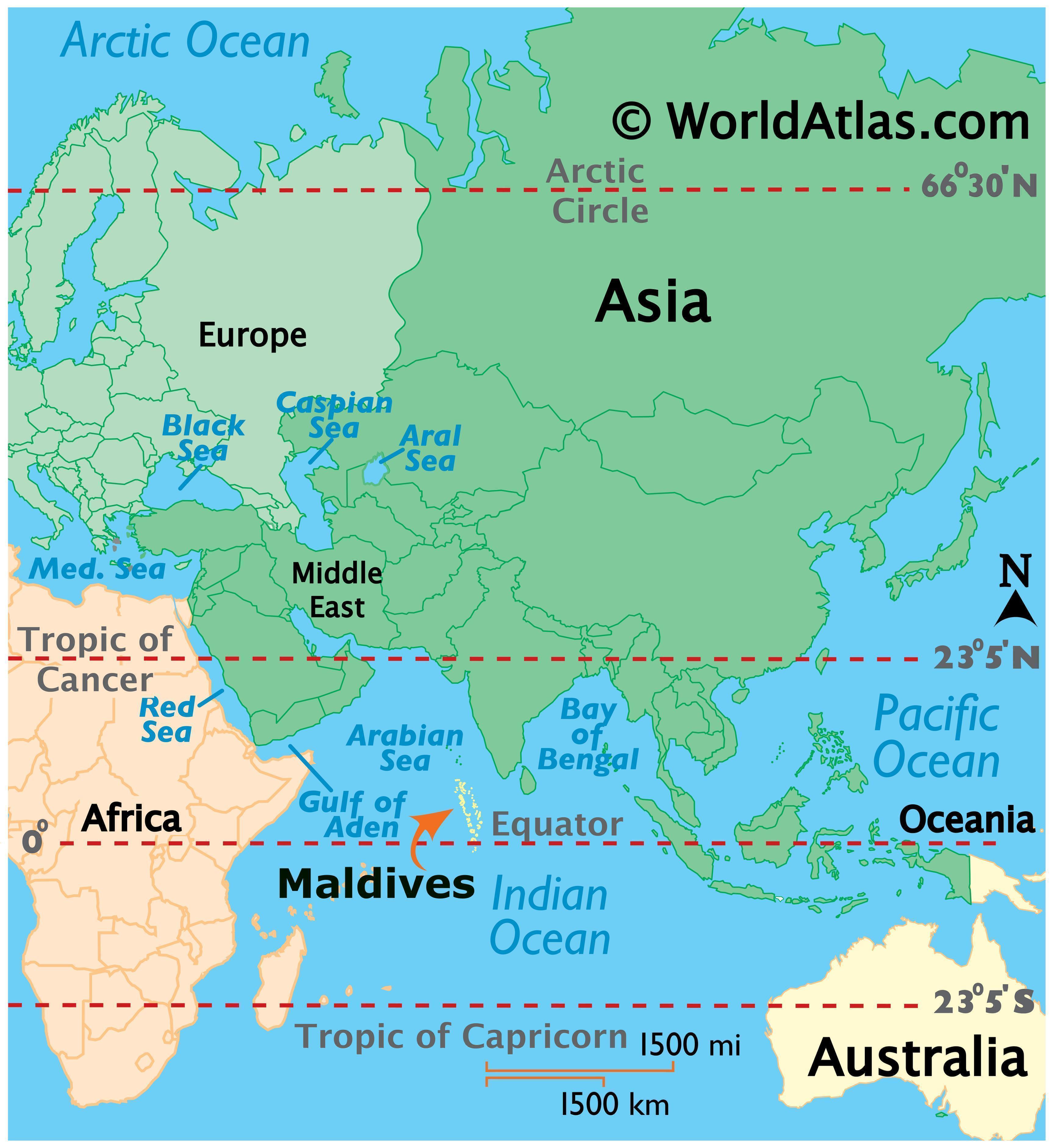
India, Maldives agree to take on terrorism, radicalisation
In news:
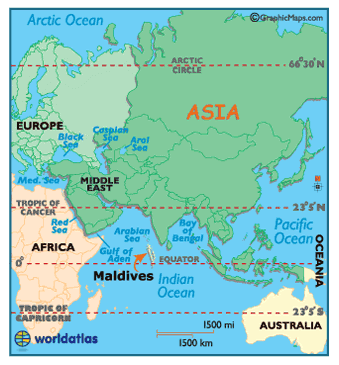
Home Minister Amit Shah met his Maldivian counterpart :
Discussed bilateral cooperation in the fields of counter-terrorism and counter-radicalisation, among other things.
From Prelims Point of View:
India-Maldives Relation
India first to recognize the Maldives after its independence in 1965
India established its mission at Malé in 1972.
Maldives archipelago comprising 1200 coral Islands lies next to key shipping lanes which ensure uninterrupted energy supplies to countries like China, Japan, and India.
More than 97% of India’s international trade by volume and 75% by value passes through the region.
Maldives member of SAARC
Daily Current Affairs IAS | UPSC Prelims and Mains Exam – 22nd February 2020
Indian Economy and issues relating to planning, mobilization, of resources, growth, development and employment.
Government policies and interventions for development in various sectors and issues arising out of their design and implementation.
Crop Insurance
Context
Flagship Crop insurance schemes of Central government are:
RWBCIS -Restructured Weather Based Crop Insurance Scheme
PMFBY – Pradhan Mantri Fasal Bima Yojana
Centre decided to restrict its premium subsidy in PMFBY and RWBCIS to 30% for unirrigated areas and 25% for irrigated areas (from the existing unlimited)
Also, it decided to make enrolment of farmers in these schemes as voluntary from the 2020 Kharif season.
About PMFBY
Launched in 2016 after rolling back the earlier insurance schemes viz. National Agriculture Insurance Scheme (NAIS) and Modified National Agricultural Insurance Scheme (MNAIS).
Premium: Farmers need to pay uniform premium of only 2% of insured amount for Kharif crops, 1.5% for Rabi crops and 5% for horticulture crops.
The remaining part of actuarial premium (charged by insurance companies) will be shared equally between Central and State government (with no upper limits)
The scheme is mandatory for farmers who have taken institutional loans from banks.
It’s optional for farmers who have not taken institutional credit.
If a farmer’s Kharif crop was insured for Rs 1,00,000 and the rate of actuarial premium was 40%, then the
Old Regime:
Premium paid by the farmer was 2% – Rs 2,000
Premium paid by the Centre was 19% -Rs 19,000
Premium paid by the Centre was 19% -Rs 19,000
Under New Regime –the Centre will give subsidy for premium rates up to 30%.
This means that the Centre will have to pay premium at the rate of 14% (out of 30%, the farmer’s share is 2%, and the Centre’s and state’s 14% each)
The state has to bear the entire burden of the premium subsidy in cases where the rate of premium goes beyond the threshold of 30%.
Premium paid by the farmer was 2% – Rs 2,000
Premium paid by the Centre -Rs 14,000
Premium paid by the State – Rs 14,000 + remaining Rs 10,000
A second interpretation is that the Centre may stop supporting insurance of certain crops in certain areas where the rate of premium is more than 30%
Why the changes to restrict the premium subsidy?
While the average premium rate under PMFBY and RWBCIS at the national level was 12.32% for 2018-19, for some crops in certain districts, the rate of premium has been higher than 30% in recent years.
For example: the rate of premium for Kharif groundnut has reached 49% in Rajkot of Gujarat, and the rate for Rabi paddy crop Ramnathapuram (Tamil Nadu) has reached 42%.
By capping the subsidy for premium rates up to 30%, the Centre wants to disincentivise certain crops in such areas where growing these crops involve high risks in terms of crop insurance premiums.
Implications of Capping premium amount
Increased States Share: After the new changes come into effect, the share of the states is expected to go up in those states in which such crops are cultivated.
Additional Financial burden on States: The states are already defaulting on their share of premium, and the Centre’s new cap will increase fiscal pressure on them
Delay in claim settlement: For example Madhya Pradesh has not paid its share of premium even for Kharif 2018, which comes to Rs 1,500 crore. As a result, farmers have not got their claims.
Implication on making insurance schemes voluntary
Making the scheme voluntary is expected to increase the disposable incomes of farmers which will help in fuelling rural demand.
The area covered under insurance and the number of enrolled farmers are expected to come down significantly as it is now made voluntary
In such a scenario, the rate of premium of certain crops in some areas may go beyond 30%.
It will further make farmers vulnerable to crop failures thus impacting their income security.
The other changes in crop insurance schemes
The government has given flexibility to states/UTs to implement PMFBY and RWBCIS
It also gives States the option to select any number of additional risk covers/features like prevented sowing, localised calamity, mid-season adversity, and post-harvest losses. Earlier, these risk covers were mandatory.
Impact of these changes
This may bring down the rates of overall premium as the state governments now will not be required to invite bids factoring these risks.
It will make these schemes less attractive for farmers.
Do You Know?
During 2018-19, about 5.64 crore farmers are enrolled with PMFBY for an insured sum of Rs 2,35,277 crore, and 30% of the gross cropped is insured.
During 2018-19, an amount of Rs 29,105 crore was collected as gross premium under PMFBY and RWBCIS, which included farmers’ share of Rs 4,918 crore and share of Rs 12,034 crore each by Centre & States
Connecting the dots!
Social Security & Insurance for crops
Food Productivity and Biotechnology
(TEST YOUR KNOWLEDGE)
Model questions: (You can now post your answers in comment section)
Note:
Correct answers of today’s questions will be provided in next day’s DNA section. Kindly refer to it and update your answers.
Comments Up-voted by IASbaba are also the “correct answers”.
Q 1. Consider the following statements about Financial Action Task Force (FATF)
The Financial Action Task Force (FATF) is an inter-governmental body established by World Economic Forum.
It is a policy-making body and promotes operational measures for combating money laundering and terrorist financing.
Which of the above statements is/are correct?
only 1
only 2
Both 1 and 2
Neither 1 nor 2
Q 2. Consider the following statements about the Financial Action Task Force (FATF):
It is an inter-governmental body established in 1989 by G -20
It sets global standards to tackle the problem of money laundering
Pakistan has an observer status in FATF
Which of the above statements is/are correct?
1 & 2 Only
2 Only
1, 2 & 3
2 & 3 Only
ANSWERS FOR 21 FEB 2020 TEST YOUR KNOWLEDGE (TYK)
1
D
2
B
3
A
Must Read
About Clashes between Brus and non-tribal Bengalis :