Part of: GS Prelims and GS – II – International Relations
In news
The Union Cabinet has given retrospective approval to the signing of MoU between the Indian Ministry of External Affairs and Foreign, Commonwealth and Development Office (FCDO) of the United Kingdom on Global Innovation Partnership (GIP).
Key takeaways
Through this MoU, India and UK agree to launch the GIP.
GIP will support Indian innovators to scale up their innovations in third countries thereby helping them explore new markets and become self-sustainable.
It will also foster the innovative ecosystem in India.
The innovations shall take place through seed funding, grants, investments and technical assistance.
GIP will also develop an open and inclusive e-market place (E-BAAZAR) for cross border innovation transfer and will focus on results based impact assessment thereby promoting transparency and accountability.
Part of: GS Prelims and GS-III – Space; Sci & tech
In news
Debris from a Chinese Long March 5B Rocket made uncontrolled re-entry into the Earth’s atmosphere and disintegrated over the Indian Ocean.
Key takeaways
Long March 5B rocket had been launched into space on April 29 for putting into orbit a core module of the new Tianhe space station, which is expected to become operational in 2022.
For days, there had been speculation on whether the debris would hit a populated area on the Earth’s surface.
Why did the rocket cause worry?
When a rocket is launched, its discarded booster stages re-enter the atmosphere soon after liftoff and harmlessly fall into the ocean
In this case, however, a 10-floor large vehicle of the rocket weighing 18 metric tonnes went into orbit along with the section of the under-construction space station that it was carrying.
While in orbit, this vehicle kept rubbing against the air at the top of the atmosphere, and the resulting friction caused it to start losing altitude.
The piece hurtled through a low-Earth orbit at roughly 25,490 km/hr.
An “uncontrolled re-entry” thus became inevitable, but China did not admit this fact to the world until 8th May.
The chance of humans getting hurt were low because most of the debris burnt up in the atmosphere and large parts of the Earth are covered by oceans and massive land areas lie uninhabited.
Do you know?
When rockets carry their payload into space, their booster stages that reach orbit fire the engine again after completing their job so as to drop back to Earth and not remain in orbit.
Space agencies plan this process to ensure that such rocket parts end up in uninhabited areas, such as the middle of the ocean.
China chose not to do this for its Long March rocket, leading to its vehicle crashing back uncontrollably.
Part of: GS Prelims and GS – II – International Relations
In news
India is participating in the 3rd Arctic Science Ministerial (ASM3) –
It is the global platform for discussing research and cooperation in the Arctic region
It is the first Ministerial meeting being held in Asia
Important value additions
The first two meetings—ASM1 and ASM2—were held in the USA in 2016 and Germany in 2018, respectively.
ASM3 is jointly organised by: Iceland and Japan.
The meeting is designed to provide opportunities to various stakeholders to enhance collective understanding of the Arctic region, emphasize and engage in constant monitoring, and strengthen observations.
Since July 2008, India has a permanent research station in the Arctic called Himadari at Ny Alesund, Svalbard Area in Norway.
Since 2013, India enjoys ‘Observer’ status in the Arctic Council with twelve other countries (Japan, China, France, Germany, UK, Italy, Switzerland, Poland, Spain, Netherlands, Singapore, and South Korea).
It has also deployed a multi-sensor moored observatory called IndARC in the Kongsfjorden fjord since July 2014.
India also contributes to the Sustained Arctic Observational Network (SAON).
The research in the Arctic region from India is coordinated, conducted, and promoted by the National Centre for Polar and Ocean Research (NCPOR), Goa, under the Ministry of Earth Sciences
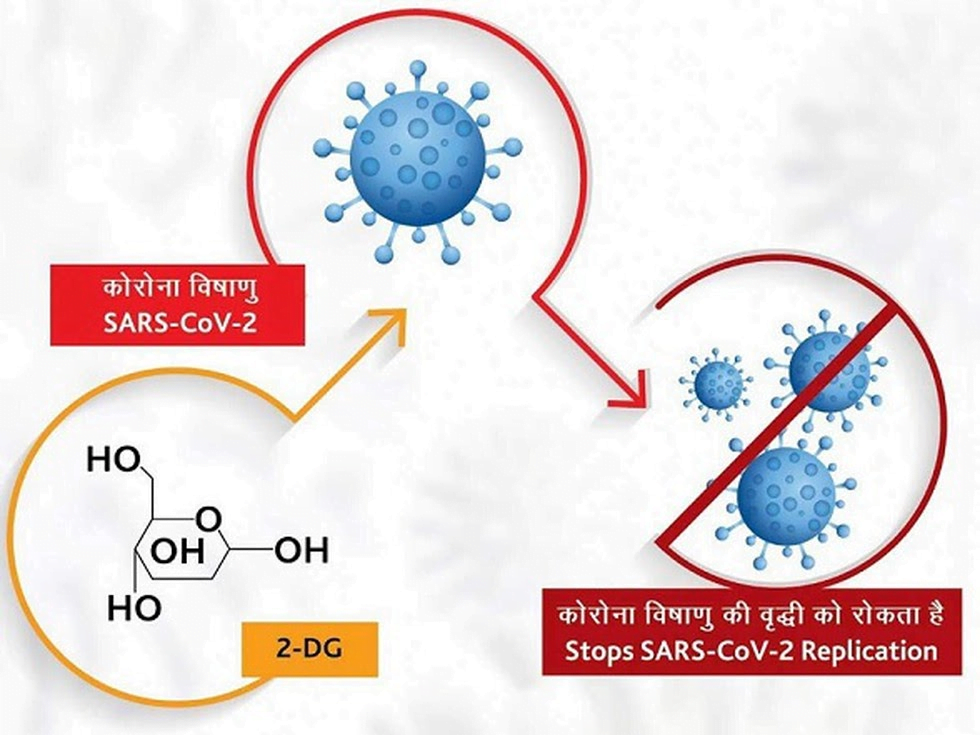
Developed by: Institute of Nuclear Medicine and Allied Sciences (INMAS), a lab of Defence Research and Development Organisation (DRDO), in collaboration with Dr Reddy’s Laboratories (DRL), Hyderabad.
Key takeaways
Clinical trial results have shown that this molecule helps in faster recovery of hospitalised patients and reduces supplemental oxygen dependence.
Higher proportion of patients treated with 2-DG showed RT-PCR negative conversion in COVID patients.
The drug will be of immense benefit to the people suffering from COVID-19.
The drug comes in powder form in sachet, which is taken orally by dissolving it in water.
It accumulates in the virus infected cells and prevents virus growth by stopping viral synthesis and energy production.
Its selective accumulation in virally infected cells makes this drug unique.
The Cabinet Committee on Economic Affairs has given its in-principle approval for strategic disinvestment along with transfer of management control in IDBI Bank Ltd.
Key takeaways
The extent of respective shareholding to be divested by GoI and LIC shall be decided in consultation with RBI.
Government of India (GoI) and LIC together own more than 94% of equity of IDBI Bank (GoI – 45.48%, LIC – 49.24%).
LIC is currently the promoter of IDBI Bank with Management Control and GoI is the co-promoter.
It is expected that strategic buyer will infuse funds, new technology and best management practices for optimal development of IDBI Bank Ltd. and shall generate more business
Resources through strategic disinvestment of Govt. equity from the transaction would be used to finance developmental programmes of the Government benefiting the citizens.
(Mains Focus)
GOVERNANCE
Topic:
GS-2: Issues and challenges pertaining to the federal structure
GS-2: Parliament and State legislatures—structure, functioning, conduct of business, powers & privileges and issues arising out of these
Context: In the judgment that declared the Maratha reservation unconstitutional, a Constitution Bench of the Supreme Court ruled that after the passage of the 102nd Constitution Amendment Act in 2018, the States do not have any power to identify ‘socially and educationally backward’ (SEBC) classes.
What does the 102nd Amendment say?
Establishment of NCBC: The Amendment established a National Commission for Backward Classes by adding Article 338B to the Constitution.
Functions of NCBC: The five-member Commission was tasked with monitoring safeguards provided for socially and educationally backward classes, giving advice on their socio-economic development, inquiring into complaints and making recommendations, among other functions.
Consultation with NCBC: Significantly, it was laid down that the Centre and the States shall consult the Commission on all policy matters concerning the SEBCs.
President’s Power to notify SEBC List: The Amendment also added Article 342A, under which the President shall notify a list of SEBCs in relation to each State and Union Territory, in consultation with Governors of the respective States.
Parliament’s Power to amend SEBC List: Once this ‘Central List’ is notified by President, only Parliament could make inclusions or exclusions in the list by law. This provision is drafted in exactly the same word as the one concerning the lists of SCs & STs.
Definition of SEBC: Further, a definition of ‘SEBCs’ was added to the Constitution — ‘SEBC’ means “such backward classes as are so deemed under Article 342A for the purposes of this Constitution”.
Why did this Amendment come up for judicial interpretation?
The reservation for the Maratha community was challenged in the Bombay High Court on various grounds.
One of the grounds was that the Act creating the Maratha quota through a new category called ‘SEBC’ was unconstitutional because after the introduction of the 102nd Amendment, the State legislature had no power to identify any new backward class.
Separately, a writ petition was also filed in the Supreme Court questioning the validity of the Amendment as it violated the federal structure and deprived the States of their powers.
In this context, the court had to examine the validity of the Amendment.
What were the rival contentions?
The Union government said Parliament’s intent was only to create a Central List that would be applied only in the Central government and its institutions. It had nothing to do with the State Lists of backward classes or the State governments’ powers to declare a community backward.
Others contended that the effect of the Amendment was that only the President, or the Union government, was authorised to make a list in relation to each State, and thereafter, any change in it would be made only by Parliament.
How did the Supreme Court reach these conclusions?
SC adopted a literal interpretation of the 102nd Amendment and cited three main reasons.
One, the text was clear that the President alone could notify the list, and subsequent changes could be made only by Parliament by law.
Two, the text was identical to the provisions governing the NCSC and the procedure to identify SCs was exactly the same, which led to the conclusion that Parliament intended to “replicate” the same process for backward classes, too.
Third, a definition clause was added to the effect that only a class found in the list notified by the President under Article 342A was an SEBC. Further, the definition was for “the purposes of the Constitution”, which meant that it was to apply to the Constitution as a whole, including Article 15(4) and Article 16(4).
The Supreme Court’s judgment also drew on deliberations before a Rajya SabhaSelect Committee that showed that the Centre had rejected suggestions from members who demanded that a specific clause be added saying that States would continue to have the power to identify SEBCs.
Dissenting judge Ashok Bhushan accepted the Union government’s position that it was never its intention to deprive the States of their powers. They held that the ‘Central List’ was only for use by the Centre in reservations for jobs and institutions under the Union government, and will not apply to States.
What next?
The Supreme Court has directed the Centre to notify the list of SEBCs for each State and Union territory, and until it is done, the present State Lists may continue to be in use.
The Centre may either comply with this or seek to further amend the Constitution to clarify the position that the 102nd Amendment was not intended to denude the States of their power to identify SEBCs.
Context: According to the 2020-21 annual report of the Ministry of MSME, India’s 63 million micro, small and medium enterprises (MSMEs) contributed to 30% of the GDP
MSMEs also employ more than 100 million workers.
The sector’s finance-related problems are due to three main factors
Absence of viable credit providers
Absence of credit products and schemes such as micro-insurance that help enterprises tide over business downturns
Delayed payments leading to a persistent crunch in working capital. The average number of days it takes for enterprises to receive cash for the credit sale are 176, 112 and 81 days for micro, small and medium enterprises, respectively.
Delayed payments entail four kinds of costs for firms —
Costs in retrieving payments in the form of personnel, time and effort;
Interest forgone beyond the prescribed period;
Business forgone due to working capital crunch;
Losses due to non-reconciliation.
Way Forward
Given the labour intensive nature of MSME sector, government should prioritise reviving the sector in its post-pandemic economic recovery strategy.
In this context, government should increase institutional credit to the sector by expanding MUSRA scheme & pushing Small Finance Banks to perform its role.
While the government has taken steps to address the delayed payment problem through setting up the online Receivables Discounting System (TReDS) and MSME Samadhan, they have not been very effective.
Therefore, government should identify the weaknesses in its present MSME schemes so that they deliver to its fullest potential
(TEST YOUR KNOWLEDGE)
Model questions: (You can now post your answers in comment section)
Note:
Correct answers of today’s questions will be provided in next day’s DNA section. Kindly refer to it and update your answers.
Comments Up-voted by IASbaba are also the “correct answers”.
Q.1 Consider the following statements regarding drug 2-deoxy-D-glucose (2-DG):
It is developed by AIIMS.
It accumulates in the virus infected cells and prevents virus growth by stopping viral synthesis and energy production.
Which of the above is/are correct?
1 only
2 only
Both 1 and 2
Neither 1 nor 2
Q.2 Long March 5B Rocket, recently seen in news, was launched by which of the following country?
Japan
Russia
India
China
Q.3 Global Innovation Partnership is launched through MoU between India and which of the following country?
USA
Israel
Russia
UK
ANSWERS FOR 8th May 2021 TEST YOUR KNOWLEDGE (TYK)